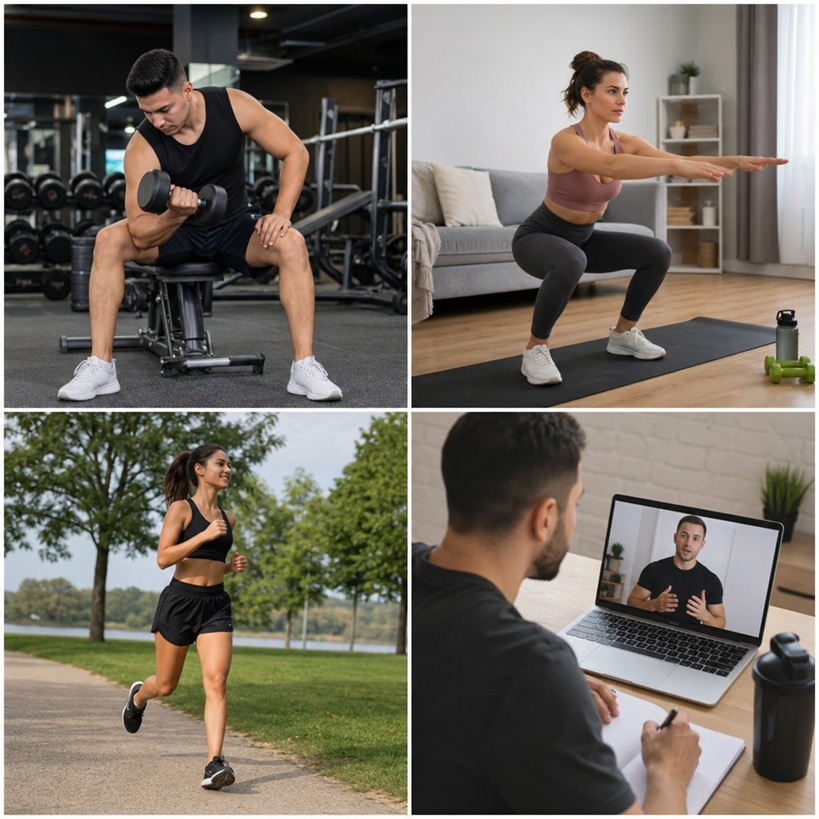
Fitness isn’t just “what’s popular on TikTok”—it’s an industry that shifts with technology, public health, the economy, and what people actually have time to do. A worldwide survey of fitness trends for 2023 (including the ACSM Fitness Trends 2023 list and broader market research) highlighted a clear pattern: Americans want workouts that are measurable, time-efficient, and adaptable—at home, in the gym, or anywhere in between.
This guide breaks down the 8 Fitness Trends Taking Over the US Right Now, based on the biggest themes in the 2023 fitness trends, what stood out in top fitness trends worldwide, and how you can apply fitness industry trends 2023 to your own routine (without falling for hype).
1) Wearable Fitness Tech Gets More “Coachable”
One of the most consistent wearable fitness technology trends in the ACSM top fitness trends 2023 list was the continued rise of wearables—now paired with better apps, AI insights, and habit coaching.
Why it’s taking off:
- People want data they can act on, not just step counts.
- Wearables support training consistency, sleep, recovery, and heart-rate-guided cardio.
How to use fitness trend data here:
- Track resting heart rate, sleep time, and weekly training minutes.
- Use HR zones for cardio and recovery days.
- Audit your month: did your “activity rings” match your real goals?
Actionable tip: Pick one metric for 4 weeks (e.g., steps/day, sleep hours, or weekly strength sessions) and build a plan around it. That’s the difference between evidence-based fitness trends vs fads.
2) Strength Training Becomes the Default, Not the “Extra”
If you’re asking what are the top fitness trends in 2023, strength training is near the top across lists and markets. In the US, it’s moved from “bodybuilding culture” to mainstream health: bone density, metabolism, posture, and long-term independence.
Why it’s trending:
- Time-efficient results versus endless cardio
- Better education around technique and progressive overload
- Strong links to healthy aging and injury prevention
How to choose a workout plan 2023 (strength edition):
- Beginners: 2–3 full-body days/week (squat/hinge/push/pull/carry)
- Intermediate: 3–4 days/week with upper/lower or full-body split
- Keep 1–2 reps “in the tank” most sets for consistency
Mini example (30–40 minutes):
- Goblet squat 3×8–10
- Dumbbell row 3×8–12
- Push-up or DB press 3×6–12
- Romanian deadlift 3×8–10
- Plank 3×30–45s
3) HIIT Evolves: Shorter, Smarter, and Paired With Strength
The HIIT vs strength training popularity debate shifted in 2023. HIIT stayed popular, but many coaches began programming it more strategically—often as a finishing block, not the entire plan.
Why fitness trends are changing 2023:
- Burnout and injury risk from “all HIIT, all the time”
- Better understanding of recovery and sustainable programming
- People want results without feeling wrecked
Smart HIIT rules (to keep it evidence-based):
- 1–2 HIIT sessions/week (not 5)
- 8–15 minutes of intervals can be enough
- Put HIIT after strength or on a separate day
Try this (12 minutes):
- 20 seconds hard / 100 seconds easy × 6 rounds (bike/rower/run)
4) Personal Training Goes Hybrid (Online + In-Person)
The online training vs gym membership question has a “both/and” answer now. The new fitness trends 2023 included the growth of online coaching, but many people still want some in-person support—especially for form, accountability, and community.
What’s driving it:
- Flexible schedules and remote work habits
- Lower cost than full-time in-person training
- Better platforms for messaging, video reviews, and programming
How to use fitness trend data:
- If you skip workouts due to logistics, hybrid is a fix.
- If you plateau, coaching adds progression and feedback.
Quick decision guide:
- Choose online coaching if you need structure + check-ins.
- Choose in-person if you need hands-on cues and motivation.
- Choose hybrid if you want the best adherence long-term.
5) “Workout Snacks” and Micro-Workouts Fit Real Life
In many 2023 fitness trends by country summaries, a common theme was time scarcity. In the US, micro-workouts (5–15 minutes) became a practical gateway—especially for beginners, parents, and busy professionals.
Why it works:
- Lower friction = better consistency
- Builds baseline conditioning without long sessions
- Easy to stack into a weekly total
Try a 10-minute “snack”:
- 1 minute brisk walk in place
- 8 minutes circuit (40s work/20s rest): squats, incline push-ups, rows, dead bugs
- 1 minute easy breathing + mobility
Pro tip: Track weekly totals. Three 10-minute sessions/day across a week can rival “traditional” plans.
6) Home Gyms Get Upgraded (But Stay Minimal)
Searches for the best home workout equipment 2023 rose because people wanted options beyond a single yoga mat. But the most effective home gyms stayed compact.
The “minimal but powerful” equipment list:
- Adjustable dumbbells or a few fixed pairs
- Resistance bands (loop + long bands)
- Pull-up bar (if possible)
- Kettlebell or sandbag
- Bench or sturdy step
How to choose a workout plan 2023 (home edition):
- Pick 6–10 core movements you can progress (load/reps/tempo).
- Use a simple tracker: add 1–2 reps or a little load weekly.
This trend connects strongly to most popular workout programs 2023 because many top plans are now designed to work in either a gym or at home.
7) Group Fitness Comes Back With a Community Edge
Among the biggest fitness industry trends 2023: people sought connection. That’s why boutique studios, community workouts, and team-based training surged again.
Group fitness classes benefits 2023 (what people actually stick with):
- Accountability: you show up because others expect you
- Coaching cues: better form and safer intensity
- Enjoyment: community reduces dropout rates
How to make group training work for you:
- Pick classes that match your goal (strength-focused, cycling, yoga, functional conditioning).
- Aim for 2 classes/week + 1–2 solo strength sessions.
- Don’t “race” the room—follow your own intensity.
8) “Health-Focused” Training: Mobility, Recovery, and Longevity
A major theme in ACSM fitness trends 2023 and broader top fitness trends worldwide was training for health outcomes, not just aesthetics. Recovery tools, mobility work, and “train for life” programming became mainstream.
What this looks like:
- Warm-ups that include joint prep (ankles/hips/shoulders)
- Weekly mobility sessions (10–20 minutes)
- Deload weeks and recovery days
- Sleep and stress management treated as training variables
Evidence-based approach:
- Mobility supports better positions and reduced aches
- Recovery improves adherence and long-term progress
- Longevity training often means more consistency, less extremity
How to Use These 2023 Trends Without Falling for Fads
The best way to apply a global fitness industry report 2023 mindset is to treat trends as “options,” not commandments. Use them to design a plan you’ll follow.
Use this quick filter (works for all new fitness trends 2023):
- Can I do this 2–4 days/week for 12 weeks?
- Can I measure progress? (reps, load, time, HR, steps, sleep)
- Does it match my goal? fat loss, strength, endurance, stress reduction
- Is it safe for my current level? (scale intensity first)
If you want a simple “trend-blended” weekly template:
- 2–3 days strength training
- 1 day HIIT or intervals
- 1–2 days low-intensity cardio + steps
- 10 minutes mobility most days
- Optional: 1 group class for community
This is exactly where how to use fitness trend data becomes practical: you’re matching what’s popular with what’s proven.
Takeaway
The worldwide survey of fitness trends for 2023 points to the same conclusion across markets: the winning approach is flexible training that’s measurable and sustainable. Whether you follow the ACSM Fitness Trends 2023 list closely or just want a plan that works, the best move is to combine strength training, smart cardio, recovery, and a delivery style you’ll stick with—home, gym, online, or group-based.