Non-invasive metabolic and biomarker patches are wearable tools designed to help people understand signals related to metabolic health without relying on frequent finger pricks, blood draws, or clinic-only testing. These health patches use sensors, adhesives, microfluidics, and connected software to collect or interpret data from the skin, sweat, or other accessible biological signals. For consumers, clinicians, researchers, and wellness teams, the promise is simple: more continuous health monitoring with less friction.
The field is still developing, and not every product measures the same thing or carries the same level of validation. Still, smart patches and related patch technology are changing how people think about prevention, performance, chronic condition support, and everyday health awareness.
What are non-invasive metabolic patches?
Non-invasive metabolic patches are wearable devices that sit on the skin and gather metabolic or biomarker-related information without requiring a traditional blood sample. Depending on the design, a patch may sense signals from sweat, interstitial fluid, skin temperature, motion, or other surface-level indicators, then send that information to a reader, phone app, or clinical dashboard.
The word “metabolic” matters because these patches are not only counting steps or estimating calories. They aim to offer insight into how the body is using, storing, or responding to energy. That can include patterns related to glucose response, hydration status, electrolyte balance, lactate changes, stress-related signals, or recovery trends, depending on the technology.
It is important to separate the concept from the marketing. Some metabolic patches are designed for wellness insights, while others may be built for medical monitoring or research. A consumer fitness patch, a clinical-grade sensor, and a laboratory prototype can all be described as health patches, but they may differ greatly in accuracy, intended use, data quality, and oversight.
The shift toward continuous metabolic health insight
Traditional health testing often gives a snapshot: a lab result from one morning, a reading during an appointment, or a measurement taken when symptoms appear. Those snapshots can be useful, but metabolism is dynamic. Food, sleep, exercise, stress, medication, hydration, illness, and hormonal changes can all influence the body throughout the day.
Non-invasive metabolic patches fit into a broader movement toward more continuous health monitoring. Instead of waiting for a single test result, users may be able to observe patterns over time. The value is not just in one number; it is in seeing how that number changes after meals, during workouts, overnight, or during periods of stress.
This trend also reflects a practical reality: people are more likely to engage with health data when collection is easy. A patch that can be worn discreetly may reduce the burden of repeated testing. For many users, that convenience can turn health tracking from an occasional task into a regular feedback loop.
How do health patches collect biomarker signals?
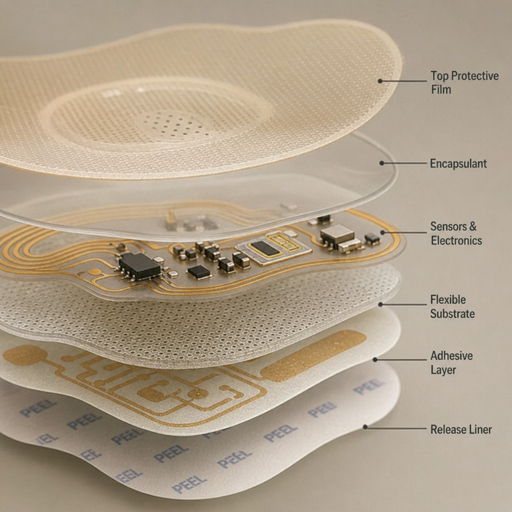
Health patches collect biomarker signals by combining a skin-friendly wearable format with sensors that detect physical, chemical, or electrical changes. The exact method depends on the patch, but many designs use a small sensing area, a flexible circuit, an adhesive layer, and software that converts raw signals into readable information.
Some patches focus on fluids that naturally reach the skin surface, such as sweat. These may look for changes in electrolytes, hydration-related markers, or compounds associated with exertion. Other designs may use very small sensing structures to access signals just under the skin while still minimizing discomfort compared with traditional sampling.
The software layer is just as important as the patch itself. A sensor may collect a signal, but an app or platform helps interpret it in context. Good design should make it clear what is being measured, how often it is updated, what the limitations are, and whether the information is intended for wellness, medical decision support, or research.
Common components in patch technology
Most smart patches rely on several parts working together:
- Adhesive layer: Keeps the device in place during normal movement, sweat, and daily activity.
- Sensor layer: Detects the target signal, such as a chemical marker, temperature shift, or electrical change.
- Flexible electronics: Allows the patch to bend with the body instead of feeling rigid or bulky.
- Power source or passive design: Supports data collection, transmission, or scanning.
- Connectivity: Sends readings to a phone, reader, or cloud-based system when applicable.
- Software interface: Turns raw data into trends, alerts, charts, or personalized guidance.
When these elements are designed well, the patch feels less like a device and more like part of the user’s daily routine. When they are poorly designed, even a promising sensor can fail because the patch peels off, irritates the skin, drains power too quickly, or produces confusing data.
Biomarkers these patches may help track
The term “biomarker” can sound technical, but it simply refers to a measurable sign of a biological process. In metabolic health, biomarkers can help users understand how the body responds to food, exercise, recovery, stress, or hydration. Not every patch tracks every marker, and some biomarkers are still better suited to laboratory testing.
Still, several categories are especially relevant to metabolic patches and adjacent wearable technologies.
Glucose-related patterns
Glucose is one of the most discussed metabolic signals because it reflects how the body handles carbohydrates, energy demand, and insulin-related processes. Some wearable systems are designed to help users observe glucose patterns over time. In a wellness context, the practical goal is often to learn how meals, timing, movement, and sleep influence daily trends.
For people managing diagnosed conditions, glucose data can be clinically significant and should be interpreted with professional guidance. For general wellness users, the most useful insight is often behavioral: which meals create large swings, which routines support steadier energy, and how activity after eating changes the pattern.
Hydration and electrolyte signals
Sweat-based health patches often focus on hydration and electrolytes because sweat is accessible at the skin surface. Athletes, outdoor workers, and people exercising in hot environments may be interested in how fluid loss and electrolyte changes affect performance and recovery.
A patch in this category may not replace common-sense hydration habits, but it can add context. Instead of relying only on thirst or a planned drinking schedule, users may eventually receive more individualized feedback. The key is understanding whether the patch provides direct measurements, estimates, or general trend indicators.
Lactate and exertion-related markers
Lactate is associated with exercise intensity and energy metabolism. In sports and performance settings, lactate trends can help describe how hard the body is working and how it is adapting to training. Non-invasive or minimally invasive patch technology in this area is attractive because traditional lactate testing can be inconvenient.
For everyday users, the value may be less about elite performance and more about matching training intensity to recovery. If a patch can reliably indicate exertion-related metabolic changes, it could support smarter workouts and reduce guesswork.
Temperature, stress, and recovery context
Not every metabolic insight comes from a chemical biomarker. Skin temperature, heart-rate patterns, sleep-related changes, and stress-linked signals can provide context around metabolic health. These measures may help explain why energy, appetite, or workout performance feels different from one day to the next.
A single metric rarely tells the full story. The stronger approach is to combine signals thoughtfully: food timing, sleep quality, activity, perceived stress, and patch-based readings. This is where smart patches become more useful as part of a broader health monitoring ecosystem.
Why non-invasive monitoring matters
Non-invasive monitoring matters because the easier a health tool is to use, the more likely people are to use it consistently. Traditional tests can be accurate and necessary, but they often require appointments, supplies, discomfort, or special handling. A wearable patch can reduce some of those barriers.
For metabolic health, consistency is especially valuable. A person may not learn much from one isolated reading, but trends across days or weeks can reveal habits and responses. For example, someone may notice that poor sleep changes their hunger patterns, that a short walk after lunch supports steadier afternoon energy, or that hydration needs vary with workout type.
The benefit is not only convenience. Non-invasive metabolic patches can also support more personalized conversations with health professionals. Instead of relying on vague memory, a user may be able to bring trend data that shows how their body responds in real life.
Practical uses for metabolic patches
Metabolic patches can serve different users in different ways. The best use case depends on the marker being tracked, the quality of the device, and whether the information is intended for wellness, medical care, performance, or research.
Everyday metabolic awareness
Many people are interested in metabolic health because they want steadier energy, better recovery, or a clearer understanding of how habits affect the body. A patch may help connect daily choices with physical responses. That feedback can make healthy behavior less abstract.
For example, a user may compare how they feel after different breakfast choices, how late-night meals affect sleep, or how movement changes post-meal patterns. The goal is not to obsess over every reading. The goal is to identify repeatable habits that make the body feel and function better.
Fitness and athletic performance
In training environments, smart patches may help athletes and active users monitor exertion, hydration, temperature, or recovery. This can be useful when subjective effort does not match what the body is experiencing. Someone may feel fine early in a workout but show signs that they are under-recovered or dehydrated.
Coaches and performance teams may also be interested in group-level patterns. If several athletes show signs of stress, fatigue, or poor recovery, training loads can be adjusted. However, patch data should support good coaching judgment, not replace it.
Chronic condition support
For people living with metabolic or endocrine conditions, continuous or near-continuous monitoring may support better awareness and more informed care. In these cases, the difference between wellness technology and medical technology is crucial. Users should choose tools appropriate to their condition and follow guidance from qualified professionals.
Patch technology can make monitoring less disruptive, but medical decisions should not be based on unverified consumer readings. Accuracy, intended use, labeling, and professional interpretation matter. The more serious the health decision, the more important it is to use validated tools and clinical advice.
Workplace and research applications
Non-invasive health patches may also be useful in research, occupational health, and controlled wellness programs. Researchers can study real-world patterns with less disruption to participants. Employers in physically demanding environments may explore monitoring for heat stress, fatigue, or hydration, while still needing strong privacy protections and clear consent.
Any workplace use should be handled carefully. Health data is sensitive, and employees should understand what is being collected, who can see it, and how it will be used. Trust is as important as technology.
What should you look for in smart patches?
You should look for clarity, comfort, data quality, privacy protections, and a use case that matches your actual goal. A smart patch is only useful if you know what it measures, can wear it comfortably, understand the results, and trust how your data is handled.
Before choosing health patches, consider these practical criteria:
- Measurement purpose: Does the patch track a specific biomarker, a general wellness signal, or an estimated trend?
- Intended use: Is it marketed for wellness, sports, research, or medical monitoring?
- Wear time: How long can the patch be worn, and does it fit your routine?
- Comfort: Is the adhesive suitable for your skin, activity level, and climate?
- Data presentation: Does the app explain trends clearly, or does it leave you guessing?
- Actionability: Does the information help you make practical choices about food, sleep, training, or recovery?
- Privacy: Are data permissions, sharing settings, and storage practices easy to understand?
- Support: Is there guidance for setup, troubleshooting, skin care, and interpretation?
A strong patch experience should reduce uncertainty, not create more of it. If the device gives frequent alerts without context, uses vague scoring systems, or encourages extreme behavior, it may be doing more harm than good.
Benefits that make patch technology appealing
The appeal of patch technology comes from its ability to gather useful information in a low-friction way. A patch can sit quietly on the body while life happens. That creates opportunities that are difficult with occasional testing.
More context than single-point testing
Single-point testing can answer one question at one moment. Patch-based monitoring can show how signals move across time. This matters because metabolism is influenced by patterns, not just isolated events.
A user may discover that the same meal produces different responses depending on sleep, stress, or activity. That kind of context can encourage more realistic habits. Instead of chasing a perfect number, users can focus on patterns they can actually influence.
Less disruption to daily life
For many people, the best health tool is the one they will keep using. A discreet patch can be easier to wear than a device that requires repeated manual input or uncomfortable sampling. This makes non-invasive metabolic patches attractive for people who want insight without making health tracking the center of their day.
Reduced friction also helps clinicians, researchers, and wellness teams collect more representative data. People behave differently in clinics than they do at home, at work, or during training. Wearable data can help fill that gap.
Better personalization
General health advice has limits. Two people can eat the same meal, do the same workout, and sleep the same number of hours while experiencing different outcomes. Metabolic patches can help reveal those individual differences.
Personalization does not mean every reading needs a dramatic response. It means the user can learn which routines consistently support their goals. Over time, small adjustments may be easier to sustain than broad, generic rules.
Limitations and cautions to keep in mind
Non-invasive does not automatically mean effortless, perfect, or clinically interchangeable with laboratory testing. Every sensor has limits. Readings may be affected by placement, sweat rate, skin condition, temperature, motion, hydration, calibration, or the quality of the underlying algorithm.
Users should also be careful about over-interpreting data. A patch may show a trend, but that trend still needs context. Food logs, symptoms, medications, training load, menstrual cycle, travel, illness, and stress can all influence metabolic signals.
Data anxiety is another real concern. More health monitoring is not always better if it leads to obsession or unnecessary restriction. The healthiest use of smart patches is usually curiosity-driven, not fear-driven.
A simple checklist for responsible use
Use this checklist before acting on patch data:
- Confirm what the patch actually measures. Do not assume every score equals a direct biomarker reading.
- Look for patterns, not isolated spikes. One unusual reading may not mean much.
- Pair data with lived experience. Energy, hunger, mood, sleep, and performance still matter.
- Avoid extreme changes. Use insights to make steady, realistic adjustments.
- Ask for help when health decisions are involved. Bring data to a qualified professional when symptoms, medications, or diagnosed conditions are part of the picture.
- Protect your privacy. Review sharing settings before connecting apps or programs.
This approach keeps health monitoring useful and grounded. The patch becomes a tool for learning, not a source of pressure.
The role of software in meaningful health monitoring
The physical patch may get most of the attention, but software often determines whether the experience is useful. Raw data is rarely meaningful to the average user. People need explanations, trends, context, and guidance that are clear without being overly simplistic.
A good app should help users connect signals to behavior. It might allow notes about meals, workouts, sleep, stress, or symptoms. It may show patterns across days rather than pushing constant reactions to every small change.
The best software also respects uncertainty. Metabolic health is complex, and responsible platforms should explain when a reading is an estimate, when data quality is limited, and when a user should seek professional input. Clear language builds trust.
Design challenges for next-generation health patches
Creating reliable non-invasive metabolic patches is difficult. The skin is not a simple window into the bloodstream. Sweat composition changes with environment and activity. Adhesives must balance durability with comfort. Flexible electronics must survive movement, moisture, and normal daily wear.
There are also human challenges. A patch may work in a controlled environment but struggle in everyday conditions. Users shower, sleep, exercise, travel, apply lotion, and move in unpredictable ways. A successful product has to handle real life, not just ideal testing conditions.
Battery life, sustainability, affordability, and accessibility also matter. If patches are disposable, waste becomes a concern. If they are expensive, access may be limited. If the app is confusing, even strong sensor technology may fail to deliver value.
How to turn patch data into better habits
The most useful way to use patch data is to translate it into repeatable behavior. Instead of asking, “Is this number good or bad?” ask, “What pattern is this showing, and what can I test next?” That mindset turns monitoring into learning.
Start with one goal at a time. If your focus is energy, look at sleep, meal timing, and post-meal movement. If your focus is fitness, compare training intensity with recovery signals. If your focus is hydration, observe how heat, workout duration, and fluid intake relate to how you feel.
A simple routine can help:
- Choose one question. For example, “Do I recover better when I stop eating earlier?”
- Keep the test realistic. Change one habit for a few days rather than changing everything.
- Record context. Add notes about meals, sleep, workouts, and stress.
- Review trends weekly. Daily variation is normal, so look for repeated patterns.
- Adjust gently. Keep what works and avoid turning data into rigid rules.
This approach is especially helpful because metabolic health is personal. The goal is not to copy someone else’s ideal routine. The goal is to understand your own response and build habits that fit your life.
The future of non-invasive metabolic patches
The future of non-invasive metabolic patches will likely involve smaller devices, better comfort, more integrated software, and broader biomarker capabilities. As patch technology improves, users may see tools that combine several signals in one wearable experience. The most meaningful advances will not only be technical; they will make data easier to understand and safer to use.
Health patches may also become more connected to broader care models. A person could track trends at home, share selected data with a care team, and use that information to support more personalized guidance. In wellness settings, people may use patches to understand nutrition, stress, recovery, and training with fewer assumptions.
The challenge will be maintaining trust. Better sensors must be matched with transparency, privacy, validation, and responsible communication. Users should know what a patch can tell them, what it cannot tell them, and when professional advice matters.
Key takeaways
Non-invasive metabolic patches are part of a larger shift toward more convenient, continuous, and personalized health monitoring. They can help users observe metabolic health patterns in daily life, especially when paired with thoughtful interpretation and realistic behavior changes.
The most important takeaways are straightforward:
- Non-invasive metabolic patches aim to reduce the burden of biomarker tracking.
- Smart patches may support wellness, sports performance, research, or clinical monitoring, depending on the product.
- The value often comes from trends over time, not isolated readings.
- Comfort, data quality, privacy, and clear software are essential.
- Patch data should guide better questions and healthier habits, not create anxiety.
- For diagnosed conditions or medical decisions, professional guidance remains important.
A practical path forward
Non-invasive metabolic and biomarker patches are not magic stickers, but they can be powerful learning tools when used with the right expectations. They bring health monitoring closer to everyday life, making it easier to notice how food, movement, sleep, stress, and hydration shape the body’s responses.
As metabolic patches continue to develop, the strongest products will be those that combine reliable sensing with human-centered design. The real promise is not simply more data. It is better insight, better conversations, and better daily choices that support long-term metabolic health.