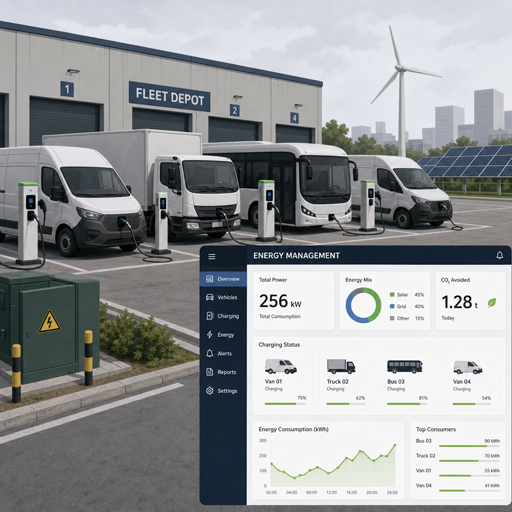
Electric vehicles are becoming more than a cleaner way to move people and goods. With bidirectional charging and coordinated energy management, batteries in vehicles, buildings, fleets, and other distributed assets can help balance electricity demand, absorb renewable power, and provide backup when the grid is stressed. This guide explains how everything-to-grid and vehicle-to-grid technology work, what makes scaling difficult, and how utilities, fleet operators, automakers, charging providers, and energy teams can move from pilots to practical deployment.
What does everything-to-grid mean?
Everything-to-grid means connecting flexible energy assets to the power system so they can intelligently consume, store, shift, or export electricity when it creates value. Vehicle-to-grid technology is one of the most visible examples, but the broader idea can include electric vehicles, home batteries, commercial batteries, heat pumps, water heaters, solar inverters, building controls, and other devices that can respond to grid needs.
The phrase matters because the grid is no longer a one-way system where large power plants push electricity to passive customers. More homes, businesses, and fleets now produce, store, or manage energy at the edge of the network. When those assets are coordinated through smart grid solutions, they can act like a flexible resource rather than a scattered collection of devices.
In that model, an electric school bus parked during the day, a delivery van depot charging overnight, a workplace charger serving employee vehicles, and a building battery can all become part of a managed energy ecosystem. The goal is not to drain batteries randomly or inconvenience users. The goal is to match available flexibility with real grid needs while protecting mobility, comfort, battery health, and customer control.
The basics of bidirectional charging
Bidirectional charging allows electricity to flow both into and out of an electric vehicle or stationary battery. A standard charger only sends power one way, from the grid to the battery. A bidirectional system can charge the battery when electricity is available or inexpensive, then discharge power back to a home, building, fleet site, or the wider grid when that stored energy is useful.
There are several related concepts that often get grouped together:
- Vehicle-to-home: An EV powers essential home loads during an outage or high-cost period.
- Vehicle-to-building: A fleet or employee vehicle supports a commercial facility, warehouse, campus, or depot.
- Vehicle-to-load: A vehicle provides portable power for tools, equipment, events, or emergency use.
- Vehicle-to-grid: A vehicle exports power or grid services through a utility-approved connection.
- Everything-to-grid: Multiple flexible assets, not only vehicles, are coordinated as part of a larger energy management strategy.
The distinction is important because each use case has different technical, financial, and regulatory requirements. Powering a home circuit during an outage is not the same as participating in a utility demand response program. Supporting a depot’s peak demand is not the same as exporting energy into a wholesale market. Scaling v2g technology requires clarity about which use case is being designed, who benefits, who controls dispatch, and how performance is measured.
Why vehicle-to-grid technology matters for the energy transition
Vehicle-to-grid technology matters because transportation electrification is adding significant new electricity demand while also creating a large source of flexible battery capacity. If EV charging is unmanaged, it can increase local peaks, strain distribution equipment, and raise energy costs for sites with many vehicles. If charging and discharging are coordinated, those same vehicles can become a tool for grid integration, renewable energy absorption, and resilience.
The value comes from timing. A battery is most useful when it can charge during periods of abundant power and discharge or pause charging during constrained periods. That flexibility can help smooth the mismatch between when clean energy is produced and when electricity is needed.
For fleet operators, the value may show up as lower demand charges, better use of onsite solar, backup power, or participation in utility programs. For utilities, aggregated EV batteries can support demand response, local grid relief, frequency services, and more efficient use of infrastructure. For drivers and communities, the promise is sustainable transportation that does not simply shift emissions from tailpipes to power plants, but helps build a cleaner, more resilient energy system.
That promise is not automatic. A vehicle is primarily a mobility asset. The driver or fleet must have enough charge when needed, and the economics must justify the extra hardware, software, interconnection effort, and operational complexity. Good design begins by treating transportation needs as non-negotiable, then finding grid value around those needs.
How everything-to-grid systems work
An everything-to-grid system is built around visibility, control, and coordination. The system needs to know what assets are available, what constraints apply, what the energy price or grid signal is, and what outcome the user wants. It then schedules or dispatches devices in a way that balances local needs with grid opportunities.
Connected assets
The first layer is the physical asset: the EV battery, stationary battery, solar inverter, controllable load, or building system. Each asset has operating limits. An EV has a state of charge, a departure time, a minimum required range, and a maximum charging or discharging rate. A building has comfort limits, operating hours, backup requirements, and electrical panel constraints.
These constraints shape the flexibility that can safely be offered. A parked fleet vehicle with a predictable route may provide dependable capacity for several hours. A privately owned car at a public charger may offer less predictable flexibility because the driver may leave at any time. A commercial battery may be easier to dispatch but may not have the same scale as a large fleet.
Power electronics and charging equipment
Bidirectional charging depends on hardware that can safely convert power in both directions. Depending on the architecture, conversion may happen in the vehicle, in the charger, or across a coordinated system. The charger must support communication, safety controls, metering, and utility interconnection requirements.
This is one reason bidirectional charging is more complex than ordinary EV charging. It is not only a plug. It is a power conversion device, a communications endpoint, a grid resource, and part of a site’s electrical system. The equipment must work with the vehicle, the building, the utility, and the software platform managing dispatch.
Software and energy management
Energy management software is the brain of the system. It decides when to charge, when to discharge, when to hold energy in reserve, and when to ignore a grid signal because the asset owner’s needs come first. The best systems are not designed around maximum export at all times. They are designed around optimized decisions.
For example, a fleet depot may need all vehicles ready by 6 a.m. The software can stagger charging overnight, avoid site peaks, charge more when electricity is cheaper, and reserve some battery capacity for morning operations. If a utility event occurs, the system can decide which vehicles have enough flexibility to participate without risking the next day’s routes.
Aggregation and grid signals
A single vehicle may be useful for a home or facility, but grid-level value often comes from aggregation. Aggregation combines many small assets into a portfolio that can respond as one resource. That portfolio may include EVs across depots, workplace chargers, residential batteries, and other flexible loads.
Grid signals can include time-based rates, demand response events, local distribution constraints, renewable generation forecasts, or market prices. The aggregator or energy management platform translates those signals into device-level actions. Done well, the user experiences reliable mobility and energy savings while the grid receives flexible capacity when it needs it.
The practical value of grid integration
Grid integration is the difference between electrification that simply adds load and electrification that becomes a flexible part of the power system. As more transportation, heating, and industrial processes run on electricity, the timing and location of demand become as important as total energy use.
For sites with EV charging, grid integration can reduce the need for expensive electrical upgrades by managing charging within existing capacity. Instead of every vehicle charging at full power as soon as it plugs in, charging can be sequenced based on departure schedules and available site capacity. That can be especially valuable for fleets that operate many vehicles from one depot.
For utilities, integrated charging can help prevent local congestion. A neighborhood with many EVs may not need every driver to charge at the same time in the early evening. Time-of-use rates, managed charging programs, and automated controls can shift load toward lower-stress periods. When bidirectional capability is available, vehicles may also support the grid during peak periods, though export requires additional technical and regulatory coordination.
For renewable energy, flexible charging creates a useful demand sink. Solar production may be abundant during midday, while wind generation may be strong at different times. EVs and other distributed batteries can help absorb that energy if charging schedules are flexible. This is one of the reasons everything-to-grid thinking is important: the system works best when many different assets can respond together.
Key use cases for vehicle-to-grid scaling
Vehicle-to-grid scaling will not happen through one universal use case. It will grow where vehicle availability, battery size, site economics, utility programs, and customer needs align. The strongest early opportunities are often in fleets and buildings where schedules are known and charging is centralized.
Fleet depots
Fleet depots are a natural starting point because operators know when vehicles return, when they leave, and how much energy each route usually requires. School buses, transit vehicles, municipal fleets, delivery vans, and service vehicles may spend predictable hours parked. That dwell time is essential for v2g technology because the vehicle must be connected long enough to provide value.
A depot can also manage many vehicles behind one meter. That creates opportunities for peak shaving, backup power, and coordinated response to utility signals. The challenge is operational discipline. Dispatch schedules, route changes, maintenance needs, and driver behavior must be integrated into the energy management system.
Commercial buildings and campuses
Workplaces, universities, hospitals, warehouses, and public facilities may use EVs as part of a broader smart grid solutions strategy. Vehicles can interact with onsite solar, building loads, stationary batteries, and backup systems. In these settings, vehicle-to-building may deliver value even before full vehicle-to-grid export is available.
The main benefit is local optimization. If a building has a costly demand peak in the afternoon, a connected fleet or employee charging program may help reduce that peak. If solar output is strong at midday, vehicles can charge when onsite generation is available. If resilience is a priority, selected vehicles may be reserved for backup support.
Residential energy resilience
At the residential level, bidirectional EVs can support home backup and energy shifting. A homeowner may use the vehicle to power critical loads during an outage or reduce grid consumption during high-cost periods. This can be compelling because the vehicle battery is often much larger than a typical small home battery.
However, residential vehicle-to-grid scaling is more complicated than home backup. Exporting to the grid may require utility approval, compatible metering, interconnection agreements, rate structures, and software coordination. For many households, the first meaningful step may be vehicle-to-home capability, followed later by more formal grid participation.
Public charging networks
Public charging sites can participate in energy management by adjusting charging speed, using onsite storage, or coordinating with grid signals. Full vehicle-to-grid at public chargers is harder because drivers may not want to remain plugged in after reaching a desired charge level. The business model must also compensate drivers or site hosts in a way that is simple and trustworthy.
Still, public infrastructure has a role in everything-to-grid systems. High-power charging sites can create large loads, and managing those loads can reduce grid stress. Over time, public charging, stationary storage, solar canopies, and local grid support may become more integrated.
What makes v2g technology difficult to scale?
V2g technology is difficult to scale because it sits at the intersection of vehicles, chargers, buildings, utilities, software platforms, customer behavior, and energy markets. Every part must work together, and misalignment in any one area can slow deployment. The technology is promising, but scaling requires more than proving that power can flow from a car to the grid.
The first barrier is interoperability. Vehicles and chargers must communicate reliably, and energy platforms need consistent data about state of charge, availability, power limits, and user preferences. If each vehicle model, charger, and utility program requires a custom integration, costs rise and deployment slows.
The second barrier is economics. Bidirectional hardware can cost more than standard charging equipment, and interconnection can add time and complexity. Asset owners need a clear value stack: energy savings, demand charge reduction, resilience, incentives, or payments for grid services. If the revenue is uncertain or too small, participation will remain limited.
The third barrier is customer trust. Drivers and fleet managers need confidence that participation will not leave them without range, damage batteries, or create surprise costs. This is as much a design challenge as a communications challenge. Programs must give users control, transparency, and simple opt-out options.
The fourth barrier is regulatory readiness. Rules for interconnection, metering, export compensation, aggregation, and market participation vary by place. A project that works in one utility territory may not transfer easily to another. Scaling requires repeatable frameworks, not one-off exceptions.
Finally, there is the operational barrier. A pilot can be managed with hands-on attention. A scaled program must work across thousands of assets, changing schedules, software updates, equipment faults, customer support requests, and utility events. Reliability at scale is the real test.
Building blocks of a scalable everything-to-grid strategy
A scalable strategy begins with the use case and works backward to technology. Too many projects start with hardware selection before defining what the system is supposed to accomplish. A better approach is to identify the target value, asset constraints, operational requirements, and grid participation pathway first.
Use this checklist to structure early planning:
- Define the primary value case. Decide whether the priority is backup power, peak reduction, renewable energy matching, demand response, market participation, or a combination.
- Map asset availability. Identify when vehicles or batteries are connected, how long they dwell, and what minimum energy must be preserved.
- Confirm electrical capacity. Review service limits, panels, transformers, protective equipment, and any upgrade requirements before selecting chargers.
- Engage the utility early. Interconnection, export rules, rates, and program eligibility can shape the entire project design.
- Choose interoperable equipment. Prioritize vehicles, chargers, and software that support open communication pathways and future upgrades where possible.
- Protect the user experience. Set minimum charge levels, departure-time guarantees, and clear rules for when the system may discharge.
- Measure performance. Track energy cost, peak demand, availability, event participation, battery usage, and operational exceptions.
- Plan for support. Include maintenance, software updates, customer service, cybersecurity, and staff training in the operating model.
This planning work may feel less exciting than the technology itself, but it is what separates a demonstration from a durable program. The energy transition will not scale on hardware alone. It needs repeatable processes that make participation safe, valuable, and easy.
Smart grid solutions and the role of software
Smart grid solutions make distributed energy resources visible and controllable. Without software coordination, a fleet of EVs is just a group of batteries plugged in at different times. With the right platform, those assets can be scheduled, aggregated, monitored, and optimized.
A strong software layer should handle several tasks at once. It needs to forecast vehicle energy needs, understand tariff structures, respond to grid events, and maintain site constraints. It also needs to communicate with chargers, vehicles, building systems, meters, and utility or aggregator platforms.
The most valuable software decisions are often preventive. Rather than reacting to a demand spike after it happens, the system can stagger charging to avoid creating the spike. Rather than discharging every available vehicle during an event, it can select assets with enough dwell time and spare energy. Rather than treating all batteries the same, it can account for different operating priorities.
Cybersecurity and data governance also matter. Everything-to-grid systems create new communication pathways between vehicles, buildings, utilities, and cloud platforms. Asset owners should understand what data is collected, who can access it, how commands are authorized, and how the system behaves if communication fails.
Energy management for fleets and facilities
Energy management is where technical potential becomes day-to-day value. A fleet operator does not need abstract flexibility; it needs vehicles ready for routes, energy costs under control, and charging operations that staff can trust. A facility manager needs reliable power, predictable bills, and systems that do not create new operational headaches.
The first step is load visibility. Sites should understand their current demand profile, planned EV load, operating hours, and constraints. Then they can design charging schedules that fit real operations rather than ideal assumptions. For example, a fleet with overnight dwell time may not need every charger running at maximum power all night. Sequenced charging can meet route needs while reducing peaks.
The second step is prioritization. Not every vehicle should participate in every energy event. Some may need a full charge for early departure. Others may have enough buffer to delay charging or discharge briefly. Energy management software should rank assets based on availability, minimum charge, departure time, and operational importance.
The third step is feedback. Operators need dashboards, alerts, and reports that explain what happened and why. If the system reduces charging speed, staff should know whether it was due to a demand limit, utility event, equipment issue, or vehicle requirement. Transparency turns automation from a black box into a trusted operational tool.
Standards, interoperability, and trust
Scaling depends on shared technical rules. When vehicles, chargers, software platforms, and utilities use compatible communication and safety frameworks, projects become easier to replicate. When they do not, each deployment can require custom engineering.
Interoperability affects several layers: the physical connector, communication between vehicle and charger, communication between charger and management software, and communication with utility or market systems. A weakness at any layer can limit functionality. For example, a vehicle may support bidirectional power, but the site may still need compatible equipment, software, and utility approval before exporting to the grid.
Trust is equally important. Asset owners must trust that the system will respect their constraints. Utilities must trust that aggregated resources will perform as promised. Drivers must trust that participation will not interfere with mobility. Regulators must trust that safety, metering, and consumer protection requirements are being met.
Clear program design helps build that trust. Participants should know how often discharge may occur, how compensation is calculated, what happens during an outage, how battery limits are protected, and how they can override participation. If these rules are buried or confusing, adoption will suffer even if the technology works.
Policy, markets, and utility programs
Everything-to-grid deployment is shaped by policy and market design. A battery can only provide grid value if there is a mechanism to recognize and compensate that value. In some places, that may be a utility demand response program. In others, it may involve time-based rates, export tariffs, resilience programs, or aggregation into energy markets.
Good policy does not need to force every EV into grid service. Instead, it should make participation possible where it is beneficial. That includes fair interconnection processes, clear metering rules, transparent compensation, and consumer protections. It also includes rate designs that encourage charging when the grid has capacity and discourage charging during the most constrained periods.
Utilities play a central role because many benefits are local. A distribution feeder constraint, transformer loading issue, or neighborhood peak cannot always be solved through broad market prices alone. Local programs can signal where flexibility is most valuable and reward assets that respond in those locations.
For project developers and fleet operators, the practical lesson is simple: do not treat policy as an afterthought. The business case depends on the rules of the place where the project is built. Early conversations with utilities, regulators, and program administrators can prevent expensive redesigns later.
How organizations can evaluate a v2g opportunity
Organizations should evaluate a v2g opportunity by testing whether the operational fit, technical pathway, and financial value are all strong enough to justify deployment. A project with attractive incentives but unpredictable vehicle availability may disappoint. A technically elegant project with no compensation pathway may remain a showcase rather than a business tool.
A practical evaluation can follow five steps:
- Start with operations. Document vehicle schedules, route energy needs, parking duration, charging windows, and exceptions. If vehicles are rarely plugged in long enough, vehicle-to-grid may not be the right first use case.
- Assess the site. Review electrical infrastructure, load profile, utility rate structure, backup needs, solar production, and space for chargers or storage.
- Model the value stack. Estimate the potential from peak reduction, managed charging, backup value, incentives, and grid services without assuming every possible revenue stream will be available.
- Confirm technology compatibility. Check whether vehicles, chargers, software, meters, and utility requirements can work together for the intended use case.
- Design a controlled rollout. Begin with a manageable group of assets, measure performance, refine operating rules, and expand only after the process is reliable.
This approach keeps expectations grounded. In many cases, managed charging may deliver immediate value before bidirectional export is added. That does not make v2g technology less important. It simply means the scaling path may move from smart charging to vehicle-to-building to full vehicle-to-grid participation as hardware, programs, and confidence mature.
Common mistakes that slow deployment
The most common mistake is focusing on export before solving charging management. If a site cannot reliably charge vehicles on time while controlling peaks, adding discharge will create more complexity. Smart charging is often the foundation for bidirectional success.
Another mistake is underestimating interconnection. Exporting power is not the same as consuming power. Protection settings, metering, utility review, and site electrical design may all need attention. Project timelines should reflect that reality.
A third mistake is designing around average behavior instead of exceptions. Fleets have late returns, emergency routes, maintenance events, substitute vehicles, and seasonal changes. Residential customers have travel days, unexpected errands, and outage concerns. Systems must handle exceptions gracefully.
A fourth mistake is ignoring the human side. Drivers, dispatchers, facility teams, and utility program managers all influence success. Training, clear responsibilities, and simple controls can be as important as advanced algorithms.
Finally, many projects fail to define success metrics early. Is the goal lower energy cost, reduced peak demand, backup duration, event participation, emissions reduction, or learning? Without clear metrics, it becomes difficult to decide whether the system is working or how to improve it.
The future of sustainable transportation and the grid
Sustainable transportation is moving toward a deeper relationship with the energy system. Electrified vehicles will not only reduce direct tailpipe emissions; they can also help shape when electricity is used, how renewable power is absorbed, and how communities respond to outages or grid stress. That future depends on practical coordination rather than hype.
The most likely path is gradual. Managed charging becomes standard for larger sites. Bidirectional charging grows first in high-value use cases such as fleets, resilience-focused facilities, and locations with strong utility programs. Aggregation platforms then connect many distributed assets into flexible portfolios. Over time, everything-to-grid becomes less of a special project and more of a normal part of energy management.
For that to happen, the industry must keep the user at the center. Vehicles must be ready when needed. Compensation must be understandable. Equipment must be reliable. Utilities must be able to trust performance. Policies must reward flexibility without creating unnecessary friction.
The opportunity is substantial because the same battery can serve more than one purpose. It can move a person or product, support a building, absorb clean power, reduce a peak, and provide resilience. Everything-to-grid thinking helps organizations see that broader value and design systems that make it real.
Key takeaways for scaling everything-to-grid
Everything-to-grid energy tech is not a single product or program. It is a coordinated approach to using flexible assets in ways that serve owners, facilities, and the power system at the same time. Vehicle-to-grid technology is one of its most important building blocks, but it works best when paired with smart grid solutions, strong energy management, and clear grid integration rules.
The most important lessons are straightforward:
- Bidirectional charging creates new value only when user needs, equipment, software, and utility rules align.
- Fleet and facility use cases often provide the clearest early path because schedules and site loads can be managed.
- Managed charging is the foundation for most successful v2g technology deployments.
- Interoperability, interconnection, compensation, and trust are scaling challenges, not minor details.
- Energy management software must protect mobility first, then optimize for cost, resilience, and grid services.
- Sustainable transportation becomes more powerful when vehicles are treated as flexible energy assets, not just electric loads.
The shift from one-way charging to everything-to-grid systems will take time, but the direction is clear. As electric vehicles, buildings, batteries, and renewable energy become more connected, the organizations that plan for flexibility now will be better positioned to control costs, strengthen resilience, and participate in a smarter, cleaner grid.