McKinsey’s Technology Trends Outlook 2026 has been released, and its message is clear: the next wave of technology is becoming more physical, more autonomous, and more constrained by real-world resources. The report examines 14 technology trends 2026 leaders should watch, from agentic AI and custom semiconductors to energy systems, robotics, mobility, and space technologies. For executives, product teams, investors, and transformation leaders, the practical takeaway is not simply “adopt more AI,” but build the operating model, infrastructure, governance, and talent base to use emerging technologies 2026 can realistically support.
What does the McKinsey Technology Trends Outlook 2026 say?
The McKinsey Technology Trends Outlook 2026 says frontier technology is moving beyond digital interfaces and into business operations, infrastructure, science, manufacturing, and the physical world. McKinsey groups its 14 trends into three broad areas: the AI revolution, compute and connectivity frontiers, and cutting-edge engineering, while noting that the boundaries between these areas are increasingly blurred. The report also adds two new trend domains this year: agentic software development and AI for scientific discovery and engineering.
That framing matters because many organizations still treat technology strategy as a portfolio of separate projects: an AI initiative here, a cybersecurity upgrade there, a cloud modernization plan somewhere else. The latest McKinsey insights suggest a more connected reality. AI requires chips, energy, data, security, software delivery, and skilled teams; robotics requires AI, sensors, connectivity, and operational redesign; scientific discovery requires models, lab validation, regulatory patience, and domain expertise.
In other words, the mckinsey 2026 technology trends are less about isolated tools and more about systems. Leaders who understand those dependencies can make better choices about where to invest, where to partner, and where to wait.
The 14 McKinsey tech trends at a glance
McKinsey’s 2026 outlook identifies 14 trend areas that are shaping the technology landscape. They are not all at the same stage of maturity, and they will not matter equally to every industry, but together they show where innovation, investment, interest, talent demand, and adoption are concentrating.
Key trend areas include:
- AI infrastructure and model architectures, the foundation for scaling AI systems.
- Agentic AI, where systems can plan and carry out more complex digital tasks.
- Agentic software development, a new domain focused on AI-enabled software creation.
- AI for scientific discovery and engineering, another new domain focused on accelerating research and design.
- Cybersecurity and trustworthy systems, reflecting the need to secure increasingly AI-enabled environments.
- Application-specific semiconductors, as workloads push beyond general-purpose chips.
- Advanced connectivity, supporting faster and more capable digital and physical systems.
- Immersive-reality technologies, connecting digital information with real-world interaction.
- Quantum technologies, still early but potentially powerful for specialized problems.
- Future of energy and sustainability technologies, covering cleaner power, storage, grid modernization, electrification, and low-carbon infrastructure.
- Future of robotics, where AI is helping machines operate in less predictable environments.
- Future of mobility, as vehicles and transport systems become more autonomous and connected.
- Future of life sciences and bioengineering, reflecting advances across therapeutics, diagnostics, genomics, and related fields.
- Future of space technologies, as satellite and launch activity continues to expand.
This list is useful because it separates hype from strategic scanning. A company does not need to chase every trend. It does need to know which trends could change its cost structure, customer experience, supply chain, risk exposure, or talent model.
AI is the accelerator behind the outlook
The most visible thread running through the mckinsey technology trends outlook 2026 is AI’s role as an accelerant. McKinsey notes that four of the 14 trends are specifically AI related, while AI also amplifies many of the remaining ten, including robotics, software development, scientific discovery, cybersecurity, and semiconductors.
This changes how organizations should think about digital transformation trends. AI is no longer just a feature added to existing software. It is becoming a design principle for workflows, product development, infrastructure planning, and decision-making. The opportunity is larger than productivity alone, but so is the management challenge.
Agentic AI moves from assistance to action
Agentic AI is one of the clearest examples of this shift. Earlier AI tools often helped users draft, summarize, classify, or retrieve information. Agentic systems aim to go further by planning steps, coordinating tasks, and taking action with varying levels of human supervision.
That makes the operating model more important than the interface. If an AI agent can initiate a workflow, access systems, recommend decisions, or trigger follow-up actions, organizations need clearer permissions, audit trails, escalation paths, and accountability. The promise is speed; the risk is uncontrolled automation.
Agentic software development raises the bar for engineering discipline
The addition of agentic software development to the report reflects how quickly AI is changing coding and product delivery. McKinsey describes this as one of two newly highlighted trends, signaling that software creation itself is becoming a major arena for AI-driven change.
For technology leaders, the implication is practical. AI-generated code can increase output, but higher output is not the same as better software. Teams need stronger testing, secure review, architecture governance, documentation practices, and deployment controls. Otherwise, speed can create fragile systems faster than organizations can maintain them.
AI for discovery compresses the idea pipeline
AI for scientific discovery and engineering is the other newly added domain in the McKinsey 2026 technology trends report. The core idea is that AI can help generate candidates, designs, simulations, or hypotheses much faster than traditional approaches in fields such as life sciences, materials, and engineering.
The bottleneck then shifts. If models can generate more possibilities, labs, engineering teams, compliance functions, and regulators still need to validate what is real, safe, manufacturable, and useful. This is a recurring theme across emerging technologies 2026: digital speed often meets physical, organizational, or regulatory friction.
Why are infrastructure and energy now central to technology strategy?
Infrastructure and energy are central because AI scaling depends on compute capacity, specialized chips, data centers, power availability, and resilient grids. McKinsey reports that energy technologies drew nearly $200 billion in investment in 2025 and that AI infrastructure spending doubled in a single year, underscoring that technology strategy now depends on physical capacity as much as software ambition.
This is one of the most important signals in the report. For years, digital transformation sounded asset-light: migrate to the cloud, build apps, automate workflows, analyze data. Now, the biggest technology bets increasingly require heavy infrastructure: chips, data centers, grid connections, cooling, transmission equipment, and specialized facilities.
Application-specific semiconductors are part of that story. As AI workloads become more specialized, chips designed for particular tasks can become a source of performance, cost, and energy advantage. McKinsey notes that hardware and software are being codesigned for differentiated AI workloads, especially as inference becomes a dominant AI workload.
Energy is the other side of the equation. McKinsey highlights the strain that data center demand can place on power grids and notes that data centers can often be built faster than the transmission lines, substations, and transformers needed to serve them. That means access to reliable power may become a strategic constraint for companies pursuing AI-heavy operations.
Cybersecurity and trust are getting harder, not easier
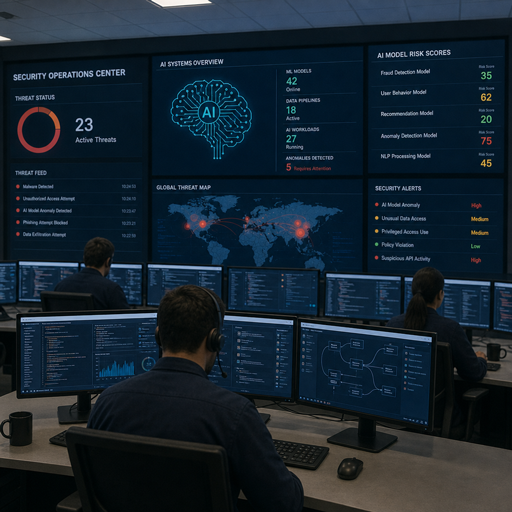
McKinsey’s 2026 outlook also emphasizes a compressed cyber defense window. AI can help defenders identify and patch vulnerabilities faster, but it can also help attackers discover and exploit weaknesses faster. The report points to the rise of zero-day pressure as a sign that traditional response timelines are under strain.
This makes cybersecurity and trustworthy systems a board-level issue, not merely an IT concern. As organizations deploy AI agents, connect operational technology, automate software development, and rely on more third-party platforms, their attack surface expands. Trust has to be designed into systems from the beginning.
A practical cybersecurity agenda for 2026 should include:
- Identity and access controls that reflect what humans, AI agents, vendors, and systems are allowed to do.
- Secure software pipelines that test AI-generated and human-written code before release.
- Continuous monitoring for unusual behavior across applications, infrastructure, and connected devices.
- Clear incident playbooks that define who decides, who communicates, and who shuts down risky activity.
- Governance for AI tools so employees do not introduce unmanaged data, model, or compliance risks.
The larger point is simple: as digital systems become more autonomous, security cannot remain reactive.
The physical world becomes the next digital frontier
One of the most interesting aspects of the mckinsey tech trends outlook is the shift from screen-based AI to physical AI. McKinsey describes AI moving into robotics, mobility, wearables, and industrial systems, where machines need perception, reasoning, and action in real environments.
That shift could reshape industries where work happens in warehouses, factories, hospitals, farms, roads, energy assets, and construction sites. The value is not only labor substitution. It can include safer inspections, more consistent quality, better asset utilization, faster logistics, and improved resilience in environments where skilled labor is scarce.
Still, physical deployment is harder than software rollout. Robots and autonomous systems must deal with messy environments, safety requirements, maintenance schedules, worker acceptance, and operational change. A pilot that works in a controlled setting may need substantial redesign before it scales across locations.
Immersive reality belongs in this same conversation. When digital information can be overlaid onto real tasks, it can support training, maintenance, design reviews, remote assistance, and frontline decision-making. The winning use cases will likely be those where the technology reduces friction in work that is already complex, expensive, or risky.
How should leaders respond to the McKinsey 2026 technology trends?
Leaders should respond by translating the trends into a focused business agenda rather than a long innovation wish list. The best starting point is to identify where a trend could change revenue, cost, risk, speed, customer experience, or strategic control, then decide whether to build, buy, partner, pilot, or monitor.
A useful planning approach includes five steps:
- Map trends to business priorities. Connect each relevant trend to a specific business problem, such as faster product development, lower downtime, better fraud detection, improved clinical workflows, or more resilient supply chains.
- Assess readiness honestly. Review data quality, architecture, cybersecurity, talent, vendor dependence, and change management capacity before scaling.
- Prioritize a small number of bets. Choose initiatives where the value case is clear and the organization has a realistic path to adoption.
- Design governance early. Define decision rights, risk controls, compliance expectations, model monitoring, and human oversight before deployment becomes widespread.
- Invest in talent and workflow redesign. Technology rarely creates full value if employees are not trained and processes remain unchanged.
This is where McKinsey insights are especially useful: the report’s methodology considers not only innovation and investment, but also interest, talent demand, and organizational adoption. That broader lens helps leaders distinguish between technologies that are exciting in theory and those that are gaining practical business traction.
A practical takeaway for 2026 planning
The biggest lesson from the McKinsey 2026 technology trends is that technology advantage is becoming a coordination challenge. Companies need to coordinate AI with infrastructure, security with speed, experimentation with governance, and innovation with the realities of talent, energy, capital, and regulation.
For some organizations, the right move will be aggressive investment in AI infrastructure, agentic workflows, or software development transformation. For others, the smarter path will be targeted pilots in robotics, immersive reality, advanced connectivity, or life sciences applications. In every case, the goal should be the same: use technology trends 2026 as a decision framework, not a hype checklist.
McKinsey’s outlook is a reminder that emerging technologies 2026 are not waiting politely at the edge of the business. They are moving into core operations, physical assets, scientific work, and strategic planning. Leaders who build the capabilities to evaluate, govern, and scale them will be better positioned to shape what comes next instead of reacting after the market has moved.