Technology has a material problem as much as it has an energy problem. Every device, sensor, accessory, package, and component depends on physical resources, many of which are difficult to recycle or slow to break down. Biodegradable tech materials offer a practical path toward green technology by replacing some conventional plastics, films, foams, and casings with sustainable materials designed to reduce long-term waste.
What are biodegradable tech materials?
Biodegradable tech materials are materials used in technology products, packaging, components, or accessories that can be broken down by microorganisms under the right conditions. They are often made from renewable resources such as plant starches, cellulose, algae, fungi, or bio-based polymers instead of purely fossil-based inputs. The goal is not to make every gadget disappear in a backyard compost pile, but to design materials that perform well during use and create fewer end-of-life problems afterward.
This matters because technology is everywhere: phones, wearables, medical devices, logistics sensors, cables, chargers, smart home products, and protective packaging. Even when electronics themselves are not fully biodegradable, parts of the surrounding ecosystem can be improved. Cases, trays, shipping materials, disposable components, labels, insulation, and low-risk non-electronic parts may be redesigned with compostable materials or other lower-impact alternatives.
It is also important to understand the word “biodegradable” carefully. A material may biodegrade only in specific industrial conditions, such as controlled heat, moisture, and microbial activity. That is why responsible sustainable tech design looks beyond marketing language and asks where the material will actually go after use.
Why sustainable materials are becoming part of tech design
For years, product teams focused mainly on performance, durability, cost, and aesthetics. Those still matter, but material impact is now part of the design conversation. Consumers are more aware of waste, companies are under pressure to reduce environmental harm, and product designers are looking for ways to use renewable resources without sacrificing reliability.
Sustainable materials can help reduce dependence on virgin fossil-based plastics, especially in short-life items. A protective shipping insert, for example, does not need to last for decades after it has delivered a device safely. A compostable or bio-based alternative may provide the same protective function while supporting a more circular approach.
In sustainable tech, the best material is not automatically the newest or most natural-sounding one. It is the material that fits the product’s purpose, expected lifespan, safety needs, repairability, and end-of-life pathway. A biodegradable film may be ideal for a temporary sensor housing, while a durable recycled metal may be better for a laptop body that should last for years.
Common sources behind biodegradable products
Many biodegradable products in the technology space begin with biological or renewable resources. These inputs are processed into materials that can replace conventional plastics or foams in certain uses. Each option has strengths and limits, so thoughtful selection matters.
Common material sources include:
- Plant starches: Often used in bio-based plastics, molded packaging, and protective fillers. They can be useful for short-life packaging but may require specific composting conditions.
- Cellulose: Derived from plant fibers and used in films, papers, coatings, and molded forms. It can support lightweight packaging and flexible material designs.
- Mushroom mycelium: Grown into custom shapes for cushioning and protective packaging. It is especially interesting for replacing foam in shipping applications.
- Algae-based materials: Explored for flexible films, foams, and experimental bioplastics. These materials may reduce reliance on land-intensive crops, depending on how they are produced.
- Bio-based polymers: Materials such as PLA and related blends can be used in packaging, cases, and printed parts, though compostability depends on formulation and disposal conditions.
- Natural fibers: Bamboo, hemp, flax, and similar fibers can reinforce composites or appear in accessories, casings, and packaging.
These materials are not interchangeable. A phone case needs impact resistance, grip, heat tolerance, and long-term stability. A shipping tray needs cushioning, stack strength, and low weight. Matching the material to the job is the difference between meaningful green technology and a product that sounds sustainable but fails in real use.

Where biodegradable materials fit in modern technology
Biodegradable tech materials are most practical where the product or component has a short service life, limited exposure to heat or moisture, and a clear disposal route. Packaging is the most obvious example. Device boxes, internal trays, cable wraps, labels, sleeves, and protective inserts can often be redesigned before the electronics themselves.
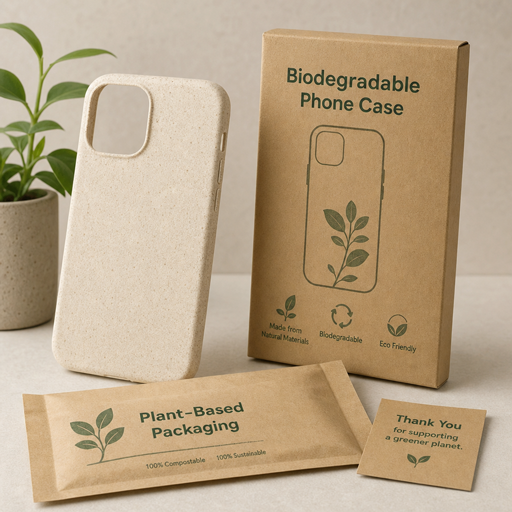
Accessories are another promising area. Phone cases, earbuds packaging, laptop sleeves, cable organizers, and wearable packaging can incorporate sustainable materials when durability requirements are moderate. Some products may combine biodegradable content with recycled materials or modular design to balance performance and lower impact.
There are also specialized use cases in agriculture, healthcare, research, and logistics. Temporary environmental sensors, disposable diagnostic housings, and single-use tracking components may benefit from materials that do not persist as long in the environment. However, electronics contain metals, batteries, circuits, and other elements that must still be handled responsibly. Biodegradable outer materials do not make an electronic device safe to discard anywhere.
A practical way to think about fit is by product lifespan:
|
Use case |
Material opportunity |
Key caution |
|---|---|---|
|
Shipping inserts |
Molded fiber, starch foam, mycelium |
Must protect products during transport |
|
Retail packaging |
Cellulose films, paper-based structures |
Coatings can affect recyclability or compostability |
|
Accessories |
Bio-based polymers, natural fiber blends |
Must withstand heat, wear, and handling |
|
Temporary sensors |
Biodegradable housings or substrates |
Electronics still need proper recovery |
|
Promotional products |
Compostable materials or reusable designs |
Avoid disposable items with vague claims |
Are compostable materials always the better choice?
Compostable materials are not always better; they are better only when the product design, local waste systems, and user behavior support composting. A compostable item that ends up in landfill may not deliver the intended benefit, and a biodegradable product mixed into the wrong recycling stream can create contamination. The right choice depends on the full life cycle, not just the label.
This is where many sustainability claims become confusing. “Biodegradable,” “compostable,” “bio-based,” and “recyclable” do not mean the same thing. A bio-based plastic may come from renewable resources but may not compost easily. A compostable material may need an industrial facility. A recyclable material may have a lower impact if it is collected and processed at scale.
Good sustainable tech communication should be specific. Instead of saying “eco-friendly packaging,” a company can explain whether the material is recyclable, industrially compostable, made with renewable content, or designed to reduce plastic use. Clear disposal instructions are just as important as the material itself.
Design principles for better sustainable tech
Sustainable materials work best when they are part of a larger design strategy. Swapping one material for another without changing product design, packaging volume, repair options, or disposal instructions may produce only a small improvement. The stronger approach is to design with the end in mind from the beginning.
Useful principles include:
- Design for the real lifespan. Durable products should use materials that last, while short-life items can prioritize compostable materials or easily recyclable formats.
- Reduce before replacing. The most sustainable package may be the one that uses less material overall, even before choosing a biodegradable option.
- Avoid mixed-material confusion. Layers, coatings, adhesives, and inserts can make disposal harder. Simpler structures are often easier to recycle or compost.
- Make disposal obvious. Labels should tell users what to do after use, using plain language rather than vague green claims.
- Protect product performance. A sustainable material that breaks, warps, or fails can create more waste through returns and replacements.
- Consider local infrastructure. A material is only practical if customers have a realistic way to dispose of it correctly.
These principles help companies avoid the trap of treating biodegradable products as a shortcut. Better materials matter, but they work best with smarter systems.
The challenges that still need solving
Biodegradable tech materials are promising, but they are not a perfect fix. Many options cost more than conventional materials, have narrower performance windows, or require composting systems that are not widely available. Some may struggle with moisture resistance, heat tolerance, strength, or consistency at scale.
There is also a risk of greenwashing. If a product is marketed as biodegradable without explaining conditions, timeframe, certifications, or disposal routes, customers may assume it can safely disappear in nature. That assumption can lead to littering or improper disposal. Responsible brands should avoid overstating what the material can do.
Another challenge is the complexity of electronics. A device may include plastics, glass, rare metals, adhesives, flame retardants, coatings, batteries, and circuit boards. Making one part biodegradable does not solve the entire waste stream. For true progress, biodegradable materials need to work alongside repairable design, take-back programs, recycled content, modular components, and better e-waste management.
How buyers can evaluate greener tech products
Consumers and business buyers do not need to be material scientists to make better choices. A few careful questions can separate meaningful sustainable tech from surface-level claims. The key is to look for specificity, not just green language.
Before choosing a product, ask:
- What part is biodegradable? Is it the device, the case, the packaging, or only one component?
- What is it made from? Look for named sustainable materials, renewable resources, or recycled inputs.
- How should it be disposed of? Clear instructions are more useful than broad claims.
- Does it require industrial composting? If so, check whether that option is available where the product will be used.
- Is the product durable enough? A greener material should still perform for its intended lifespan.
- Can the electronic parts be repaired, reused, or recycled? Biodegradable packaging does not replace responsible e-waste handling.
Businesses can apply the same thinking to procurement. Packaging suppliers, accessory manufacturers, and hardware partners should be able to explain material composition, performance limits, and disposal guidance. If the answer is vague, the sustainability claim may not be ready for serious use.
A practical future for green technology
The future of green technology will not be built from a single miracle material. It will come from many better decisions: using fewer resources, choosing sustainable materials where they make sense, designing products for longer life, and creating clearer paths for reuse, recycling, or composting. Biodegradable tech materials are one important part of that broader shift.
The most exciting progress is likely to happen in the places where material lifespans are currently mismatched. Packaging that lasts centuries after protecting a product for a few days is an obvious target. Disposable accessories, temporary devices, and short-term protective parts also deserve redesign.
For consumers, the takeaway is simple: choose products with clear material claims, practical disposal instructions, and durable design. For companies, the opportunity is bigger: build sustainable tech that performs well, communicates honestly, and reduces waste without asking customers to decode complicated environmental language. Biodegradable materials are not the whole answer, but used wisely, they can help technology become lighter on the planet it depends on.