Technology is no longer something we use only at work or during special moments. It shapes how we communicate, shop, learn, move, manage our homes, and even relax. Understanding how technology changes everyday life helps us use it with more intention instead of letting every new tool quietly take over our attention.
How does technology impact daily life?
Technology impacts daily life by making many ordinary tasks faster, more connected, and more personalized, while also creating new habits and challenges. From checking the weather before leaving home to paying bills on a phone, technology in life often works in the background. The practical question is not whether we use it, but how thoughtfully we use it.
The impacts of technology in our daily life are easy to overlook because they are woven into routines. A calendar reminder can prevent a missed appointment. A video call can keep a family close across distance. A fitness app can turn vague health goals into visible progress. At the same time, constant notifications, screen fatigue, and privacy concerns remind us that convenience still needs boundaries.
The 7 main ways technology impacts your daily life
When people talk about the 7 main ways technology impacts your daily life, they usually mean the areas where digital tools have become part of normal living. These areas overlap, but each one changes daily habits in a different way.
- Communication becomes instant. Messages, video calls, voice notes, and group chats make it easier to stay connected. The benefit is speed, but the challenge is learning when not to respond immediately.
- Work becomes more flexible. Cloud platforms, project tools, and remote meetings allow many people to work from more places. This can save time, but it can also blur the line between work and home.
- Learning becomes more accessible. Online courses, tutorials, podcasts, and digital libraries make education easier to fit around real life. People can learn a skill in small sessions instead of waiting for a formal class.
- Shopping and payments become simpler. Digital wallets, online stores, delivery apps, and subscription services reduce friction. The downside is that spending can become almost too easy.
- Health habits become more trackable. Wearables, telehealth, medication reminders, and wellness apps help people notice patterns. These tools work best when they support professional advice rather than replace it.
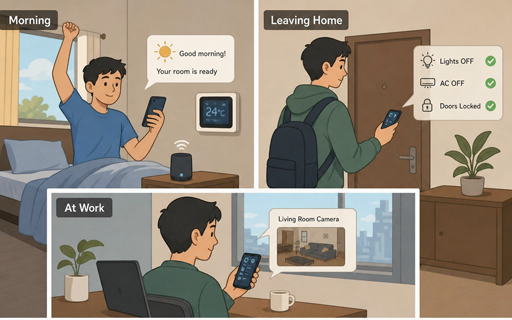
- Homes become more automated. Smart speakers, thermostats, cameras, and appliances add comfort and control. They also require attention to security settings and data sharing.
- Entertainment becomes on demand. Streaming, gaming, social media, and digital publishing give people endless choices. The key is choosing content deliberately rather than scrolling by default.
Some articles describe the 6 main ways technology impacts your daily life by combining shopping with entertainment or home automation with personal productivity. Either way, the core idea is the same: technology and living are now deeply connected.
Communication feels closer, faster, and sometimes louder
One of the clearest examples of how technology impacts daily life is communication. A message that once required a letter, landline call, or in-person visit now takes seconds. Families can share photos instantly, teams can collaborate across time zones, and friends can stay connected even when they rarely meet face to face.
But faster communication does not always mean better communication. Digital conversations can miss tone, context, and patience. Healthy use means choosing the right channel for the moment: a quick text for simple updates, a call for sensitive topics, and in-person time when connection matters most.
A helpful approach is to set communication norms for yourself. Silence nonessential alerts during focused work. Avoid checking messages the moment you wake up. Use technology to strengthen relationships, not to create a constant sense of urgency.
Daily decisions are becoming more data-driven
Technology gives ordinary people access to information that once required experts, printed guides, or trial and error. Navigation apps suggest routes. Budgeting tools categorize spending. Smart devices recommend energy settings. Search engines and AI assistants help people compare options before they buy, cook, travel, or fix something.
This can make everyday choices more confident. If you are planning dinner, you can find recipes based on what is already in the kitchen. If you are trying to save money, an app can reveal repeated expenses you forgot about. If you are building a habit, reminders and trackers can show whether your plan is realistic.
The risk is outsourcing too much judgment. Data can guide decisions, but it should not replace common sense, values, or personal context. The best use of technology is a partnership: let tools organize information, then let human judgment make the final call.
How is technology changing home life?
Technology is changing home life by turning the home into a more connected, controllable, and media-rich space. Smart devices can adjust lighting, manage temperature, monitor doors, play music, and support daily routines. For busy households, these small conveniences can reduce mental load.
For example, a shared digital calendar can help a family coordinate school events, appointments, meals, and chores. A smart speaker can set timers while someone cooks. A robot vacuum can handle a repetitive task. None of these tools is essential, but each can remove a small point of friction.
Still, connected homes need thoughtful setup. Use strong passwords, update devices, review privacy settings, and avoid buying gadgets that solve problems you do not actually have. Technology in life should make a home feel calmer and more functional, not more complicated.
Work, learning, and creativity move beyond one place
Technology has changed where productivity happens. A laptop, phone, and internet connection can turn a kitchen table, library, train seat, or small office into a workspace. For students and lifelong learners, digital tools make research, writing, practice, and feedback more flexible.
Creativity has changed too. People can record music, edit videos, publish writing, design graphics, or launch small projects with tools that are easier to access than in the past. This gives more people the chance to create, test, and share ideas without waiting for permission from traditional gatekeepers.
The tradeoff is distraction. The same device used for deep work also holds entertainment, messages, and endless browsing. Practical productivity often comes from simple boundaries: close unused tabs, schedule focused blocks, keep a short task list, and separate creation time from consumption time.
What are the downsides of technology and living online?
The downsides of technology and living online include distraction, privacy concerns, comparison, misinformation, reduced face-to-face interaction, and overdependence on digital systems. These risks do not mean technology is bad. They mean people need habits that protect attention, relationships, and wellbeing.
A balanced digital life usually includes intentional limits. That may mean keeping phones away from meals, turning off nonessential notifications, checking sources before sharing information, or creating device-free time before bed. Small boundaries are often more sustainable than dramatic digital detoxes.
Use this quick checklist to make technology work better for you:
- Review your notifications: Keep alerts for people and tasks that truly matter.
- Protect your privacy: Update passwords, use multi-factor authentication when available, and check app permissions.
- Audit your apps: Remove tools you do not use or that mostly waste time.
- Create screen-free spaces: Try the dinner table, bedroom, or first hour of the morning.
- Choose active use over passive use: Create, learn, plan, or connect instead of only scrolling.
- Pause before upgrading: Buy new devices for a real need, not just novelty.
Everyday technology works best when it serves real needs
The most useful technology is not always the newest or most advanced. It is the tool that solves a real problem with minimal friction. A simple notes app may be more valuable than a complex productivity system if it helps you remember ideas. A basic video call may matter more than an expensive device if it keeps you connected to someone you love.
When thinking about how technology changes everyday life, focus on fit. Does the tool save time, reduce stress, improve access, support health, strengthen relationships, or help you learn? If it does, it may deserve a place in your routine. If it mainly adds noise, it may be worth limiting or removing.
A thoughtful approach to a connected life
Technology will keep changing, but the goal of daily life remains familiar: communicate well, use time wisely, care for your health, learn, work, rest, and stay connected to other people. Digital tools can support all of that when used with purpose.
The real value of technology in life is not convenience alone. It is the ability to make ordinary moments smoother, more informed, and more flexible. When you choose tools intentionally and set healthy boundaries, the impacts of technology in our daily life become less overwhelming and more useful.