A modern digital lifestyle is the everyday blend of devices, platforms, apps, data, and online services that shape how people work, shop, relax, learn, and stay connected. The biggest shift is not simply that people use more modern tech; it is that digital living now sits inside ordinary routines, often making tasks faster, more personalized, and more flexible. Understanding these digital trends helps individuals build better digital habits and helps brands design experiences that feel useful rather than intrusive.
What does a modern digital lifestyle really mean?
A modern digital lifestyle means using connected tools as part of daily decision-making, communication, productivity, entertainment, and home management. It can include smartphones, wearables, smart speakers, mobile banking, streaming, online learning, telehealth, food delivery, connected cars, remote work tools, and AI assistants. In the United States, Pew Research Center has reported that most adults use the internet and smartphones, with a sizable share saying they are online almost constantly, which shows how deeply connected living has become embedded in daily life. (pewresearch.org)
The phrase can sound futuristic, but most of it is already familiar. Checking a map before leaving home, saving payment details in a digital wallet, comparing products through reviews, joining a video meeting, or using an app to manage fitness are all examples of digital living. The trend is less about owning every new device and more about building a network of services that reduce friction.
The rise of convenience-first digital habits
Modern convenience is one of the strongest forces behind digital adoption. People return to tools that save time, remove uncertainty, or make a task easier to repeat. A grocery app that remembers past orders, a calendar that sends travel-time reminders, or a streaming service that continues across devices all create a sense of low-effort control.
These digital habits often form quietly. A person tries one feature because it solves a small problem, then gradually builds a routine around it. Over time, the habit becomes the default, and the older method feels slower or less reliable.
Common convenience-first habits include:
- Mobile-first planning: using phones for directions, reservations, payments, reminders, and quick research.
- Subscription-based access: relying on recurring services for entertainment, software, wellness, food, and household needs.
- One-tap transactions: using stored preferences, digital wallets, saved addresses, and auto-fill to reduce repetitive steps.
- On-demand support: expecting chat, self-service portals, delivery tracking, and instant notifications.
- Cross-device continuity: starting a task on one screen and finishing it on another without losing progress.
Convenience is powerful, but it needs boundaries. When every app asks for attention, convenience can turn into distraction. The healthiest digital habits usually combine speed with intention: notifications are limited, recurring payments are reviewed, and useful automation does not replace thoughtful choice.
Connected living is moving beyond the phone
Smartphones remain central to the modern digital lifestyle, but connected living now extends into homes, cars, workplaces, and public spaces. DataReportal’s global overview notes that mobile phones account for a large share of internet access and web traffic, reinforcing the phone’s role as the control point for many digital experiences. (datareportal.com)
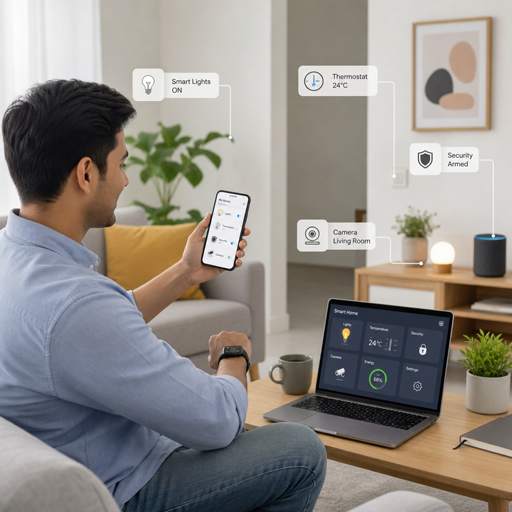
At home, connected devices can manage lighting, security, climate, cleaning schedules, music, and shopping lists. At work, cloud tools support collaboration across time zones, while messaging platforms replace many quick meetings. In wellness, wearables and apps turn activity, sleep, and nutrition into trackable patterns.
The benefit is not the device itself. The benefit is coordination. A connected home can reduce repetitive chores. A connected workplace can make shared information easier to find. A connected health routine can help people notice patterns they might otherwise miss. The best modern tech works in the background and supports human priorities rather than demanding constant attention.
Why are digital trends changing work, shopping, and entertainment?
Digital trends are changing these areas because they give people more choice, more information, and more control over timing. Work is no longer tied only to a single office setup, shopping is no longer limited to store hours, and entertainment is no longer scheduled around fixed broadcasts. Consumers also compare prices, reviews, formats, and delivery options before deciding, which raises expectations for speed and clarity.
In work, hybrid routines have made digital communication skills more important. Clear writing, file organization, calendar discipline, and thoughtful video meeting habits now affect productivity as much as technical knowledge. Tools can help teams move faster, but only when norms are clear.
In shopping, digital living has made discovery more fluid. A person may see a product in a short video, compare reviews, check availability, look for a discount, and complete the purchase from a phone. McKinsey’s consumer research continues to track how digital behavior shapes spending, channel choice, and brand expectations, especially as consumers balance convenience with value. (mckinsey.com)
In entertainment, people expect personalization. Music, video, games, newsletters, podcasts, and creator content now compete inside the same attention economy. This gives users more freedom, but it also makes curation essential. Without intentional choices, entertainment platforms can easily fill every empty moment.
AI is becoming a practical layer in everyday life
Artificial intelligence is no longer limited to technical teams or experimental tools. It is becoming a practical layer across search, writing, scheduling, customer service, photo editing, product recommendations, language translation, and personal productivity. For many people, AI is less a separate destination and more a feature inside the apps they already use.
The most useful AI habits are specific. Instead of asking a broad tool to “make life easier,” people get better results when they use it for defined tasks: summarizing notes, drafting a polite email, comparing options, building a checklist, organizing ideas, or simplifying complex text. The value comes from reducing mental load, not handing over judgment.
A responsible AI routine should include:
- Check the output: treat AI responses as drafts, not final authority.
- Protect private details: avoid entering sensitive financial, medical, legal, or personal information unless the tool and context are appropriate.
- Use clear prompts: explain the goal, audience, constraints, and preferred format.
- Keep the human decision: use AI to support thinking, not replace accountability.
Privacy, attention, and balance matter more than ever
A modern digital lifestyle creates value, but it also creates trade-offs. More connected services can mean more data collection, more subscriptions, more alerts, and more screen time. Good digital living requires design on the user’s side: deciding which tools deserve access, which notifications deserve attention, and which habits deserve to stay.
Digital wellbeing is not about rejecting technology. It is about using it with a clear purpose. A phone can support learning, connection, creativity, navigation, and safety. The same phone can also fragment attention if every app is allowed to interrupt.
A simple digital lifestyle audit can help:
- Review app permissions and remove access that no longer makes sense.
- Turn off nonessential notifications, especially for apps that create urgency without value.
- Cancel unused subscriptions and document recurring digital expenses.
- Separate work and personal channels where possible.
- Schedule device-free windows for sleep, meals, exercise, or focused work.
- Keep important files, passwords, and backups organized before there is a problem.
How can you build a healthier modern digital lifestyle?
You can build a healthier modern digital lifestyle by choosing tools around your goals instead of building your day around your tools. Start with the routines that matter most: communication, money, health, work, learning, entertainment, and home management. Then decide where modern convenience genuinely improves life and where analog boundaries still serve you better.
A practical approach is to simplify first. Remove duplicate apps, consolidate calendars, clean up cloud storage, and create a password routine that is secure and manageable. Next, automate low-risk tasks, such as reminders, bill alerts, backups, shopping lists, or recurring household routines. Finally, set limits around high-friction areas like social feeds, late-night scrolling, and unnecessary alerts.
The goal is not to chase every new platform. The goal is to make digital habits more intentional, secure, and useful. When modern tech supports your real priorities, connected living becomes less overwhelming and more empowering.
The future of digital living is personal, connected, and selective
Modern digital lifestyle trends point toward a future where technology becomes more personalized, more integrated, and more ambient. Devices will keep talking to one another, services will keep learning preferences, and people will expect digital experiences to be fast, flexible, and easy to manage. DataReportal’s recent reporting also highlights continued growth in global internet, mobile, social, and AI-related activity, showing that digital living is still expanding rather than slowing down. (datareportal.com)
The most successful users will not necessarily be the people with the newest gadgets. They will be the people with the clearest systems. A strong modern digital lifestyle uses technology for access, efficiency, creativity, and connection while protecting time, privacy, money, and attention. That balance is the real trend worth following.