Health-Focused Wearables and Skin Health Diagnostics bring two fast-moving areas of wellness together: continuous body monitoring and more accessible skin assessment. Fitness trackers, activity trackers, smart health devices, health apps, and other forms of wearable technology can help people notice patterns in sleep, stress, movement, temperature, hydration habits, and skin changes. This guide explains how wearable health tech fits into everyday skin awareness, what it can and cannot do, and how to use it responsibly alongside professional care.
What do health-focused wearables have to do with skin health?
Health-focused wearables can support skin health by tracking body signals and lifestyle patterns that often affect the skin, such as sleep consistency, activity levels, temperature changes, stress markers, and recovery habits. They do not replace a dermatologist or clinical diagnosis, but they can help users notice changes earlier, record symptoms more clearly, and connect skin flare-ups with possible triggers.
Skin is not separate from the rest of the body. It responds to inflammation, hormones, environmental exposure, sweat, friction, sleep quality, medication changes, and immune activity. Because many smart health devices already collect information related to daily routines, they can become useful context tools when someone is trying to understand recurring dryness, irritation, acne flare-ups, redness, rashes, or sensitivity.
The value is not simply in the device itself. It is in the pattern: what was happening before a flare-up, what changed afterward, and whether the same sequence repeats. A wearable may show poor sleep, elevated stress signals, reduced exercise, unusual temperature patterns, or changes in routine around the same time skin symptoms appear. That context can make conversations with a healthcare professional more precise.
The connection between daily health data and the skin barrier
The skin barrier is the outer protective layer that helps retain moisture and defend against irritants. When the barrier is stressed, the skin may feel tight, itchy, flaky, inflamed, or more reactive than usual. Wearable technology cannot directly explain every barrier issue, but it can help people track daily behaviors that influence barrier function.
Sleep is one of the most common examples. If a health app shows several nights of poor sleep before a flare-up, that does not prove sleep caused the change. It does, however, give the user a practical clue to investigate. The same applies to intense workouts, excessive sweating, cold weather exposure, travel, menstrual cycle patterns, or high-stress periods.
Activity trackers can also reveal routine shifts that the user might otherwise forget. A person may not remember that they doubled their outdoor training time, changed their commute, wore a tight fitness band during long workouts, or slept less during a busy week. When that information sits next to a skin diary, patterns become easier to spot.
The main types of wearable health tech used for wellness monitoring
Wearable health tech includes a wide range of devices, from simple fitness trackers to advanced smart health devices that monitor multiple signals. Most consumer tools are designed for wellness and trend awareness rather than medical diagnosis. Understanding the categories helps users set realistic expectations.
Fitness trackers and activity trackers
Fitness trackers and activity trackers commonly monitor movement, steps, workouts, estimated energy expenditure, sleep, and heart-related metrics. For skin health, their usefulness comes from routine mapping. They help users identify whether skin changes coincide with more sweat, increased training intensity, less rest, or a sudden drop in activity.
For example, someone who experiences recurring irritation under a watch band may discover that it happens after long sweaty workouts or when the band is worn too tightly. Another person may notice facial flushing after high-intensity sessions. The device does not diagnose the skin condition, but it helps capture timing, duration, and frequency.
Smartwatches and smart rings
Smartwatches and smart rings often collect broader wellness data, including sleep stages, resting heart trends, skin or body temperature variation, stress-related metrics, and recovery indicators. These features can be helpful when a user wants to understand whether flare-ups seem connected to poor recovery, travel, illness, or a disrupted routine.
Temperature and recovery trends should be interpreted carefully. A single unusual reading may be meaningless, while repeated patterns may be worth noting. The most useful approach is to compare device data with visible symptoms, personal notes, and professional advice when symptoms persist.
Connected patches and sensor-based devices
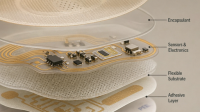
Some wearable technology uses patches or adhesive sensors to collect data from the skin surface. Depending on design, these may track temperature, sweat, motion, or other physiological signals. Because patches sit directly on the skin, they can be useful in certain monitoring situations, but they can also cause irritation in people with sensitive skin.
Users should pay attention to redness, itching, adhesive reactions, or skin breakdown beneath a patch. Rotating placement, following wear-time instructions, and removing devices when irritation appears can help reduce problems. Anyone with fragile skin, eczema-prone skin, allergies, or a history of adhesive reactions should be especially cautious.
Health apps and skin tracking tools
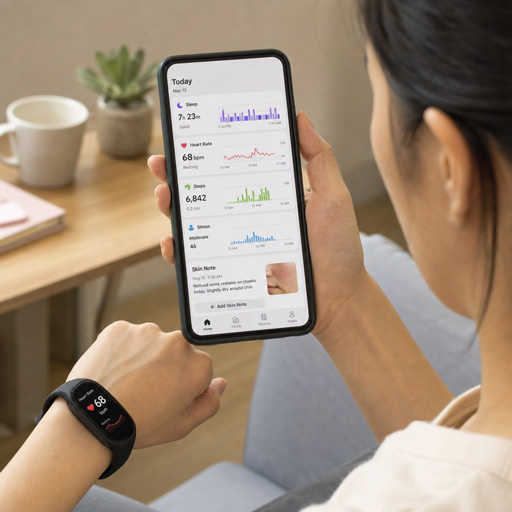
Health apps are the bridge between raw wearable data and useful interpretation. Some apps focus on workouts and recovery, while others support symptom journaling, skin photos, medication reminders, habit tracking, or environmental notes. The best setup is often a combination: wearable data for body and lifestyle patterns, plus deliberate skin notes for visible changes.
A helpful skin log does not need to be complicated. It may include the date, location of symptoms, appearance, discomfort level, skincare products used, sun exposure, workouts, stress, sleep, and anything unusual. Over time, this record can become far more useful than memory alone.
How can wearable technology support skin health diagnostics?
Wearable technology can support skin health diagnostics by providing context before, during, and after a skin concern appears. The device may not diagnose a rash, mole, infection, or inflammatory condition, but it can help document patterns, support remote monitoring, and give clinicians clearer information when evaluating symptoms.
The word “diagnostics” should be used carefully. In a clinical setting, diagnosis may involve physical examination, medical history, imaging, dermoscopy, lab testing, biopsy, or other professional methods. Consumer wearable health tech is more often a support tool. It can help users decide when to seek care, provide trend data, and make follow-up conversations more informed.
Earlier awareness of visible changes
Many skin concerns become easier to manage when noticed early. Health apps that encourage regular skin photos or symptom logging can help users see gradual changes they might otherwise overlook. This is especially useful for recurring conditions, treatment monitoring, or checking whether a product or routine change is helping.
Photography must be consistent to be meaningful. Lighting, distance, angle, and timing can all affect how skin appears. A weekly image taken in the same location may be more useful than random photos taken under different lighting every day.
Better trigger identification
Skin symptoms often have multiple triggers. Sweat, friction, allergens, stress, diet changes, weather, sleep disruption, hormonal shifts, and skincare products may all play a role. Wearables help by capturing some of the routine data around these triggers.
A user might notice that flare-ups happen after intense exercise followed by delayed showering, or after several nights of short sleep. Another might find that symptoms occur when stress and poor recovery overlap. These insights are not final answers, but they can guide practical changes and help a professional ask better questions.
Stronger follow-up conversations with clinicians
When someone visits a dermatologist or primary care provider, details matter. “It comes and goes” is less useful than “it has appeared four times in the past two months, usually after long runs, and it lasts two to three days.” Wearable data and health app notes can support that level of detail.
The goal is not to overwhelm the clinician with every metric. It is to bring a concise pattern: when symptoms started, what they looked like, what changed in routine, what helped, what made them worse, and whether wearable trends showed anything unusual. This can make appointments more productive.
Practical ways to use wearables for skin awareness
A wearable is most useful when the user has a simple routine for collecting and reviewing data. Without a plan, health data can become noise. With a plan, it can become a practical record of what the skin is experiencing over time.
Start with one skin concern rather than trying to track everything. For example, focus on acne flare-ups, hand dermatitis, facial redness, scalp irritation, dryness, or irritation under a device strap. Then choose the wearable metrics and notes most likely to matter.
A practical skin-awareness routine might include:
- Choose the skin issue to monitor. Define what you are watching, where it appears, and what counts as a flare-up or improvement.
- Track symptoms consistently. Note appearance, discomfort, location, and duration in a health app or simple diary.
- Add photos when useful. Use consistent lighting and distance so images are easier to compare.
- Review wearable trends. Look at sleep, activity, stress, recovery, temperature variation, and workout intensity around symptom changes.
- Record skincare and exposure changes. Include new products, sun exposure, shaving, masks, detergents, travel, or weather shifts.
- Look for repeated patterns. One event may be random; repeated timing is more meaningful.
- Share concise summaries with a professional. Bring the most relevant patterns rather than every data point.
This process helps reduce guesswork. It also discourages overreacting to isolated readings, which is important because wearable data can be imperfect.
Skin concerns where tracking may be especially useful
Wearable health tech can be helpful for many common skin concerns, especially when symptoms come and go. It works best when paired with observation, common sense, and timely medical care for symptoms that are severe, persistent, painful, spreading, or unusual.
Exercise-related irritation and sweat reactions
People who exercise frequently may experience clogged pores, chafing, friction rashes, or irritation under straps and tight clothing. Fitness trackers can help connect symptoms with workout length, intensity, sweat levels, and recovery habits. If irritation appears after specific activities, changing clothing, shower timing, band fit, or cleansing routines may help.
The skin under wearable devices deserves special attention. Trapped sweat, friction, soap residue, and tight bands can all contribute to irritation. Cleaning the device, drying the skin, loosening the fit when possible, and taking breaks from wear can reduce unnecessary stress on the skin.
Sleep and stress-related flare-ups
Many people suspect that stress or poor sleep affects their skin, but they may struggle to confirm the pattern. Smart health devices that track sleep consistency and stress-related signals can provide helpful context. The point is not to obsess over every score, but to see whether flare-ups repeatedly follow periods of poor recovery.
If the pattern is consistent, the next step may be improving sleep routines, reducing late-night screen time, adjusting workout recovery, or practicing stress-management habits. These changes may support overall wellness even when they do not fully resolve the skin concern.
Temperature, redness, and sensitivity patterns
Some wearables monitor temperature trends, which may be useful context when skin feels unusually warm, flushed, or reactive. Temperature changes can relate to many factors, including exercise, environment, illness, hormonal patterns, or local irritation. Because these readings are not a skin diagnosis, they should be viewed as part of a broader picture.
Users should be cautious with persistent warmth, swelling, pain, spreading redness, fever, or signs of infection. Those symptoms need professional attention rather than app-based monitoring alone.
Product reactions and routine changes
Skin reactions often appear after a new product, detergent, sunscreen, cosmetic, fragrance, or topical treatment enters the routine. A health app can help users record when a product was started and when symptoms appeared. Wearable data may add context, such as whether exercise, sweat, or sleep disruption also changed at the same time.
This is especially helpful because skin reactions are not always immediate. A simple timeline can prevent people from blaming the wrong product or changing too many things at once.
Data quality, privacy, and realistic expectations
Wearable health tech works best when users understand its limits. Consumer devices estimate many metrics rather than measuring them with clinical precision. Algorithms may vary by device, and readings can be affected by fit, movement, skin tone, tattoos, temperature, moisture, and user behavior.
That does not make the data useless. It means the most valuable insights usually come from trends, not isolated numbers. If a metric changes once, it may not matter. If the same pattern appears repeatedly with the same skin symptoms, it may be worth discussing or adjusting habits around it.
Privacy also matters. Health apps can collect sensitive information about routines, body signals, photos, location, and medical concerns. Before using any app for skin tracking, users should review what data is collected, how it is stored, whether it is shared, and how to delete it.
A responsible wearable health checklist includes:
- Use trends, not single readings. Look for repeated patterns over days or weeks.
- Keep notes simple and consistent. A short daily log is more useful than an intense routine that stops after three days.
- Protect skin photos. Store images only in apps or locations you trust.
- Check privacy settings. Limit unnecessary sharing and permissions.
- Avoid self-diagnosing serious symptoms. Use data to support care, not replace it.
- Watch for device-related irritation. Clean wearables regularly and give skin breaks.
- Seek care when symptoms are concerning. Pain, rapid spreading, bleeding, infection signs, changing moles, or persistent rashes deserve professional evaluation.
Choosing smart health devices for skin-focused wellness
The right device depends on the user’s goal. Someone interested in exercise-related irritation may need a reliable activity tracker and a simple symptom log. Someone focused on sleep and stress patterns may benefit from a device with strong sleep and recovery tracking. Someone monitoring visible skin changes may prioritize a secure health app with photo documentation.
When comparing options, focus less on the longest feature list and more on daily usability. A device that is comfortable, easy to clean, and simple to sync will usually be more useful than a complex tool that becomes annoying after a week.
Consider these selection factors:
- Comfort and materials. Bands, adhesives, and sensors should not irritate the skin during normal use.
- Battery life and charging habits. If the device is always off or charging, the data record will be incomplete.
- Relevant metrics. Sleep, activity, workout intensity, recovery, temperature trends, and stress-related indicators may be useful depending on the skin concern.
- App quality. The health app should make it easy to review trends and add notes.
- Photo and symptom logging. For visible skin tracking, consistent documentation matters.
- Privacy controls. Sensitive wellness and skin data should be easy to manage.
- Export or sharing options. Being able to summarize or share information can help during appointments.
No device needs to do everything. The best setup is the one that helps the user notice meaningful patterns without creating anxiety or data overload.
How should health apps present skin and wearable data?
Health apps should present skin and wearable data in a way that is clear, contextual, and careful about claims. Users need practical guidance, not alarming conclusions or vague scores. A useful app helps people record what they see, connect it with routine patterns, and understand when professional care is appropriate.
The strongest experience is often simple. A timeline that places skin notes, photos, sleep, activity, stress, and product changes together can be more helpful than a complicated dashboard. The user should be able to answer: What changed, when did it change, and did it happen before?
Good health app design for skin awareness should include:
- Plain-language explanations that clarify what each metric may suggest and what it cannot prove.
- Custom symptom notes so users can track the details that matter to their condition.
- Consistent photo prompts that encourage comparable images over time.
- Trigger tagging for sweat, stress, sleep, weather, products, diet changes, travel, and menstrual cycle patterns when relevant.
- Clear escalation guidance that encourages professional care for urgent or persistent symptoms.
- Data controls that allow users to manage, export, or delete sensitive records.
The app should avoid making users feel as if every blemish or reading is a crisis. Skin tracking should create clarity and confidence, not constant monitoring stress.
Best practices for using wearable health tech without overtracking
Wearable technology can be empowering, but too much tracking can become distracting. The healthiest approach is to collect enough information to support decisions, then step back. Skin health is affected by many factors, and not every change has a clear cause.
A balanced tracking plan sets boundaries. Users might review trends once or twice a week instead of checking every metric multiple times per day. They might track one active concern for a month, then stop if no meaningful pattern appears. This keeps wearable health tech useful rather than overwhelming.
It also helps to separate wellness experiments from medical treatment. Adjusting shower timing after workouts or improving sleep hygiene is reasonable. Ignoring a spreading rash because an app score looks normal is not. Devices are tools for awareness; professional evaluation remains essential when symptoms raise concern.
The future of wearable technology in skin health
The relationship between wearable technology and skin health is likely to keep expanding. Sensors may become more comfortable, health apps may become better at combining lifestyle and skin data, and remote care may use patient-generated records more often. The biggest opportunity is not replacing clinicians, but giving people better information between visits.
Future smart health devices may place more emphasis on skin-contact comfort, environmental exposure, hydration-related behaviors, and personalized routines. Skin-focused health apps may also improve how they organize photos, symptom notes, and wearable trends. As these tools mature, transparency will matter: users should know what is measured, what is estimated, and what requires medical interpretation.
For now, the practical path is clear. Use fitness trackers and activity trackers to understand routines. Use health apps to document visible changes. Use wearable health tech to identify patterns and prepare better questions. And when a skin issue is new, changing, painful, persistent, or concerning, use that information to support timely professional care.
Key takeaways
Health-Focused Wearables and Skin Health Diagnostics are most useful when treated as a partnership between technology, personal observation, and clinical judgment. Wearables can reveal patterns in activity, sleep, stress, recovery, and temperature trends, while skin logs and photos show what is happening on the surface.
The most effective users do three things well: they track consistently, interpret cautiously, and seek professional care when needed. They do not expect a smartwatch or health app to diagnose every concern. Instead, they use smart health devices to build a clearer picture of their daily health and how their skin responds.
For anyone exploring wearable health tech, the goal should be practical awareness. A good system helps you notice changes, reduce avoidable triggers, protect sensitive data, and have better conversations with healthcare professionals. That is where wearable technology becomes truly valuable for skin health: not as a replacement for expertise, but as a smarter way to understand the patterns your skin has been showing all along.