Synthetic biology and precision fermentation are reshaping how researchers, manufacturers, and food innovators think about making useful molecules. Instead of relying only on extraction from plants, animals, or petrochemical routes, the field increasingly uses engineered cells, DNA design, fermentation systems, and data-driven testing to produce targeted proteins, enzymes, flavors, materials, and therapies. The result is not one technology but a platform shift: biology is becoming a programmable production system, with major opportunities and equally important questions around safety, scale, regulation, and public trust.
What is synthetic biology, and why does it matter now?
Synthetic biology is the design and construction of new biological parts, devices, and systems, as well as the redesign of existing biological systems for useful purposes. It matters now because DNA sequencing, DNA synthesis, automation, genome editing, computational biology, and fermentation infrastructure have become mature enough to move ideas from the lab toward real products in medicine, food, agriculture, materials, and industrial manufacturing. The National Institute of Biomedical Imaging and Bioengineering describes the field as combining biology, engineering, genetics, chemistry, and computer science to create or modify biological systems in predictable, efficient ways. (nibib.nih.gov)
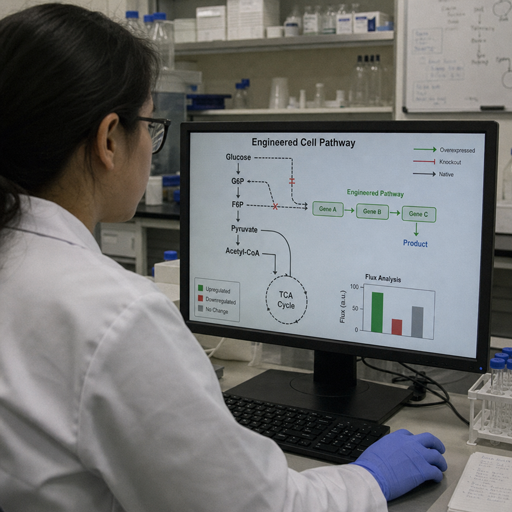
At its simplest, synthetic biology treats cells less like mysterious black boxes and more like living systems that can be designed, tested, and improved. A scientist may add a gene that gives a microbe a new function, redesign a pathway so a cell makes more of a desired molecule, or build a biological circuit that turns a cellular response on only when a certain signal is present. That engineering mindset is what separates modern synthetic biology from older forms of genetic modification.
The practical appeal is clear. If a target molecule is hard to harvest, expensive to purify, dependent on a fragile supply chain, or produced through a wasteful process, biology may offer another route. The hard part is making that route reliable, safe, affordable, and scalable outside the controlled environment of a research lab.
From gene editing to biological programming
Synthetic biology did not appear overnight. It grew from decades of molecular biology, recombinant DNA work, metabolic engineering, fermentation science, and genome research. Early biotechnology proved that organisms could be modified to make useful products. Synthetic biology expanded that idea by asking whether biological systems could be composed from standardized parts, modeled before they were built, and optimized through repeated design-build-test-learn cycles.
The distinction between synthetic biology and genome editing is useful but not absolute. Genome editing often focuses on targeted changes to an organism’s own DNA. Synthetic biology may use editing, but it often goes further by adding longer DNA sequences, designing pathways, or introducing entirely new genetic programs. The National Human Genome Research Institute notes that synthetic biology researchers may stitch together long stretches of DNA and insert them into an organism’s genome, while genome editing tools are often used for smaller changes. (genome.gov)
That shift has changed how teams approach biological problems. A food scientist can think in terms of flavor molecules and protein functionality. A materials company can think in terms of monomers, binders, pigments, or fibers. A therapeutics team can think in terms of cell behavior, targeted delivery, or controlled gene expression. In each case, the question becomes: what biological system could produce, sense, transform, or deliver the desired output?
Precision fermentation as a bridge between biology and manufacturing
Precision fermentation is one of the most visible synthetic biology applications because it connects engineered biology with a familiar industrial process. Fermentation has been used for thousands of years in food and beverage production, but precision fermentation is more targeted. It uses microorganisms such as yeast, bacteria, or fungi in controlled systems to produce specific products, including proteins, enzymes, vitamins, and other bioactive substances. (fao.org)
The “precision” comes from directing the organism toward a defined output. Instead of fermenting grapes into wine or milk into yogurt, a company may engineer a microbe to produce a specific dairy protein, egg protein, enzyme, sweetener, pigment, lipid, fragrance molecule, or specialty chemical. After fermentation, the target ingredient is separated, purified, and formulated for its intended use.
This makes precision fermentation a bridge technology. It keeps the scale logic of industrial fermentation but adds the design logic of synthetic biology. The microbe is not usually the final product; it is the production host. The output may be an ingredient that behaves like a familiar molecule but can be made without the same agricultural, animal-derived, or petrochemical input.
A simplified precision fermentation workflow
A typical workflow includes several stages, each of which affects cost, quality, and scalability:
- Choose the target molecule. The team identifies the protein, enzyme, flavor, fat, vitamin, or other compound it wants to produce.
- Design or select the genetic instructions. Scientists determine what DNA sequence or pathway is needed for the host organism to make the molecule.
- Engineer the production strain. The DNA is introduced into a microbial host, and the strain is screened for performance.
- Optimize fermentation conditions. Feedstock, temperature, oxygen, pH, time, and vessel design are adjusted to improve yield and consistency.
- Recover and purify the product. The target molecule is separated from the fermentation broth and processed to meet quality requirements.
- Formulate for use. The ingredient is tested in a real product system, whether that is a food, cosmetic, medicine, diagnostic reagent, or industrial material.
Each step is technically demanding. A strain that works in a small flask may struggle in a large bioreactor. A protein that is easy to express may be hard to purify. A product that performs well in a prototype may face regulatory, labeling, cost, or consumer acceptance hurdles. Precision fermentation is powerful, but it is not magic; it is biology, engineering, and manufacturing discipline working together.
The most important synthetic biology examples are already familiar
Many synthetic biology examples sound futuristic, yet the underlying logic is already present in everyday biotechnology. Modified microbes can produce enzymes used in food processing, ingredients used in cosmetics, components for diagnostics, and inputs for pharmaceutical research. In medicine, engineered immune cells, modified bacteria, RNA-based systems, and biological circuits show how cells can be programmed to sense, respond, or produce therapeutic molecules. NIBIB highlights examples such as CAR T-cell therapies, engineered bacterial biosensors, synthetic biological circuits, and synthetic tissues as areas of biomedical research. (nibib.nih.gov)
In food and agriculture, synthetic biology can help produce animal-free proteins, improve crop traits, create biosensors for contamination, and develop biological alternatives to some conventional chemical inputs. In industrial settings, engineered organisms may produce specialty chemicals, fragrances, dyes, polymers, or materials that would otherwise require extraction from scarce natural sources or multi-step chemical synthesis.
A few practical examples make the concept easier to grasp:
- Animal-free dairy or egg proteins: Microbes can be engineered to produce specific proteins that provide familiar taste, texture, foaming, binding, or nutritional properties.
- Enzymes for food and industry: Fermentation-derived enzymes can improve baking, brewing, textile processing, detergents, and biomanufacturing workflows.
- Biosensors: Engineered cells or biological systems can be designed to detect pathogens, toxins, or environmental signals.
- Therapeutic proteins and cell therapies: Cells can be programmed to produce medicines or respond to disease markers.
- Flavor and fragrance molecules: Rare or supply-constrained compounds can sometimes be made through fermentation rather than extraction.
- Agricultural biologicals: Microbes can be designed or selected to support nutrient use, crop protection, or soil-related functions.
The common thread is not the market category. It is the ability to use biological instructions to make a predictable function or molecule.
Synthetic biology applications are expanding across industries
Synthetic biology applications are often grouped into healthcare, food, agriculture, industrial chemicals, energy, materials, and environmental uses. In reality, the boundaries blur. The same DNA synthesis platform may support a vaccine researcher, a food ingredient company, an agricultural biotech firm, and a materials startup. The same fermentation equipment may produce an enzyme one month and a specialty protein another month, depending on the organism, process, and facility.
Healthcare remains one of the most advanced areas because the value of a successful product can justify long development timelines and rigorous testing. Synthetic biology can support therapeutic protein production, vaccine development, cell therapies, diagnostics, drug discovery tools, and delivery systems. These applications also face high safety and regulatory standards, which can slow commercialization but strengthen confidence when products are approved.
Food and ingredients are moving quickly because precision fermentation offers a way to create functional molecules without asking consumers to change everything about how products taste or behave. A plant-based cheese, for example, may improve if it contains fermentation-derived casein-like proteins that melt or stretch more like conventional dairy proteins. A baked good may perform better with a targeted egg protein. The ingredient may be novel, but the consumer benefit is familiar: better taste, texture, nutrition, or consistency.
Industrial and materials applications may be less visible to consumers but highly important. Companies are exploring bio-based routes to adhesives, coatings, fibers, pigments, fuels, and specialty chemicals. If a biological process can reduce harsh inputs, diversify supply, or enable molecules that are difficult to make through conventional chemistry, it can become strategically valuable even before it becomes widely known.
What role do synthetic biology companies play in commercialization?
Synthetic biology companies turn scientific capability into usable products, services, platforms, and supply chains. Some design DNA, some build strains, some operate fermentation capacity, some develop finished ingredients, and others provide software, automation, analytics, or testing infrastructure. Their role is not only to invent but to make biology dependable enough for customers who care about cost, quality, timelines, compliance, and repeatability.
The market includes several business models. Platform companies may sell DNA, enzymes, libraries, or services to many customers. Product companies may focus on one category, such as alternative dairy proteins, crop inputs, biomaterials, or therapeutics. Hybrid companies may combine a technology platform with internal product programs.
For readers researching synthetic biology companies, it helps to ask what layer of the value chain a company occupies:
- Design layer: software, AI models, pathway design, protein engineering, and sequence optimization.
- Build layer: DNA synthesis, cloning, strain construction, genome editing, and library generation.
- Test layer: screening, analytics, omics, automation, and performance measurement.
- Scale layer: fermentation development, downstream processing, purification, and quality systems.
- Product layer: finished ingredients, therapeutics, materials, agricultural products, or industrial molecules.
This value-chain view is more useful than treating every company as if it were doing the same thing. A DNA synthesis supplier, a precision fermentation dairy startup, and a cell therapy company may all sit under the synthetic biology umbrella, but their risks, customers, capital needs, and timelines can be very different.
Precision fermentation changes the economics of ingredients
The business case for precision fermentation often starts with scarcity or complexity. Some molecules are valuable because they are hard to obtain from nature, costly to extract, inconsistent in supply, or tied to environmental and ethical concerns. If microbes can produce the same or functionally similar molecules in controlled tanks, companies may gain a more stable and scalable production route.
However, economics depend on more than whether a microbe can make the molecule. Commercial success requires strong yield, low-cost feedstocks, efficient purification, reliable quality, appropriate regulation, and enough customer demand to justify production. Downstream processing can be especially important. If purification is expensive, the product may remain too costly even when fermentation works well.
Precision fermentation also forces companies to choose their targets carefully. High-value, low-volume ingredients are often easier starting points than commodity proteins or bulk chemicals because customers may accept a premium for performance. Over time, process improvements, larger facilities, better strains, and supply-chain learning can help reduce costs, but scale-up remains one of the defining challenges of the field.
Where precision fermentation can create value
The strongest opportunities often share one or more of these traits:
- The target molecule has high functional value at low inclusion levels.
- Conventional supply is volatile, expensive, seasonal, animal-derived, or geographically concentrated.
- The molecule improves taste, texture, nutrition, stability, or processing performance.
- Customers can use it as a drop-in or near-drop-in ingredient.
- The production organism and purification process can meet safety and quality requirements.
- The finished product has a clear regulatory path and a credible labeling strategy.
This is why enzymes, specialty proteins, flavors, fats, colors, and high-performance ingredients receive so much attention. They allow companies to demonstrate value before attempting the hardest commodity-scale markets.
Scientific publishing and the ACS Synthetic Biology impact factor
As a research field matures, journals, citations, and publication quality become part of how scientists track progress. ACS Synthetic Biology is one of the journals associated with the field, and readers often search for the ACS Synthetic Biology impact factor when evaluating where research is published or how the journal is positioned. ACS Publications currently lists a 2-Year Impact Factor of 4.5 for ACS Synthetic Biology. (pubs.acs.org)
It is worth interpreting that number carefully. An impact factor is a journal-level citation metric, not a guarantee that any individual paper is important, correct, or commercially relevant. Strong synthetic biology work can appear in many journals, and useful industrial know-how may never appear in the academic literature at all because companies protect it as trade secrets.
Still, search interest around “impact factor ACS Synthetic Biology” shows that the field is no longer niche. Researchers, students, investors, and business development teams are trying to understand which publications carry influence and where new methods are being validated. A healthier way to use journal metrics is to combine them with paper-level assessment: experimental design, reproducibility, strain performance, scale data, safety analysis, and whether the work solves a real bottleneck.
Investment attention follows enabling platforms
The commercial evolution of synthetic biology is strongly tied to enabling platforms. DNA synthesis, sequencing, lab automation, machine learning, protein design, and high-throughput screening all reduce the time it takes to move from idea to candidate. When these tools improve, more applications become practical.
Twist Bioscience is one example of an enabling company because it supplies synthetic DNA tools and related capabilities to customers across multiple sectors. In its fiscal 2025 results, Twist reported total revenue of $376.6 million and SynBio revenue of $145.0 million for the fiscal year ended September 30, 2025. (sec.gov) A common search phrase such as “twist bioscience synthetic biology revenue 2025” usually points to this kind of question: how much demand is there for the tools that help other organizations build synthetic biology products?
Twist also told shareholders that its DNA Synthesis and Protein Solutions business, which includes synthetic biology and biopharma offerings, delivered $168.5 million in fiscal 2025 revenue. (investors.twistbioscience.com) Those numbers do not define the entire market, but they illustrate an important trend: the picks-and-shovels layer of synthetic biology can be commercially meaningful because many downstream innovators need reliable DNA, libraries, proteins, and workflow support.
For investors and strategists, revenue from enabling tools can be easier to understand than long-term moonshot products. Tools serve many customers and applications, while individual product companies may face category-specific regulatory and scale-up risks. Both models matter, but they should not be evaluated with the same expectations.
The scale-up challenge separates prototypes from products
A successful lab demonstration is only the beginning. In synthetic biology and precision fermentation, scale-up can change everything: oxygen transfer, mixing, heat, contamination risk, strain stability, purification, waste handling, and batch-to-batch consistency. Biology can behave differently in a 2-liter vessel than it does in a 200,000-liter tank.
This is why many promising concepts take longer to commercialize than headlines suggest. A company may have a strain that produces the right molecule, yet still need years of work to improve yield, reduce byproducts, lower media costs, validate purification, and meet customer specifications. The final product must not only exist; it must perform at the right price and quality.
Manufacturing capacity is another constraint. Precision fermentation needs bioreactors, skilled operators, downstream processing equipment, quality systems, and access to feedstocks. Some companies build facilities, some partner with contract manufacturers, and some use a phased approach. Each path involves trade-offs between control, capital intensity, speed, and risk.
A practical commercialization checklist includes:
- Does the strain remain stable over production time?
- Can the process use cost-effective feedstocks?
- Are yields high enough for the target market?
- Is purification technically and economically feasible?
- Can the product meet food, pharmaceutical, cosmetic, or industrial specifications?
- Is there enough fermentation capacity available?
- Does the regulatory pathway match the intended use and market?
- Can customers integrate the ingredient without major reformulation?
These questions may seem operational, but they often determine whether a synthetic biology idea becomes a business.
Regulation, safety, and public trust shape adoption
Synthetic biology operates in a world where technical possibility is not the same as social permission. Regulators, customers, and consumers want to know whether products are safe, how they are made, how they should be labeled, and what risks might appear during production or use. In food, FAO notes that many food safety authorities are working to address potential safety implications of alternative food-production systems, including cell-based food and precision fermentation. (fao.org)
Safety assessment depends on the product and use case. A purified enzyme used in processing raises different questions from a live engineered microbe released into the environment. A therapeutic cell product faces different scrutiny from a fermentation-derived flavor molecule. Responsible development means matching oversight to risk rather than treating all synthetic biology as either automatically safe or automatically dangerous.
Public communication matters as much as technical compliance. Many consumers do not think in terms of strain engineering, host organisms, or downstream purification. They ask simpler questions: Is it safe? Is it natural? Is it healthy? Is it sustainable? Who benefits? What is being replaced? Clear answers are essential, especially in food applications where trust, labeling, and taste drive adoption.
The field also has dual-use concerns. Technologies that make it easier to synthesize DNA and engineer organisms can be used for beneficial work, but they also require biosecurity screening, responsible access, and governance. The future of synthetic biology depends on maintaining the benefits of open innovation while reducing opportunities for misuse.
The next phase is integration
The evolution of synthetic biology is moving from isolated breakthroughs toward integrated systems. The winning organizations will not simply have a clever strain or an impressive model. They will connect design software, DNA synthesis, automation, fermentation, analytics, regulatory strategy, and market insight into a repeatable engine.
Artificial intelligence and machine learning are likely to accelerate this integration, especially in protein design, metabolic pathway optimization, and experimental planning. Better models can help teams choose more promising designs before entering the lab. Better automation can test more variants. Better analytics can reveal why a strain succeeds or fails.
But integration also means closer collaboration between disciplines. Biologists need process engineers. Process engineers need product developers. Product developers need regulatory specialists. Business teams need enough scientific literacy to avoid overpromising. The companies and research groups that bridge these cultures will be better positioned than those that treat synthetic biology as a single-tool solution.
What to watch as the field matures
The next decade of synthetic biology and precision fermentation will likely be defined by execution rather than imagination alone. Many ideas have already been proposed. The harder question is which ones can scale, meet safety expectations, satisfy customers, and compete economically.
Key signals to watch include:
- Improved strain productivity: Higher titers, rates, and yields can change the cost profile of fermentation-derived products.
- More flexible manufacturing capacity: Shared or contract fermentation infrastructure can help startups avoid building expensive facilities too early.
- Clearer regulation: Predictable pathways reduce uncertainty for food, cosmetic, agricultural, and industrial products.
- Better downstream processing: Purification advances can unlock products that are currently too expensive.
- Customer pull: Adoption will grow fastest where synthetic biology solves a real formulation, supply, performance, or sustainability problem.
- Transparent communication: Companies that explain what they make, how it is produced, and why it matters will have an advantage.
- Responsible governance: Biosecurity, biosafety, and ethical oversight will remain central to public confidence.
The field’s promise is not that biology will replace every existing manufacturing system. It is that engineered biology can become one more powerful production route, especially for molecules that biology is uniquely good at making.
A grounded view of the future
Synthetic biology and precision fermentation have moved from speculative science into a practical toolkit for building new products and improving old ones. The strongest opportunities are not just scientifically exciting; they solve concrete problems in supply, performance, sustainability, health, or manufacturing resilience.
At the same time, the field must stay honest about its constraints. Scale is hard. Regulation matters. Consumer trust must be earned. Metrics such as the acs synthetic biology impact factor, company revenue, and investment activity can help readers understand momentum, but they are only part of the story.
The real evolution is deeper: biology is becoming easier to design, measure, and manufacture with. As that capability improves, synthetic biology will increasingly sit behind the products people use every day, from medicines and diagnostics to ingredients, materials, and industrial inputs. Precision fermentation is one of the clearest examples of that shift, turning engineered cells into production partners for a more flexible bio-based economy.