Clean energy is changing how power systems operate, but it also makes balancing supply and demand more complex. AI-driven clean energy grid balancing uses data, forecasting, automation, and intelligent controls to help electricity networks respond faster to variable renewable generation, shifting demand, and unexpected disruptions. For utilities, energy providers, grid operators, and large energy users, the goal is simple: cleaner power that remains reliable, efficient, and ready for growth.
What is AI-driven clean energy grid balancing?
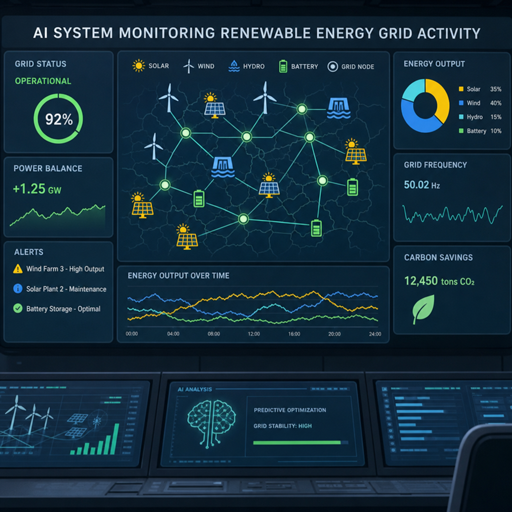
AI-driven clean energy grid balancing is the use of artificial intelligence to help match electricity supply with demand across a cleaner, more dynamic grid. Instead of relying only on static schedules or manual intervention, AI energy management systems analyze patterns from renewable generation, consumption, weather, storage assets, grid sensors, and market signals to recommend or automate better decisions in near real time.
This matters because clean energy resources behave differently from traditional centralized power plants. Solar output changes with cloud cover. Wind generation can rise or fall quickly. Electric vehicles, heat pumps, batteries, and distributed solar add more moving parts at the edge of the grid. Smart grid solutions give operators more visibility, while AI helps turn that visibility into practical action.
At its best, clean energy optimization does not replace human expertise. It supports it. Operators still define priorities, safety rules, reliability standards, and business constraints. AI helps process the volume and speed of grid data so people can act earlier, coordinate more assets, and reduce avoidable waste.
The new balancing challenge in clean energy systems
Traditional grids were designed around predictable generation and one-way electricity flow. Power moved from large plants through transmission and distribution networks to homes, businesses, and industry. Balancing was still difficult, but the main resources were fewer, more centralized, and often easier to dispatch.
Clean energy systems are more distributed. A neighborhood may include rooftop solar, community batteries, EV chargers, smart thermostats, and commercial energy systems that can all affect local demand or supply. This creates opportunity, but it also creates coordination challenges.
AI-driven clean energy grid balancing helps address several recurring issues:
- Variable renewable output: AI can forecast likely solar and wind generation using historical performance, weather data, and asset conditions.
- Demand peaks: Energy efficiency AI can identify usage patterns and support demand response before stress builds on the grid.
- Distributed assets: Intelligent energy distribution can coordinate batteries, flexible loads, and local generation across many locations.
- Congestion and bottlenecks: AI can help identify where grid capacity may become constrained and suggest operational adjustments.
- Reliability risks: Grid stability solutions can flag abnormal patterns before they become larger service issues.
The practical benefit is not only cleaner energy. It is cleaner energy that can be managed with more confidence.
How AI supports cleaner, more stable power
AI works best when it is applied to specific grid problems rather than treated as a broad technology layer. In clean energy optimization, the most useful applications often combine forecasting, control, and continuous learning.
Forecasting renewable generation and demand
Accurate forecasting is central to ai energy management. AI models can compare weather conditions, historical load, seasonal behavior, and asset performance to estimate how much energy will be available and how much customers are likely to use. Better forecasts help operators prepare for ramps, peaks, and shortfalls instead of reacting after they occur.
For example, if solar production is expected to dip while evening demand rises, an AI-enabled system can recommend charging batteries earlier, adjusting flexible loads, or securing additional supply. The same logic can apply at a campus, microgrid, utility territory, or commercial energy portfolio.
Coordinating batteries and flexible loads
Energy storage becomes more valuable when it is coordinated intelligently. AI can help decide when batteries should charge, discharge, or remain available for later grid needs. It can also support demand response by identifying loads that can shift with minimal disruption, such as HVAC pre-cooling, industrial process timing, or EV charging windows.
This is where intelligent energy distribution becomes practical. The system is not simply asking for less energy use. It is looking for the right action, at the right time, in the right location.
Detecting anomalies and improving resilience
Grid data can reveal early signs of trouble, but those signals are not always obvious. AI can monitor equipment behavior, voltage conditions, frequency changes, demand spikes, and sensor readings to identify patterns that may deserve attention. This can support maintenance planning, faster issue detection, and more targeted grid stability solutions.
AI does not eliminate outages or operational risk. However, it can improve the speed and quality of decision-making, especially when many variables are changing at once.
Why does AI matter for energy efficiency?
AI matters for energy efficiency because it can identify waste, predict demand, and automate adjustments faster than traditional manual methods. Energy efficiency AI helps buildings, facilities, utilities, and grid operators understand when energy is being used, where flexibility exists, and how to reduce strain without compromising performance.
Efficiency is often discussed as using less energy, but in a clean grid, timing matters too. Using energy when renewable supply is abundant can reduce pressure during peak periods. Shifting noncritical demand away from constrained hours can help avoid unnecessary backup generation or infrastructure stress.
Useful efficiency actions may include:
- Load scheduling: Moving flexible consumption to periods when clean power is more available.
- Automated controls: Adjusting HVAC, lighting, pumps, or chargers based on comfort, process, or operational limits.
- Portfolio visibility: Comparing energy performance across buildings, sites, or assets.
- Peak reduction: Reducing short periods of high demand that can create cost and reliability challenges.
- Continuous improvement: Learning from past actions so recommendations become more relevant over time.
For organizations with sustainability goals, this creates a more active approach to decarbonization. Instead of only buying cleaner power, they can also use power more intelligently.
Core features of effective smart grid solutions
Not every AI tool is ready for grid-critical work. Strong smart grid solutions need more than a polished dashboard. They require trustworthy data, transparent controls, cybersecurity awareness, and clear operating rules.
A practical AI-enabled grid platform should support:
- Real-time or near-real-time visibility into generation, load, storage, and grid conditions.
- Forecasting tools that account for weather, seasonality, asset behavior, and demand patterns.
- Human oversight so operators can review, approve, override, or refine recommendations.
- Interoperability with existing grid systems, meters, DER platforms, building systems, and energy market tools.
- Security and governance to protect operational data and define who can act on which assets.
- Explainable recommendations so teams understand why a system suggests a particular action.
- Performance tracking that shows whether actions improved reliability, efficiency, or clean energy use.
The most successful deployments are usually focused. They start with a clear use case, such as battery dispatch, demand forecasting, grid congestion management, or commercial energy optimization. Once the value is proven, the approach can expand.
What should organizations consider before adopting AI energy management?
Organizations should begin by identifying the operational problem they want AI energy management to solve. The technology is most useful when the goal is specific, the data is accessible, and the decision process is clear.
Before investing, teams should ask:
- What assets can we control? AI recommendations are more valuable when they can influence batteries, loads, generation, or purchasing decisions.
- What data do we already have? Meter data, weather feeds, asset telemetry, building controls, and market information may all be useful.
- Who will act on recommendations? Define whether actions will be manual, semi-automated, or automated.
- What constraints must the system respect? Comfort, safety, production schedules, regulatory requirements, and equipment limits matter.
- How will success be measured? Common goals include improved reliability, lower peaks, better renewable utilization, reduced waste, or more resilient operations.
A measured approach reduces risk. Start with one high-value workflow, validate the results, and then connect more assets or sites over time.
The future is cleaner, smarter, and more coordinated
AI-driven clean energy grid balancing is becoming an essential part of modern energy strategy because the grid is no longer simple, centralized, or predictable. As more renewable energy, storage, electric vehicles, and flexible loads connect to the system, balancing will depend on faster insight and better coordination.
The opportunity is not just to make the grid more digital. It is to make clean energy more dependable and useful at every level, from utility operations to commercial facilities and local energy networks. With the right data, governance, and smart grid solutions, AI can help turn complexity into flexibility.
Clean energy growth will continue to challenge traditional operating models. Organizations that invest in intelligent energy distribution, clean energy optimization, and practical grid stability solutions will be better prepared for a power system that is cleaner, more responsive, and built for the future.