Passive radiative cooling materials help buildings reject heat without relying only on compressors, fans, or chilled-water systems. In urban real estate, they can support cooler roofs, façades, terraces, parking structures, and public spaces by reflecting incoming sunlight and emitting heat outward through the atmosphere. This guide explains how these materials work, where they fit in building design, what owners should evaluate before adopting them, and how they compare with other passive cooling solutions.
What are passive radiative cooling materials?
Passive radiative cooling materials are surfaces engineered to reduce heat gain and release thermal energy as infrared radiation, often while reflecting a large share of solar radiation. In practical terms, they are designed to stay cooler than conventional dark or heat-absorbing surfaces under the same conditions, especially on roofs and exterior building envelopes. For real estate teams, the core value is simple: less absorbed heat can mean lower cooling loads, more comfortable exterior areas, and a stronger foundation for energy-efficient cooling strategies.
The idea is not that a coating, membrane, tile, or panel replaces every mechanical cooling system. Urban buildings still need ventilation, humidity control, code-compliant HVAC, and careful thermal design. Instead, passive radiative cooling materials sit within a broader set of thermal management materials that help the building reject heat before it becomes an indoor cooling problem.
These materials usually work through two linked properties:
- High solar reflectance, which means the surface sends much of the sun’s energy back rather than absorbing it as heat.
- High thermal emittance, which means the surface can release heat effectively as infrared radiation.
Some advanced materials are also tuned to emit strongly within atmospheric infrared windows, where heat can pass through the atmosphere more effectively. The exact performance depends on climate, sky conditions, humidity, installation quality, surface dirt, surrounding shade, and the construction assembly beneath the material.
The urban heat problem behind the opportunity
Cities concentrate heat. Dense buildings, dark roofs, asphalt surfaces, limited vegetation, waste heat from vehicles and mechanical systems, and reduced airflow can make urban districts warmer than surrounding areas. For real estate owners, that extra heat shows up as higher cooling demand, uncomfortable amenity decks, greater stress on roofing systems, and reduced resilience during hot weather.
Urban real estate also has a design challenge that rural or low-density sites often do not: surfaces influence each other. A dark roof may heat the air above it. A reflective façade may affect pedestrians or adjacent buildings if not designed carefully. A paved podium deck may radiate heat into apartments long after sunset. Passive cooling solutions must therefore be considered at the building, site, and neighborhood scale.
Passive heat rejection is attractive because it addresses heat at the surface. If a roof membrane absorbs less solar energy, less heat travels into the roof assembly. If a façade finish reduces thermal load, perimeter zones may be easier to condition. If exterior hardscape materials stay cooler, courtyards and public areas can feel more usable. These effects can complement advanced cooling systems by reducing the burden placed on them.
For developers, asset managers, and design teams, the opportunity is not only operational. Heat performance increasingly influences leasing narratives, resilience planning, tenant comfort, sustainability goals, and long-term capital planning. A building that manages heat well can be easier to operate, easier to position, and better prepared for hotter urban conditions.
How passive radiative cooling works
Radiative cooling is based on a simple physical principle: all surfaces emit thermal radiation. A warm roof, wall, or pavement releases energy in the infrared range. The more effectively that surface emits heat, and the less solar heat it absorbs, the cooler it can remain.
A conventional dark surface does the opposite of what a cooling-focused surface should do. It absorbs a large amount of sunlight during the day and converts it into heat. Some of that heat is released into the air, some radiates to nearby surfaces, and some travels inward through the building assembly. By contrast, radiative cooling materials are designed to reflect more sunlight and emit more heat.
Reflection reduces the heat entering the surface
Solar reflectance is the first line of defense. The sun delivers energy across visible, ultraviolet, and near-infrared wavelengths. A surface that reflects more of that energy takes in less heat. This is why light-colored roofing, reflective membranes, and cool coatings are common starting points for passive cooling strategies.
However, color alone is not the full story. Two products that look similarly white may perform differently across invisible wavelengths. Some materials are designed to reflect near-infrared radiation even when they are not bright white. That matters for architects who want thermal performance without limiting every exterior surface to a single appearance.
Emittance helps the surface release heat
Thermal emittance describes how effectively a surface releases absorbed heat as infrared radiation. High-emittance surfaces can shed heat more readily than low-emittance surfaces. In many real estate applications, a useful passive cooling surface combines high solar reflectance with high thermal emittance, allowing it to avoid heat gain and release heat that does accumulate.
Emittance becomes especially important when a material must recover after intense sun exposure. A surface that reflects well but emits poorly may still retain heat. A surface that emits well but absorbs too much sunlight may struggle during peak daytime conditions. Effective radiative cooling materials are designed to balance both properties.
Atmospheric conditions affect performance
Radiative cooling is not isolated from the surrounding environment. Clear skies, dry air, and open exposure tend to support stronger heat rejection. Dense humidity, cloud cover, nearby tall buildings, pollution, and obstructed sky views can reduce the cooling effect. Urban real estate often includes many of these complications, which is why site-specific evaluation is essential.
This does not make passive radiative cooling materials impractical in cities. It simply means expectations should be grounded in context. A high-rise roof with broad sky exposure may behave differently from a shaded courtyard surrounded by towers. A coastal city with humid air may see different results than an inland district with dry nights. Good design starts with the site, not with a generic product claim.
Common material types and where they fit
Radiative cooling materials come in several forms. Some are familiar building products optimized for reflectance and emittance. Others are newer engineered materials that aim to deliver stronger passive heat rejection while meeting architectural, durability, and installation requirements.
Cool roof membranes and coatings
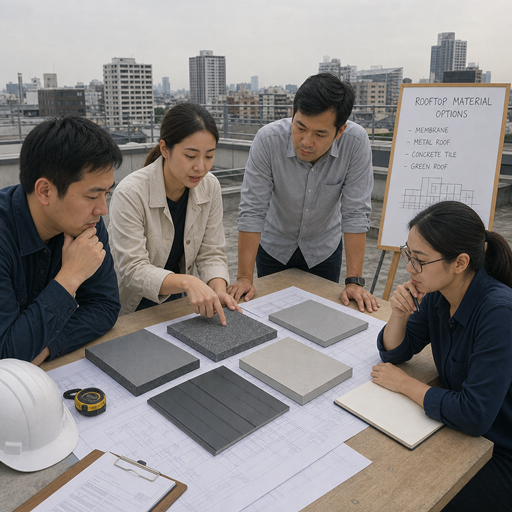
Roofs are often the most straightforward application because they receive strong solar exposure and usually have a clear view of the sky. Cool roof membranes, reflective coatings, and light-colored roof systems can reduce heat absorption at the top of the building. They are especially relevant for commercial roofs, multifamily buildings, warehouses, schools, healthcare facilities, and mixed-use developments with large roof areas.
For owners, the key questions are practical. Can the product work with the existing roof assembly? Is it appropriate for foot traffic, ponding water, mechanical equipment areas, and maintenance patterns? Does it meet warranty requirements? A reflective roof coating may be useful in one retrofit scenario, while a full membrane replacement may be more appropriate in another.
Radiative façade finishes
Façades are more complex than roofs because they are vertical, visible, and closely tied to architectural identity. Radiative cooling materials for façades may include coatings, cladding finishes, ceramic surfaces, engineered panels, or other exterior materials designed to reduce heat gain. These can be valuable on sun-exposed elevations, especially where perimeter cooling loads are high.
Design teams must evaluate reflectivity carefully. A façade that reflects too much visible light in the wrong direction can create glare for occupants, pedestrians, drivers, or neighboring buildings. The goal is not simply to make every exterior surface highly reflective. The goal is to manage heat while preserving visual comfort, design quality, and neighborhood compatibility.
Pavements, plazas, and amenity decks
Urban real estate includes many horizontal surfaces beyond roofs. Podium decks, terraces, courtyards, parking areas, walkways, and plazas can become heat reservoirs. Passive cooling solutions for these areas may include reflective pavers, lighter hardscape materials, coatings, permeable surfaces, shaded assemblies, and materials with better thermal behavior.
Radiative cooling in occupied outdoor areas must be evaluated differently from roof applications. A surface may stay cooler but still create glare. A material may perform well thermally but fail under heavy traffic, freeze-thaw exposure, cleaning routines, or stain conditions. Outdoor spaces need a balance of heat reduction, slip resistance, durability, aesthetics, stormwater strategy, and user comfort.
Films, paints, and specialty coatings
Some passive radiative cooling materials are applied as films or coatings. These can be appealing for retrofits because they may avoid major demolition. Coatings may be used on roofs, walls, equipment enclosures, tanks, canopies, and selected exterior structures.
The advantage is flexibility. The caution is quality control. Surface preparation, coating thickness, adhesion, curing conditions, and maintenance all matter. A coating that performs well in a laboratory sample can disappoint if applied over a dirty, incompatible, or deteriorated substrate. Owners should treat coating selection as a building-envelope decision, not a quick cosmetic upgrade.
Emerging engineered materials
Advanced radiative cooling materials may use multilayer structures, photonic designs, polymer composites, ceramics, nanoparticles, or selective emitters to improve heat rejection. These materials are part of a broader movement toward advanced cooling systems that combine passive design with smarter mechanical strategies.
Emerging products can be promising, but real estate adoption should be disciplined. Building teams need to know whether the material has suitable fire performance, weathering resistance, cleanability, structural compatibility, repair pathways, and local code acceptance. Innovation is valuable when it survives construction reality.
Why do these materials matter for urban real estate?
Passive radiative cooling materials matter because they can reduce heat at the point of exposure, before that heat moves into occupied space or burdens mechanical cooling. For urban real estate, that can support lower cooling demand, improved comfort, better resilience, and more credible sustainability planning. They are not a standalone answer to every heat problem, but they are one of the few strategies that can work continuously with little or no operational input once installed.
This matters because cooling is not only an energy issue. It is also a comfort, risk, and asset-quality issue. Tenants notice hot top-floor units, overheated corridors, uncomfortable terraces, and cooling systems that struggle during heat waves. Operators notice higher peak loads, rooftop equipment strain, and temperature complaints. Investors notice capital exposure when properties require mechanical upgrades sooner than expected.
Passive heat rejection can help shift the cooling conversation upstream. Instead of asking only how to produce more chilled air, teams can ask how to reduce the heat entering the asset in the first place. That shift can influence design, procurement, operations, and long-term portfolio strategy.
Key real estate benefits may include:
- Lower heat absorption at roofs and exterior surfaces By reflecting more sunlight and emitting heat effectively, suitable materials can reduce surface temperature compared with darker or less emissive alternatives.
- Reduced cooling load pressure When less heat enters the building envelope, HVAC systems may face less demand, especially in sun-exposed zones and upper floors.
- Improved outdoor usability Cooler surface choices can make roof decks, courtyards, plazas, and pedestrian areas more comfortable when paired with shade, airflow, planting, and smart layout.
- Support for energy-efficient cooling goals Passive strategies can complement efficient chillers, heat pumps, controls, insulation, air sealing, and ventilation design.
- Greater resilience during hot conditions Buildings that absorb less heat may be better positioned to maintain tolerable conditions when equipment is stressed or grid demand is high.
- Longer-term asset positioning Heat-aware design can support sustainability messaging, tenant experience, and climate adaptation planning without depending entirely on active systems.
Applications across building types
Different property types use passive cooling solutions in different ways. The best application depends on building geometry, ownership model, tenant expectations, equipment layout, and renovation timing.
Multifamily and mixed-use properties
In multifamily buildings, heat issues often appear in top-floor apartments, west-facing units, shared corridors, roof amenity areas, and podium courtyards. Radiative cooling materials can help reduce roof heat gain and improve the thermal behavior of outdoor common spaces. In mixed-use projects, they may also support comfort in retail frontages, terraces, and parking structures.
Owners should coordinate material choices with acoustic needs, waterproofing, façade maintenance, and resident experience. For example, a roof coating that reduces heat may still need designated walk pads around mechanical equipment. A lighter courtyard paving material may require glare testing and careful furniture placement. Thermal performance is important, but it must integrate with everyday use.
Office buildings
Office buildings often have internal heat gains from people, lighting, equipment, and plug loads. Passive radiative cooling materials cannot solve all of those loads, but they can reduce solar-driven gains through roofs and envelopes. They may be especially useful for low-rise offices, large floorplate buildings, and properties with exposed roofs or extensive curtain wall interfaces.
For office owners, energy-efficient cooling is also tied to tenant expectations. Comfortable perimeter spaces, stable indoor conditions, and lower operational intensity can support leasing conversations. The materials should be considered alongside glazing performance, shading, commissioning, controls, and tenant fit-out standards.
Industrial and logistics facilities
Warehouses, logistics centers, and light industrial properties often have large roofs and high internal volumes. A heat-absorbing roof can contribute to uncomfortable working conditions and increased cooling or ventilation demand. Cool roof systems and reflective thermal management materials can be practical because the roof area is large and the architectural constraints may be lower than on highly visible buildings.
These assets still require careful specification. Roof traffic, solar panel installation, skylights, smoke vents, drainage, and structural loading can all influence product choice. If rooftop solar is planned, the cooling material strategy should be coordinated with panel layout, maintenance access, and potential reflectance interactions.
Hospitality, healthcare, and education
Hotels, hospitals, senior housing, schools, and campuses have strong comfort and reliability needs. In these settings, passive heat rejection can support a more stable thermal environment and reduce the burden on mechanical systems. Outdoor areas such as courtyards, drop-off zones, playgrounds, and terraces may also benefit from cooler surface strategies.
These property types often have strict operational constraints. Hospitals may have infection-control and equipment-access requirements. Schools may prioritize durability and safety. Hotels may emphasize guest-facing aesthetics. Passive radiative cooling materials should be selected through a cross-functional lens rather than evaluated only as energy products.
Integration with advanced cooling systems
The strongest urban cooling strategies usually combine passive and active measures. Passive radiative cooling materials reduce heat gain at the envelope or site surface. Advanced cooling systems then condition the indoor environment more efficiently because they are not fighting as much avoidable heat.
A well-integrated approach may include:
- High-performance roof membranes or coatings.
- Exterior shading and solar-control glazing.
- Insulation and air sealing appropriate to the climate.
- Efficient heat pumps, chillers, or variable refrigerant systems.
- Smart controls that respond to occupancy and weather.
- Demand management strategies for peak conditions.
- Green roofs, trees, and landscape shading where feasible.
- Ventilation strategies that manage both temperature and indoor air quality.
The sequence matters. If a building has major air leakage, poor insulation, or uncommissioned equipment, a reflective surface alone will not deliver the full value expected. If a roof is near the end of its service life, a coating may be a short-term patch rather than a durable investment. If HVAC equipment is being replaced, envelope improvements should be studied before final sizing decisions are locked in.
Passive-first does not mean mechanical-last
A passive-first mindset asks how much heat can be avoided before mechanical cooling is used. It does not imply undersizing equipment without analysis or ignoring humidity, ventilation, and occupant loads. In many climates, mechanical systems remain essential for comfort and safety.
The practical goal is coordination. Radiative cooling materials can reduce the intensity and duration of cooling demand, while active systems handle the conditions passive measures cannot fully address. This can lead to more balanced design decisions and less reliance on one intervention to solve every problem.
Controls and monitoring make benefits more visible
Passive materials do not have an on-off switch, so their performance can be harder to notice than a new chiller or thermostat system. Monitoring helps. Surface temperature readings, indoor temperature trends, energy use data, tenant comfort logs, and roof inspections can show whether the strategy is performing as intended.
For larger portfolios, consistent measurement also supports better procurement. Owners can compare similar buildings, climates, roof types, and operating patterns. Over time, this can turn passive cooling from a one-off sustainability feature into a repeatable asset management practice.
How should owners evaluate a material before specifying it?
Owners should evaluate passive radiative cooling materials by looking at performance, durability, installation requirements, code compliance, maintenance, aesthetics, and whole-building impact together. A product that looks excellent on a data sheet may be wrong for a specific roof, façade, plaza, or climate. The best selection process is multidisciplinary and includes design, engineering, operations, procurement, and maintenance input.
A useful evaluation should start with the problem being solved. Is the asset trying to reduce top-floor heat gain, improve roof deck comfort, support energy-efficient cooling, extend roof service life, or prepare for hotter conditions? Each objective may point to a different material or installation method.
Practical specification checklist
Before selecting radiative cooling materials, teams should review:
- Solar reflectance and thermal emittance Confirm that the material’s heat-management properties are relevant to the intended application and climate.
- Substrate compatibility Check whether the material can be installed over the existing roof, wall, pavement, or deck assembly without trapping moisture or voiding warranties.
- Durability and weathering Evaluate resistance to ultraviolet exposure, rain, freeze-thaw cycles, foot traffic, abrasion, pollutants, biological growth, and cleaning chemicals.
- Fire and life-safety requirements Confirm that the product and assembly meet applicable fire classifications and code requirements.
- Waterproofing and drainage Do not let thermal goals compromise water management. Roofs, decks, and façades must still shed or manage water correctly.
- Glare and visual impact Assess how reflectivity affects occupants, neighbors, streets, drivers, and adjacent buildings.
- Maintenance expectations Ask how dirt, staining, algae, dust, or surface wear may change performance over time.
- Repairability Understand how damaged sections are patched, recoated, replaced, or matched visually.
- Warranty and service responsibilities Clarify who is responsible for product performance, installation quality, and ongoing maintenance.
- Interaction with other systems Coordinate with solar arrays, roof anchors, façade attachments, drainage, insulation, HVAC equipment, and pedestrian access routes.
Questions to ask suppliers and installers
Product conversations should move beyond headline performance claims. Owners and project teams can ask:
- What test methods support the stated solar reflectance and emittance values?
- Are values based on initial performance, aged performance, or both?
- What substrates and assemblies has the product been installed on successfully?
- What surface preparation is required?
- How does dirt accumulation affect performance, and what cleaning method is recommended?
- What are the limitations in humid, polluted, shaded, or high-traffic environments?
- How is the product repaired if punctured, stained, cracked, or abraded?
- Does the product create glare risks in vertical or pedestrian-facing applications?
- What warranties apply, and what maintenance actions are required to keep them valid?
- Can the supplier provide project references that resemble the intended application?
These questions help separate useful passive cooling solutions from materials that are interesting but not yet appropriate for the project.
Design considerations for dense city sites
Urban sites complicate heat management. Buildings shade each other, reflect onto each other, restrict airflow, and create localized microclimates. Passive radiative cooling materials should therefore be specified with attention to geometry and context.
Roof exposure and sky view
Radiative cooling performs best when the surface has a meaningful view of the sky. Tall adjacent buildings, rooftop equipment, parapets, penthouses, and solar arrays can reduce exposure. That does not automatically eliminate the benefit, but it changes where and how materials should be applied.
A roof plan can help identify priority zones. Open roof areas may be suitable for reflective membranes or coatings. Equipment-dense zones may need durable walk pads or different surface treatments. Amenity roof areas may require a blend of cool paving, shade structures, planting, and user comfort analysis.
Glare and neighboring properties
Reflective surfaces can create unintended glare. This is especially important for façades, sloped roofs, upper-level terraces, and surfaces near roads or neighboring windows. A material that is excellent for reducing heat may still be inappropriate if it creates visual discomfort.
Designers can reduce glare risk through orientation, finish selection, surface texture, parapet design, shading, and targeted rather than blanket application. The best approach is not maximum reflectivity everywhere. It is the right reflectivity in the right place.
Moisture and envelope performance
Thermal upgrades should never undermine moisture control. Roofs and walls are assemblies, not just exterior surfaces. A new coating or membrane may change surface temperature patterns, drying potential, condensation risk, or vapor behavior depending on climate and construction.
Building-envelope professionals should evaluate how passive radiative cooling materials interact with insulation, vapor control layers, drainage planes, and existing moisture conditions. This is particularly important in retrofits where the current assembly may be poorly documented or already degraded.
Aesthetics and planning approvals
Real estate projects often need to satisfy planning boards, design review committees, historic districts, brand standards, or tenant expectations. White roofs may be easy to accept on unseen surfaces, while visible façades and public plazas require more nuanced choices.
Manufacturers are developing more varied appearances, but thermal performance can shift with color, texture, and composition. Teams should avoid assuming that a visually preferred finish has the same heat rejection performance as a bright white sample. Appearance and performance should be reviewed together.
Retrofit strategy for existing assets
Existing buildings are often the biggest opportunity for passive cooling improvements because they already contain heat-absorbing surfaces, aging roofs, and mechanical systems under pressure. Retrofits also require extra care because hidden conditions can limit what is possible.
A practical retrofit process can follow five steps:
- Diagnose the heat problem Review energy data, tenant complaints, infrared scans if available, roof condition reports, indoor temperature trends, and maintenance history. Define whether the problem is roof heat gain, façade exposure, outdoor comfort, equipment strain, or a combination.
- Assess the existing assembly Inspect roof membranes, insulation, drainage, penetrations, walls, coatings, sealants, and structural conditions. Passive cooling materials should not be installed over failures that require repair first.
- Model or estimate whole-building impact Use appropriate engineering analysis for major projects. Small surface upgrades can be evaluated more simply, but large investments should consider energy use, comfort, peak loads, and interaction with future HVAC decisions.
- Select a material and installation method Match the product to substrate, exposure, traffic, climate, maintenance capabilities, and design goals. Confirm warranty requirements and installation sequencing.
- Measure and maintain Track performance after installation through inspections, temperature observations, energy trends, and occupant feedback. Schedule cleaning or recoating as needed.
Retrofits are also a timing question. The most cost-effective moment to add passive radiative cooling materials may be during roof replacement, façade renovation, plaza resurfacing, waterproofing work, or mechanical upgrades. Bundling improvements can reduce disruption and help teams make more integrated decisions.
New development strategy
In new construction, passive radiative cooling materials can be embedded from the beginning rather than added later. This gives design teams more freedom to coordinate roofs, façades, mechanical systems, outdoor areas, and sustainability goals.
Early integration is valuable because material choices influence multiple disciplines. A cooler roof may affect insulation strategy, rooftop amenity design, and equipment placement. A façade finish may influence energy modeling, glare studies, and architectural expression. A cooler courtyard surface may interact with planting, irrigation, drainage, and retail activation.
For new developments, teams should consider:
- Including passive heat rejection goals in the owner’s project requirements.
- Reviewing radiative cooling options during concept design, not only during product substitution.
- Coordinating with energy modeling before HVAC systems are finalized.
- Testing visible materials for appearance and glare.
- Confirming that maintenance teams can preserve performance over time.
- Documenting installed products for future asset management.
When addressed early, radiative cooling materials become part of the building’s logic. When addressed late, they risk becoming a superficial add-on.
Economics and value considerations
The financial case for passive radiative cooling materials depends on the building, climate, installation scope, utility costs, maintenance needs, and timing. Because every project is different, owners should avoid relying on generic payback assumptions. The better approach is to evaluate value across several categories.
Direct operating value
If passive materials reduce cooling demand, they may support lower electricity use or reduced peak demand. The magnitude depends on climate, building type, occupancy, HVAC efficiency, roof or façade area, and existing envelope quality. A poorly insulated building may respond differently than a high-performance new development.
Energy modeling or measured pilots can help clarify potential value. For major capital decisions, engineering analysis is preferable to broad claims. For smaller projects, comparing before-and-after trends may still provide useful insight, especially if weather and occupancy changes are considered.
Capital planning value
Passive cooling improvements can affect capital planning. If a roof replacement is already scheduled, choosing a high-performance cool membrane may add thermal value without creating a separate project. If HVAC equipment is near replacement, reducing envelope heat gain first may help inform equipment sizing and system selection.
This sequencing is important. Installing larger mechanical systems without addressing avoidable heat gain can lock in higher costs and energy use. Conversely, using passive materials without fixing failing equipment or controls may not solve comfort complaints. Capital plans should treat envelope and mechanical systems as connected.
Tenant and experience value
Comfort can influence tenant satisfaction, retention, and property perception. A cooler top floor, a more usable terrace, or a less oppressive courtyard may not always show up neatly in an energy calculation, but it can matter to the way people experience the building.
Owners should be careful not to overstate benefits. Passive radiative cooling materials do not guarantee perfect comfort in all conditions. They can, however, contribute to a more heat-aware property strategy that supports occupant experience alongside efficiency.
Risk and resilience value
Hotter urban conditions can increase operational risk. Buildings that absorb large amounts of heat may be more vulnerable during heat waves, equipment failures, or periods of high grid stress. Passive heat rejection can provide a layer of resilience because it does not require active controls to begin working.
This resilience value is difficult to price precisely without project-specific analysis. Still, it is increasingly relevant for owners with long-term holds, public-facing assets, vulnerable occupants, or portfolios in heat-prone markets.
Limitations and risks to manage
Passive radiative cooling materials are useful, but they are not magic. Their performance depends on design, climate, maintenance, and correct application. A clear view of limitations helps owners avoid disappointment.
Common risks include:
- Overpromising energy savings Savings vary by building and climate. Claims should be supported by modeling, pilots, or measured performance where possible.
- Ignoring dirt and aging Dust, pollution, biological growth, and wear can reduce reflectance over time. Maintenance planning matters.
- Creating glare problems Highly reflective surfaces can affect neighbors, pedestrians, vehicles, or occupants if poorly placed.
- Using the wrong product for the substrate Coatings and membranes need compatible surfaces and proper preparation.
- Neglecting moisture behavior Thermal changes can interact with vapor movement, drying potential, and existing water damage.
- Treating passive cooling as a substitute for HVAC design Buildings still need appropriate mechanical systems, ventilation, humidity control, and commissioning.
- Forgetting maintenance teams If a product requires careful cleaning or restricted access, operations staff need to know that from the beginning.
The solution is not to avoid these materials. It is to specify them realistically, document assumptions, and integrate them with the whole building.
Passive radiative cooling and sustainability goals
Many real estate organizations are working toward lower energy use, lower emissions, and more resilient assets. Passive radiative cooling materials can support those goals by reducing heat gain and complementing energy-efficient cooling systems. They may also help address urban heat when applied thoughtfully across roofs, façades, and outdoor spaces.
Sustainability teams should frame these materials as part of a hierarchy:
- Reduce heat gain first through orientation, envelope design, shading, reflective and emissive surfaces, insulation, and air sealing.
- Use efficient active systems that are correctly sized, commissioned, and controlled.
- Operate intelligently with monitoring, maintenance, and occupant-aware controls.
- Improve the site with shade, vegetation, stormwater-sensitive design, and cooler hardscape materials.
- Track outcomes through energy data, comfort indicators, inspections, and portfolio benchmarks.
This hierarchy prevents a common mistake: treating one product as the sustainability strategy. Radiative cooling materials are powerful when they reinforce a larger plan. They are less effective when used as a symbolic upgrade with no connection to building operations.
Procurement and implementation best practices
Successful implementation depends on more than choosing a promising material. It requires clear scope, responsible parties, quality control, and post-installation care.
Build the right project team
For a simple coating project, the team may include the owner, property manager, roofing contractor, product representative, and facilities staff. For larger projects, it may also include architects, façade consultants, mechanical engineers, energy modelers, envelope specialists, code consultants, and sustainability advisors.
The more visible or complex the application, the more important multidisciplinary review becomes. A roof coating on a low-slope warehouse is a different decision from a radiative façade finish on a dense downtown tower.
Define performance requirements clearly
Specifications should identify the intended outcome, not just the product name. Relevant requirements may include reflectance, emittance, durability, cleanability, fire classification, slip resistance, color, texture, warranty terms, and installation standards. Where possible, distinguish between initial and aged performance.
Clear requirements protect the owner during substitutions. They also help contractors understand that the material is being selected for thermal management, not just appearance.
Control installation quality
Passive radiative cooling materials can fail to deliver if installed poorly. Surface preparation, weather conditions during application, seams, penetrations, curing times, coating thickness, and protection from construction traffic all matter. Quality assurance should be built into the schedule rather than treated as an afterthought.
For existing assets, mockups or pilot areas can reduce uncertainty. A pilot can reveal adhesion issues, glare concerns, cleaning needs, or tenant reactions before a full rollout.
Plan for maintenance from day one
Performance can decline if surfaces become dirty, damaged, or covered by equipment and stored materials. Maintenance plans should identify cleaning methods, inspection intervals, access rules, repair procedures, and documentation responsibilities.
Operations teams should know why the surface was selected. If staff understand that the material supports passive cooling and energy-efficient cooling goals, they are more likely to protect it during routine work.
The future of thermal management materials in cities
Urban real estate is moving toward more active heat management. As summers become more challenging and cooling demand grows, building owners are looking beyond conventional HVAC upgrades. Thermal management materials are becoming part of that conversation because they address heat at the surface, where many problems begin.
Future development may bring more visually flexible materials, improved durability, better aged performance, and stronger integration with building systems. Some products may combine radiative cooling with waterproofing, self-cleaning surfaces, solar compatibility, or adaptive properties that respond to changing conditions. The most useful innovations will be the ones that can be installed, maintained, repaired, and verified in real buildings.
For cities, the broader opportunity is cumulative. One cool roof helps one building. Many heat-aware roofs, façades, pavements, terraces, and public spaces can contribute to a cooler urban fabric. Real estate owners do not control the whole city, but they do control many of the surfaces that shape urban heat.
Key takeaways for owners, developers, and design teams
Passive radiative cooling materials deserve serious consideration in urban real estate, especially when buildings face high solar exposure, cooling strain, or outdoor comfort challenges. They are most effective when selected for the specific asset, climate, assembly, and operating model.
The most important lessons are:
- Passive radiative cooling combines solar reflection and thermal emission to support passive heat rejection.
- Roofs are often the easiest starting point, but façades, plazas, decks, and parking areas can also matter.
- These materials work best as part of a broader strategy that includes insulation, shading, efficient HVAC, controls, and maintenance.
- Product selection should consider durability, glare, code requirements, moisture behavior, installation quality, and aged performance.
- Retrofit projects should begin with diagnosis, while new developments should integrate passive cooling early in design.
- The value case should include operations, capital planning, comfort, sustainability, and resilience rather than energy savings alone.
For urban real estate, the central question is not whether passive cooling solutions can replace advanced cooling systems. They usually cannot, and they do not need to. Their value lies in reducing the heat burden that those systems must handle, creating buildings and outdoor spaces that are better prepared for a hotter, denser, more energy-conscious urban future.