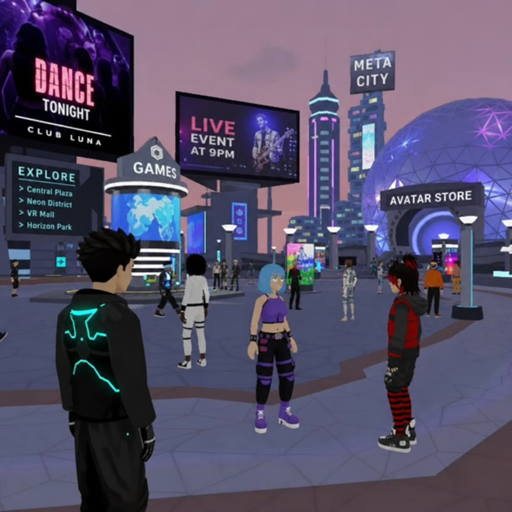
The Metaverse ecosystem is evolving from a futuristic idea into a broad digital environment where people can socialize, work, learn, shop, create, and build value through connected virtual spaces. Its future will not depend on one platform alone, but on how virtual reality world design, digital ownership, community behavior, immersive experiences, and the virtual economy develop together. For users, creators, brands, and builders, the opportunity is not simply to “enter the metaverse,” but to understand what makes this digital universe useful, trustworthy, and worth returning to.
What makes the Metaverse ecosystem different from a single virtual world?
The Metaverse ecosystem is different from a single virtual world because it describes the wider network of technologies, communities, platforms, assets, economies, and experiences that can connect across digital environments. A virtual reality world may be one destination, but the ecosystem includes the tools used to create it, the people who participate in it, the virtual economy that supports it, and the rules that help it function. In that sense, the metaverse is less like one website and more like a developing digital universe made of many spaces, identities, and interactions.
This distinction matters because the future will likely be shaped by connection rather than isolation. A single platform can host games, events, or meetings, but an ecosystem allows creators, users, and businesses to imagine broader possibilities. People may want avatars, digital goods, credentials, memberships, or creative works that hold meaning across multiple environments. That requires shared standards, better user experience, safer community design, and more practical reasons to participate.
The word “ecosystem” also reminds us that the metaverse is not only a technology story. It is a social, economic, and cultural story. A platform without people is empty. A digital marketplace without trust is fragile. A virtual community without purpose quickly becomes noise. The future depends on how well these pieces support one another.
The core layers shaping the digital universe
A useful way to understand the Metaverse ecosystem is to break it into layers. These layers are not always visible to everyday users, but they influence how immersive, accessible, and valuable the experience feels.
- Hardware and access devices: Headsets, smartphones, computers, controllers, wearables, and future interfaces determine how people enter virtual spaces. The easier and more comfortable access becomes, the more likely mainstream audiences are to participate.
- Virtual environments: These are the worlds, rooms, campuses, venues, and shared spaces where users gather. Some are realistic, while others are imaginative, game-like, or highly abstract.
- Identity and avatars: Digital identity gives users a sense of presence. Avatars, profiles, reputation systems, and personalization tools help people feel recognizable and expressive.
- Creation tools: Builders need intuitive ways to design objects, spaces, games, stores, events, and interactive experiences. The stronger the creator layer becomes, the richer the ecosystem grows.
- Commerce and ownership systems: The virtual economy depends on payments, digital goods, subscriptions, memberships, tokens, licenses, and other models that allow value to move.
- Community and governance: Rules, moderation, safety systems, accessibility practices, and user norms help virtual communities remain healthy and welcoming.
- Interoperability and standards: For the digital universe to become more connected, platforms need ways to share data, assets, identity signals, or experiences without locking users into separate silos.
Each layer creates opportunities and challenges. Better devices can make immersive experiences feel natural, but they must also be affordable and comfortable. Richer virtual environments can attract attention, but they need meaningful activity. Digital ownership can create new business models, but it must be understandable and secure. The ecosystem succeeds when these layers work together instead of competing for attention.
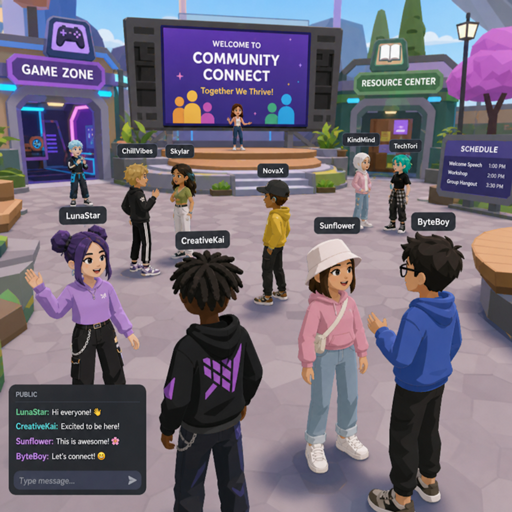
Immersive experiences will become more practical
Early conversations about the metaverse often focused on spectacle: giant virtual concerts, fantasy landscapes, branded worlds, or fully immersive social spaces. Those experiences still matter because they show what digital environments can do beyond a flat screen. However, the long-term future of immersive experiences will likely depend on practical usefulness as much as novelty.
People return to digital spaces when those spaces solve real needs. A training simulation can help employees practice complex tasks without real-world risk. A virtual showroom can let shoppers examine products in context. A digital classroom can make abstract ideas visible and interactive. A design team can review a 3D prototype together even when members are in different locations.
The most successful immersive experiences will probably be those that blend emotion with function. They will feel engaging, but they will also save time, reduce friction, improve understanding, or create a stronger sense of presence. In other words, immersion should not be treated as decoration. It should help the user do something better.
For example, a virtual reality world built for education should not simply copy a classroom with digital chairs and a digital whiteboard. It could let students walk through a historical reconstruction, manipulate molecular structures, explore climate models, or collaborate on spatial projects. The advantage is not that it looks futuristic. The advantage is that the environment makes learning more active and memorable.
How will people use the metaverse in everyday life?
People will use the metaverse in everyday life when virtual spaces become easier to access, socially meaningful, and clearly useful. Instead of replacing the physical world, the Metaverse ecosystem is more likely to extend everyday activities: meeting friends, attending events, learning skills, trying products, building communities, managing digital assets, and collaborating across distance. The strongest use cases will fit naturally into existing habits rather than demanding that people change everything at once.
One of the most promising everyday uses is social presence. Video calls are useful, but they can feel flat and tiring. A well-designed virtual community can create a stronger feeling of “being there” with others. People might gather in digital lounges, creative studios, fan spaces, support groups, or professional rooms where conversation feels more spatial and expressive.
Work is another area where the metaverse may become more practical. Not every meeting needs a virtual environment, and forcing all work into 3D spaces would be inefficient. But certain tasks can benefit from shared spatial context. Product reviews, architectural walkthroughs, medical training, engineering collaboration, and onboarding simulations are all examples where a digital universe can add clarity.
Retail and entertainment will also continue to evolve. A brand can use immersive experiences to let customers explore styles, customize items, attend launches, or participate in limited virtual events. Artists and creators can host performances, exhibitions, workshops, or fan experiences that go beyond passive viewing. The key is to design participation, not just presentation.
Everyday adoption will depend on three simple questions users ask, even if they do not say them out loud:
- Is it easy to enter? If setup is confusing or expensive, many people will leave before the experience begins.
- Is there a reason to come back? A beautiful environment is not enough without community, utility, progress, or fresh activity.
- Does it feel safe and respectful? Users need confidence that their identity, time, money, and personal boundaries are protected.
When the answer to these questions is yes, the metaverse becomes less like a gimmick and more like a useful layer of digital life.
The virtual economy will define long-term value
The virtual economy is one of the most important forces shaping the future of the Metaverse ecosystem. It includes the exchange of digital goods, services, access, experiences, creative work, memberships, and identity-based assets. It also includes the business models that allow creators, platforms, and communities to sustain themselves.
A healthy virtual economy should do more than encourage people to buy digital items. It should support meaningful value creation. Designers can sell virtual fashion, architects can create digital spaces, educators can offer immersive lessons, musicians can host exclusive events, and community managers can build membership-based environments. In this model, the metaverse becomes a place where people can produce and participate, not only consume.
However, the virtual economy also needs trust. Users need to understand what they are buying, what rights they have, whether an asset can be transferred, and what happens if a platform changes direction. Clear ownership rules, transparent terms, secure payments, and responsible design will be essential. Without trust, digital scarcity and virtual goods can feel confusing or risky.
The future may also bring more blended economies, where physical and digital value connect. A customer might buy a physical product that includes a digital version for an avatar. A conference ticket might include access to a virtual networking space. A membership community might offer both online events and immersive rooms. These hybrid models can make digital assets feel more relevant because they are connected to real experiences.
What role could metaverse ecosystem coins play?
Metaverse ecosystem coins could play a role in payments, rewards, governance, access, digital ownership, or community incentives within certain platforms, but their usefulness depends on real utility rather than hype. In some projects, tokens may help users buy virtual goods, participate in platform decisions, access special experiences, or support creator economies. Still, users should approach any coin or token carefully, because value can be volatile and the presence of a token does not guarantee a strong community or sustainable product.
The phrase “metaverse ecosystem coins” often attracts attention because it connects two powerful ideas: immersive digital worlds and blockchain-based value. In practice, the important question is not whether a token exists. The important question is what the token actually does. Does it reduce friction? Does it support creators? Does it give users meaningful participation? Does it work inside an active virtual economy?
A responsible view separates utility from speculation. Tokens may be useful when they help a community coordinate activity or when they unlock functions that would be difficult with traditional systems. They are less useful when they exist only as a marketing feature. For builders, this means token design should follow the needs of the experience, not the other way around.
Users evaluating metaverse ecosystem coins should consider a practical checklist:
- Purpose: What can the coin actually be used for inside the platform or community?
- Adoption: Are people using the related virtual world, marketplace, or experience in a meaningful way?
- Transparency: Are the rules, supply, fees, and risks easy to understand?
- Security: How are wallets, transactions, and user accounts protected?
- Sustainability: Does the project have a reason to exist beyond short-term attention?
- User fit: Does participation align with your goals, comfort level, and risk tolerance?
This approach helps keep the conversation grounded. Coins may become one part of the Metaverse ecosystem, but they are not the whole ecosystem. Community, usability, creativity, safety, and genuine demand matter just as much.
Virtual community will matter more than visual detail
High-quality graphics can make a virtual environment impressive, but community is what makes it alive. A beautifully rendered space with no social energy quickly feels empty. A simpler space with active members, shared rituals, helpful moderation, and a clear purpose can become a destination.
A strong virtual community gives people a reason to identify with a space. Members may come for networking, entertainment, learning, fandom, collaboration, or support. Over time, they stay because they form relationships and routines. This is why the social architecture of the metaverse matters as much as the visual architecture.
Community design should be intentional. Platform builders need to think about onboarding, conversation flow, accessibility, safety tools, event programming, and ways for members to contribute. A new user should not enter a virtual world and wonder what to do next. They should quickly understand where to go, how to interact, and why the space matters.
Good virtual community design often includes:
- Clear entry points that help new users feel oriented rather than lost.
- Shared activities such as events, quests, workshops, games, discussions, or collaborative projects.
- Visible norms that explain acceptable behavior and community expectations.
- Moderation tools that protect users without making the space feel overly controlled.
- Recognition systems that reward contribution, creativity, helpfulness, or expertise.
- Accessible design so more people can participate comfortably across devices and ability levels.
As the Metaverse ecosystem matures, the best communities will not be the loudest or most visually extravagant. They will be the ones where people feel present, respected, and involved.
Interoperability is the bridge between isolated spaces
For the metaverse to feel like a true digital universe, users need smoother movement between experiences. Today, many virtual environments operate like separate islands. Each may have its own avatar system, assets, currency, rules, and social graph. That can work for individual platforms, but it limits the broader promise of the Metaverse ecosystem.
Interoperability means different systems can communicate or work together in useful ways. In a metaverse context, it could involve portable avatars, compatible digital goods, shared identity signals, cross-platform event access, or creator tools that export assets into multiple environments. Full interoperability is difficult because platforms have different business models, technical standards, and safety requirements. Still, even partial progress can improve user experience.
Imagine buying a digital jacket for an avatar and being able to wear it in more than one compatible space. Imagine attending a professional event where your verified credentials help you enter the right rooms without creating a new profile each time. Imagine creators designing objects once and adapting them across several virtual worlds. These examples show why interoperability matters: it gives users and creators more freedom.
The challenge is balance. Platforms need openness, but they also need security, quality control, and community protection. Not every asset should automatically move everywhere. A cartoon item that fits one game may not fit a professional training environment. The future will likely involve layers of compatibility, where certain identities, assets, and permissions travel when it makes sense.
Trust, safety, and identity will shape adoption
The Metaverse ecosystem cannot grow sustainably without trust. People need to feel safe in immersive spaces because virtual interactions can feel more personal than ordinary web browsing. Voice, movement, avatars, proximity, and real-time participation can create stronger emotional experiences, both positive and negative.
Safety must be built into the design rather than added after problems appear. Users should have clear controls for privacy, blocking, reporting, muting, personal space, and data sharing. Communities should have standards that are easy to find and consistently enforced. Brands and organizations should be especially careful because a poorly moderated immersive environment can damage trust quickly.
Identity is another major issue. Some users want persistent identities that carry reputation across spaces. Others want pseudonymity, creative freedom, or separate identities for different contexts. A person may not want the same avatar or profile in a gaming community, a workplace meeting, a health-related support group, and a shopping environment. Future identity systems should respect context.
This is where thoughtful design becomes a competitive advantage. A metaverse platform that makes users feel in control will stand out from one that simply pushes them into more interaction. Trust is not only a compliance issue. It is part of the user experience.
Opportunities for creators, brands, and educators
The future of the metaverse will be built by more than large technology companies. Independent creators, educators, designers, developers, musicians, consultants, and community leaders all have potential roles. The ecosystem needs content, spaces, services, stories, objects, events, and moderation. That creates room for many kinds of expertise.
For creators, the opportunity is to design experiences that people value enough to join, share, buy, or support. This may include avatar items, digital art, virtual venues, interactive lessons, branded experiences, or community programming. Success will depend on understanding the audience rather than chasing every new feature.
For brands, the metaverse offers a chance to move from advertising to participation. Instead of only showing a message, a brand can create a useful or entertaining environment. A sports brand might host training challenges. A fashion brand might let users style avatars and preview collections. A software company might run immersive product education. The best brand experiences will give users something to do, not just something to watch.
For educators and trainers, immersive environments can make complex ideas easier to explore. A virtual reality world can simulate scale, movement, risk, or collaboration in ways that a slide deck cannot. The goal should not be to replace all learning with virtual learning. The goal should be to use immersive tools where they make the lesson clearer, safer, or more engaging.
A simple planning framework can help any organization decide whether a metaverse experience is worth building:
- Define the user need. What problem, desire, or community behavior does the experience support?
- Choose the right level of immersion. Not every idea needs full virtual reality; some may work better on desktop or mobile.
- Design for repeat participation. Build activities, updates, events, or progression that encourage return visits.
- Protect the user experience. Plan moderation, privacy, accessibility, and support from the beginning.
- Measure meaningful outcomes. Look beyond visits and focus on engagement quality, learning, conversion, retention, or contribution.
This keeps the metaverse from becoming a novelty project. It turns it into a strategic environment with a clear purpose.
The road ahead for the Metaverse ecosystem
The future of the Metaverse ecosystem will likely unfold gradually. Some ideas will grow quickly, while others will fade because they are too complicated, too expensive, or not useful enough. That is normal for an emerging digital category. The strongest parts of the ecosystem will be the ones that solve real problems and create experiences people genuinely want.
We can expect continued experimentation in immersive experiences, virtual economy models, avatar identity, digital goods, and cross-platform participation. We can also expect more pressure for better safety, clearer ownership, and stronger standards. As the space matures, the conversation may shift away from grand promises and toward practical value.
For users, the best approach is curiosity with caution. Explore virtual communities, learn how digital ownership works, and pay attention to the difference between meaningful utility and hype. For creators and organizations, the best approach is purpose-led experimentation. Start with the audience, design something useful, and build trust before scale.
The metaverse is not a single destination waiting to be discovered. It is a developing digital universe shaped by the people, tools, economies, and communities that participate in it. Its future will belong to experiences that feel immersive without being overwhelming, social without being unsafe, and economically active without losing sight of real human value.