AI-powered recipe and pantry management apps help home cooks turn scattered ingredients, saved recipes, grocery lists, and weekly meal plans into one connected workflow. Instead of asking “What should I make?” at 6 p.m., these tools can suggest meals based on what you already have, organize recipes you want to keep, and make shopping feel less like a guessing game. For busy households, they can sit somewhere between recipe organizer software, meal prep apps, and a practical digital cooking assistant.
What do AI-powered recipe and pantry management apps actually do?
AI-powered recipe and pantry management apps use artificial intelligence to help you decide what to cook, track what is in your kitchen, organize recipes, and plan meals with less manual effort. A basic recipe app may store instructions and ingredient lists, but AI cooking apps can go further by suggesting substitutions, adapting recipes to dietary preferences, building meal plans, and creating shopping lists from your pantry gaps.
The most useful apps in this category solve a familiar problem: food decisions are repetitive, but your pantry is always changing. You may have half a bag of spinach, a few eggs, leftover rice, and no desire to search through twenty recipes manually. An AI cooking assistant can connect those pieces and recommend realistic options, from a quick fried rice to a breakfast-for-dinner scramble.
That does not mean the app cooks for you or replaces judgment. You still decide what sounds good, whether an ingredient is fresh, and how much seasoning fits your taste. The value is in reducing friction so you can spend less time planning and more time actually cooking.
The pantry becomes the starting point
Traditional cooking often begins with a recipe, followed by a trip to the store. Pantry-first cooking flips that order. You start with what you already own, then build meals around those ingredients.
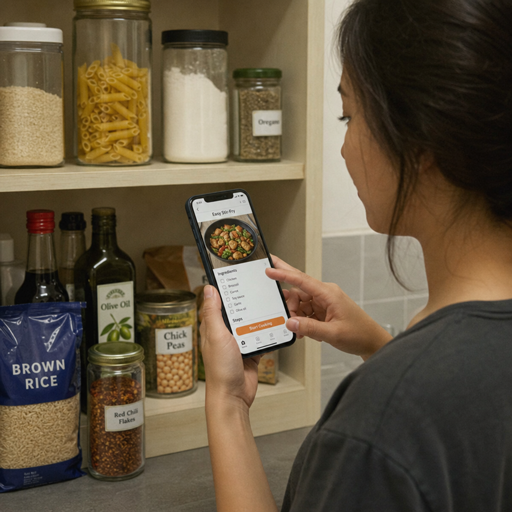
This is where ai recipe management apps become especially helpful. When your pantry, fridge, freezer, and recipe collection are connected, the app can highlight meals that are already within reach. It may suggest recipes that use soon-to-expire produce, show which dishes require only one missing ingredient, or help you avoid buying a duplicate jar of something hiding behind the pasta.
A good pantry workflow usually includes:
- Ingredient tracking: Add staples, fresh items, frozen foods, sauces, grains, and spices so the app can understand what is available.
- Expiration awareness: Mark dates when useful, especially for dairy, meat, leftovers, and delicate produce.
- Quantity estimates: Track whether you have “some,” “enough,” or a specific amount, depending on how detailed you want to be.
- Smart recipe matching: Let the app surface meals that fit your inventory instead of forcing you to search from scratch.
- Shopping list updates: Move missing ingredients directly into a grocery list when you choose a recipe.
The best system is not always the most detailed one. If entering every teaspoon of paprika becomes a chore, you may stop using the app altogether. For many people, pantry management works best when it focuses on the items that drive meal decisions: proteins, vegetables, grains, dairy, canned goods, condiments, and frequently used staples.
Recipe organization gets less messy
Most home cooks collect recipes everywhere. One is bookmarked in a browser. Another is in a screenshot. A third is written in a notebook. A family favorite may live in someone’s text message thread. Recipe organizer software brings those pieces into one searchable home.
AI adds another layer by making saved recipes easier to adapt and retrieve. Instead of scrolling through a long list, you may be able to search by mood, cooking time, ingredient, cuisine style, appliance, or dietary need. If you want “a high-protein dinner using chickpeas and rice,” an AI-enabled system can understand the request more naturally than a rigid folder structure.
Useful organization features often include:
- Recipe importing from websites, notes, photos, or pasted text.
- Automatic ingredient parsing so items can become grocery list entries.
- Tags and collections for weeknight dinners, freezer meals, kid-friendly ideas, holidays, or budget meals.
- Personal notes for changes you made, cooking times that worked, or ingredients you would skip next time.
- Scaling tools to adjust servings without rewriting the entire recipe.
- Search by pantry items so saved recipes become easier to use in real life.
This is one reason ai recipe management apps can be more valuable over time. The more accurately they reflect your household’s tastes, ingredients, and habits, the more useful their suggestions become.
How do AI cooking apps help with meal planning?
AI cooking apps help with meal planning by turning preferences, schedules, pantry items, and recipes into a practical plan for the week. Instead of manually choosing every breakfast, lunch, and dinner, you can ask the app to suggest meals that fit your time, budget style, dietary needs, leftovers, or ingredients you want to use first.
Meal planning is often difficult because it is not just about recipes. It is about energy, timing, cleanup, storage, and repetition. A beautiful slow-cooked meal may not help on a night when everyone gets home late. A salad plan may fall apart if the greens are already wilting. Good meal prep apps account for the way people actually eat.
For example, a useful weekly plan might combine:
- A fast dinner for a busy weekday.
- A batch-cooked grain or protein that supports multiple meals.
- One flexible leftover night.
- A no-cook or low-cook option.
- A recipe that uses fragile produce early in the week.
- A pantry-staple meal for backup.
AI can help by spotting patterns you might miss. If three recipes need cilantro, it can group them into the same week so the bunch does not go to waste. If a meal creates leftovers, it can suggest lunch the next day. If your plan is too labor-heavy, it may recommend simpler substitutions.
Smarter grocery lists reduce waste and stress
Grocery lists are deceptively simple. The hard part is knowing what you already have, what each planned meal needs, and what you will realistically cook before food spoils. Cooking assistant apps can connect these decisions.
When recipes, pantry inventory, and meal plans are synced, the app can create a list based on gaps. If you already have rice, olive oil, and canned tomatoes, the list does not need to include them. If you are planning three dinners with onions, the app can combine the amount instead of listing onions three separate times.
A strong grocery workflow might help you:
- Avoid duplicate purchases of staples you already own.
- Use up ingredients before buying more.
- Group items by grocery category for faster shopping.
- Convert recipe ingredients into list items automatically.
- Add household basics alongside meal ingredients.
- Adjust the list when you swap recipes or change serving sizes.
The practical benefit is not only saving money, though that can happen. The bigger win is confidence. You walk into the store with a clearer plan, and you come home with ingredients that actually support meals.
Personalization is the real advantage
AI becomes more useful when it understands constraints. Many households are not simply looking for “good recipes.” They are looking for meals that fit allergies, budget goals, picky eaters, equipment limits, cultural preferences, time limits, health priorities, or specific ingredients already on hand.
That is why personalization matters. A generic recipe search may produce hundreds of options, but a personalized cooking assistant can narrow the field. It can suggest vegetarian dinners, low-effort lunches, gluten-free swaps, or recipes that avoid a disliked ingredient. It may also help turn a standard recipe into something more realistic for your kitchen.
Common personalization options include:
- Dietary preferences: vegetarian, vegan, gluten-free, dairy-free, low-carb, high-protein, or other user-defined needs.
- Time limits: meals under a chosen prep or cook time.
- Skill level: beginner-friendly steps or more advanced cooking projects.
- Appliance-based filtering: oven, slow cooker, air fryer, pressure cooker, grill, or stovetop-only meals.
- Flavor preferences: spicy, mild, savory, bright, comforting, or fresh.
- Household size: scaled recipes for one person, couples, families, or batch cooking.
The app should still make its logic visible. If it recommends a recipe because you have most of the ingredients, that is useful to know. If it changes a recipe for a dietary reason, you should be able to review the substitution before cooking.
Features to look for before choosing an app
Not every app needs every feature. The right choice depends on how you cook, how much structure you want, and whether your biggest problem is planning, shopping, recipe storage, or food waste. Before committing to one system, look for features that match your real routine.
Consider this practical checklist:
- Easy recipe capture: Can you save recipes from the places you already find them?
- Reliable search: Can you find recipes by ingredient, tag, cook time, or preference?
- Pantry tracking: Is adding and updating ingredients simple enough to maintain?
- AI suggestions: Are recommendations practical, or do they feel random and unrealistic?
- Meal planning tools: Can you drag recipes into a calendar or weekly plan?
- Grocery list generation: Does the list update based on pantry items and planned meals?
- Substitution support: Does the app suggest swaps when you are missing an ingredient?
- Serving adjustments: Can it scale recipes clearly?
- Household sharing: Can multiple people add items, update lists, or view the plan?
- Privacy controls: Are you comfortable with how your data, preferences, and saved recipes are handled?
A simple app you use consistently will beat a complex app you abandon after a week. Start with the problem that bothers you most. If your recipes are scattered, prioritize organization. If groceries are the pain point, focus on list and pantry features. If weeknight decisions are the issue, meal planning and AI suggestions may matter most.
Good apps support better habits, not perfection
It is easy to imagine an ideal kitchen system where every item is logged, every meal is planned, and nothing ever goes bad. Real life is messier. You may order takeout, forget to update the pantry, or buy a beautiful vegetable with no plan at all.
That is fine. AI-powered kitchen tools work best when they support flexible habits rather than demand perfect tracking. You can use them lightly for inspiration, more deeply for meal prep, or somewhere in between.
A realistic routine might look like this:
- Add key pantry and fridge items once or twice a week. Focus on perishables and meal-building staples.
- Save recipes when you find them. Tag them quickly so they are easier to retrieve later.
- Plan three to five meals, not every bite. Leave room for leftovers, social plans, and low-energy nights.
- Generate a grocery list from the plan. Review it manually before shopping.
- Cook, adjust, and make notes. Save what worked so the next plan gets easier.
This loop is simple, but it builds momentum. Over time, your saved recipes become more useful, your shopping gets more intentional, and your pantry becomes easier to use.
Where AI still needs a human cook
AI can suggest, organize, and adapt, but it should not be treated as flawless kitchen authority. Recipes depend on ingredient quality, pan size, stove strength, altitude, personal taste, and basic food safety. An app may not know that your oven runs hot or that your spinach is past its prime.
Use AI-generated recipes with common sense. Check cooking times, especially for meat, seafood, eggs, and baked goods. Read the full recipe before starting. Confirm that substitutions make sense, because some swaps affect texture, moisture, or structure more than flavor.
It is also worth protecting the human side of cooking. Family recipes, cultural traditions, personal memories, and sensory judgment cannot be fully automated. The goal is not to remove creativity from the kitchen. The goal is to clear away enough planning noise that cooking feels more approachable.
The best use cases for busy households
AI-powered pantry and recipe tools can help many types of cooks, but they are especially useful when time and attention are limited. Parents may use them to plan repeatable weeknight meals. Students may use them to stretch a small grocery budget. Solo cooks may use them to scale recipes and reduce leftovers. Meal preppers may use them to coordinate batch cooking with shopping lists.
They can also help people who want to cook more but feel overwhelmed by decisions. Instead of starting with a blank search bar, the app provides a smaller set of relevant options. That can be the difference between making dinner and giving up.
Helpful everyday scenarios include:
- You have several ingredients but no clear meal idea.
- You want to use leftovers without eating the same dish again.
- You need a dinner plan before grocery shopping.
- You are trying to reduce food waste.
- You want to organize years of saved recipes.
- You need flexible meals for different diets in one household.
- You want meal prep apps that connect planning with pantry reality.
In each case, the technology is most useful when it reduces a specific point of friction. It should make the next step obvious.
A practical takeaway for choosing your kitchen system
The strongest ai recipe management apps are not just recipe databases with a shiny AI feature. They connect the full cooking cycle: what you have, what you like, what you plan to make, what you need to buy, and what you want to remember for next time.
If you are exploring cooking assistant apps, start small. Choose one app, add a handful of pantry staples, import a few favorite recipes, and plan a simple week of meals. Notice whether the app makes decisions easier. If it does, build from there.
AI cooking apps are most powerful when they serve your habits instead of trying to redesign your entire kitchen overnight. Used well, they can make meal planning calmer, grocery shopping clearer, and everyday cooking more creative, flexible, and less wasteful.