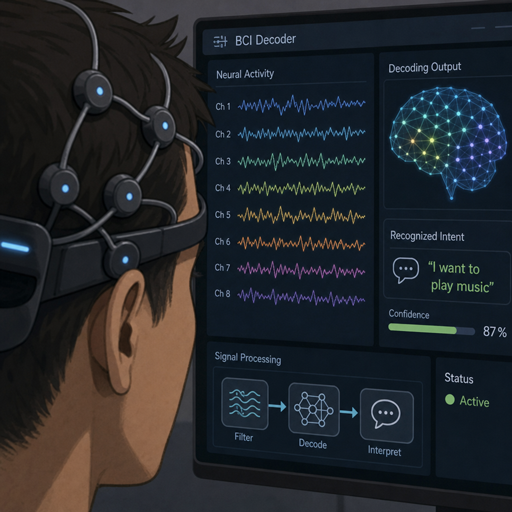
A brain-computer interface BCI is a system that captures brain activity, decodes useful patterns, and turns them into commands for software, prosthetics, communication tools, or therapy. The field is moving from lab demonstrations toward more practical neural interface designs, helped by better sensors, smarter signal processing, and growing clinical experience. For readers tracking neurotechnology advancements, the big story is not simply “mind control,” but the careful engineering required to make BCIs safe, reliable, comfortable, and useful in real life.
What is a brain-computer interface BCI?
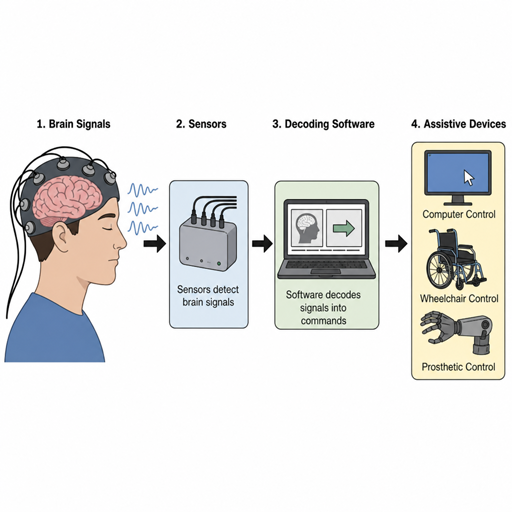
A Brain-computer interface BCI creates a direct pathway between neural activity and an external device, usually by recording electrical signals from the brain and translating them into an output the user can control. In practice, that might mean selecting letters on a screen, moving a cursor, operating an assistive device, controlling a robotic limb, or giving feedback during rehabilitation. The system typically includes sensors, hardware to amplify and clean the signal, algorithms that decode intent, and an application layer that turns the decoded signal into action.
The phrase “bci brain computer interface” can make the technology sound like one single device category, but it is really a spectrum. Some systems sit on the scalp and require no surgery. Others are placed under the skull, on the brain surface, inside blood vessels, or within the cortex itself. Each choice changes the balance between signal quality, user comfort, surgical risk, long-term stability, and the kinds of bci applications that become realistic.
At the center of the field is a simple technical challenge: the brain is noisy, dynamic, and highly individual. A useful neural interface must find task-relevant patterns in that activity, adapt to the user over time, and keep errors low enough that the experience feels empowering rather than frustrating.
The core BCI types shape what the technology can do
The most important difference between BCI systems is where and how they record neural activity. Better access to the brain generally produces richer signals, but it can also increase invasiveness. That tradeoff drives many design decisions in medical, consumer, and research settings.
Non-invasive EEG BCIs use electrodes on the scalp to detect electrical activity. Their major advantage is accessibility: no surgery, lower risk, easier setup, and more potential for wearable use. Their limitation is that the skull, scalp, hair, and movement can weaken or distort the signal, so the system often receives a broad, lower-resolution picture of brain activity.
ECoG systems record from the surface of the brain, typically under the skull. Because the sensors are closer to the source, they can capture stronger signals than scalp EEG while avoiding penetration into cortical tissue. The tradeoff is that they still involve surgery and often capture activity from populations of neurons rather than the fine-grained activity of individual cells.
Intracortical BCIs use tiny electrode arrays that enter the cortex. They can record highly detailed neural activity and are often discussed for advanced communication, cursor control, and prosthetic control. BrainGate, for example, describes its clinical work as translating brain signals from people living with paralysis into commands for computers and assistive devices, with studies assessing safety and feasibility as well as communication and control use cases.
Endovascular BCIs are placed through blood vessels rather than by opening a larger area of skull. This approach aims to reduce surgical burden, though the recording location can limit the type and richness of signals captured. Like every implant pathway, it still raises questions about long-term performance, device retrieval, and patient selection.
A practical comparison of BCI approaches
|
BCI approach |
Main strength |
Main limitation |
Best-fit use cases |
|---|---|---|---|
|
Scalp EEG |
No surgery and easier wearable design |
Weaker, noisier signals |
Training, research, basic control, fatigue monitoring |
|
ECoG |
Better signal than scalp EEG |
Requires surgery |
Clinical mapping, communication research, high-resolution decoding |
|
Intracortical |
High-detail neural recordings |
Most invasive, tissue-related risk |
Advanced communication, prosthetic control, cursor control |
|
Endovascular |
Less invasive access route |
Signal quality and reversibility constraints |
Emerging implant use cases where lower surgical burden matters |
The future will not belong to only one type. Instead, the best BCI brain computer interface design will depend on the user’s goals. A person with severe paralysis may accept more invasive hardware if it restores communication, while a workplace fatigue-monitoring tool would need to be non-invasive, comfortable, and privacy-preserving.
Sensor innovation is making BCIs more wearable and scalable
Many early BCI setups were bulky, fragile, or dependent on highly controlled lab conditions. A major shift now is toward systems that are easier to place, wear, maintain, and remove. That matters because a device that works for an hour in a research setting is very different from one a person can use comfortably at home, in a clinic, or during daily movement.
Recent work from Georgia Tech points in this direction. Researchers described a wearable microneedle BCI sensor designed to fit between hair follicles, with the goal of stable brain-signal detection over longer periods and less obtrusive use than conventional scalp setups. The project highlights a broader trend: improving contact with the body without making the system feel clinical, painful, or difficult to use.
Implantable systems are also changing. Precision Neuroscience’s Layer 7 Cortical Interface is described as a thin, flexible cortical-surface array; the company’s clinician-facing materials discuss high-resolution cortical mapping with arrays containing 1,024 electrodes, while its earlier platform research explored scalable micro-electrocorticography arrays placed through a cranial micro-slit approach. This kind of work shows how implant design is moving beyond the old binary of “simple scalp cap” versus “deep penetrating implant.”
These neurotechnology advancements matter because signal quality is only one part of usefulness. Daily-life BCIs must also handle sweat, hair, movement, device drift, charging, cleaning, software updates, and changing user needs. In many cases, comfort and reliability will determine adoption as much as decoding accuracy.
How do AI and cognitive computing improve BCI performance?
AI and cognitive computing improve BCI performance by helping systems identify meaningful neural patterns, filter noise, personalize decoding, and translate brain activity into useful commands in real time. The brain does not produce neat “left,” “right,” or “click” signals; decoding software must learn from examples, adapt to changing signal conditions, and infer intent from complex activity patterns.
This is where the modern BCI stack looks less like a simple sensor and more like an intelligent loop. The sensor captures activity, machine learning models interpret it, the user sees feedback, and the system updates based on performance. With enough well-designed training, the user and system can begin to co-adapt: the person learns which mental strategies work, and the algorithm learns the person’s signal patterns.
AI can help in several practical ways:
- Noise reduction: separating task-relevant neural activity from muscle movement, eye blinks, electrode shifts, and environmental interference.
- Intent decoding: mapping neural signals to commands such as cursor movement, letter selection, grasp attempts, or imagined speech features.
- Calibration support: reducing the time required before a system becomes usable, which is critical for home and clinical use.
- Adaptive control: updating the model as signals change across hours, days, or months.
- Closed-loop feedback: adjusting stimulation, therapy, or user prompts based on measured brain activity.
The challenge is that powerful decoding also increases responsibility. If a model can infer useful intent, it may also detect sensitive patterns unrelated to the task. That is why privacy, consent, and data minimization need to be designed into the system from the beginning, not added after deployment.
Medical and assistive applications lead the way
The clearest value proposition for BCIs is in medicine, especially where conventional interfaces fail. For someone who cannot speak, type, gesture, or move reliably, even a slow but dependable communication channel can be life-changing. That is why many of the most serious bci applications focus on paralysis, ALS, spinal cord injury, stroke, traumatic brain injury, limb loss, and locked-in syndrome.
Assistive communication is a central use case. In an implanted system, the user may imagine hand movement, speech, or another intentional action while the decoder converts neural activity into cursor movement or text selection. BrainGate’s clinical trial materials describe goals such as enabling people with tetraplegia to control a cursor and assistive devices, and to operate communication software by imagining movement.
Motor restoration is another area of interest. A BCI may be paired with a robotic arm, powered wheelchair, computer interface, or functional electrical stimulation system. The aim is not simply to “read thoughts,” but to restore a control pathway when nerves, muscles, or speech systems can no longer perform that role.
Neurorehabilitation is a related but distinct opportunity. After stroke or injury, a BCI can provide feedback when the brain produces patterns associated with attempted movement. That feedback may support practice, attention, and therapy engagement. In these settings, the interface is not only a control device; it becomes part of a training loop between brain activity, feedback, and functional goals.
Consumer and workplace uses are more cautious but still expanding
Consumer-facing BCIs attract attention because they point toward hands-free computing, immersive gaming, meditation feedback, adaptive virtual reality, and new forms of human-machine interaction. These use cases are exciting, but they also face stricter practical constraints than headlines suggest. A consumer device must be affordable, comfortable, easy to set up, and useful even when signals are weaker than clinical implants.
Some near-term non-medical uses are less dramatic and more plausible. Wearable EEG-like systems may help with attention-state research, fatigue monitoring in high-focus roles, biofeedback, accessibility shortcuts, or experimental creative tools. In industrial contexts, a neural interface could potentially complement eye tracking, motion sensing, and physiological monitoring rather than replace them.
The most realistic consumer future is probably multimodal. Instead of relying only on brain signals, devices may combine neural data with eye movement, voice, gestures, heart rate, skin response, and context. That blended approach could make systems more robust while keeping invasive hardware reserved for medical needs where the benefit justifies the risk.
Where BCIs may create practical value first
- Communication access: text entry, cursor control, and device selection for people with severe motor impairment.
- Prosthetic and robotic control: more intuitive control pathways for assistive limbs or external devices.
- Rehabilitation feedback: therapy systems that respond to attempted movement or attention states.
- Clinical monitoring and mapping: high-resolution recording to support neurological assessment and surgical planning.
- Human-computer interaction: hands-free control for specialized environments where keyboards, touchscreens, or speech are limited.
- Adaptive digital experiences: gaming, VR, or training systems that respond to cognitive workload or fatigue.
The lesson is that “possible” is not the same as “ready.” Successful BCI products will solve a meaningful problem, work consistently outside ideal settings, and respect the user’s body and data.
Safety, privacy, and trust will decide the pace of adoption
As BCIs move closer to everyday use, the ethical questions become more concrete. Neural data is not ordinary app data. It may reveal information about attention, fatigue, intention, health status, or emotional response, depending on the system and context. Even when a device is designed for a narrow task, the raw signals may contain more information than the application needs.
For implanted devices, physical safety comes first. The U.S. FDA has guidance for implanted BCI devices for patients with paralysis or amputation, including nonclinical testing and clinical study considerations; FDA digital health guidance also addresses cybersecurity expectations for connected medical devices. These frameworks matter because BCI performance cannot be separated from surgical risk, software reliability, update procedures, data handling, and long-term monitoring.
Cybersecurity is especially important when a BCI controls assistive software, stimulation, mobility devices, or prosthetics. Risk management must consider unauthorized access, unsafe commands, corrupted updates, data leakage, and the possibility that a model behaves differently after software changes. The more useful and connected BCIs become, the more carefully they must be protected.
A responsible BCI ecosystem should prioritize:
- Informed consent that explains what data is collected, how it is used, and what risks remain uncertain.
- Data minimization so systems collect only what they need for the stated purpose.
- User control over sharing, deletion, updates, and participation in research.
- Security by design including encryption, authentication, safe update pathways, and limited unnecessary connectivity.
- Clinical realism about benefits, limitations, maintenance, and the possibility of device failure.
- Equitable access so life-changing systems do not remain available only to a narrow group of users.
Trust will become a competitive advantage. The most impressive neural interface will not succeed if users feel watched, overpromised to, or locked into opaque systems they cannot understand.
The future is hybrid, personal, and carefully regulated
The future of BCIs will likely be shaped by hybrid design. Some systems will be fully non-invasive and wearable. Others will use flexible cortical-surface arrays or intracortical implants for people with higher clinical need. Many will rely on AI-driven decoding, cloud or edge computing, and feedback loops that personalize performance over time.
Progress will also be incremental. Better electrodes, lower-power electronics, improved wireless links, more durable materials, and easier calibration may sound less dramatic than science fiction, but they are the improvements that make real-world use possible. The field’s next breakthroughs may come as much from reliability and usability as from raw signal resolution.
For patients, the promise is restored independence: communication, control, mobility, and participation. For clinicians and researchers, BCIs offer new ways to understand neural function and design therapies. For technologists, they represent a demanding frontier where cognitive computing, neuroscience, materials science, software engineering, and ethics must work together.
The path forward is not about turning every person into a cyborg. It is about building tools that help the right users at the right level of invasiveness, with clear benefits and strong protections. If the field keeps that balance, brain computer interface bci technology can move from fascinating experiment to practical human support system—one careful advancement at a time.