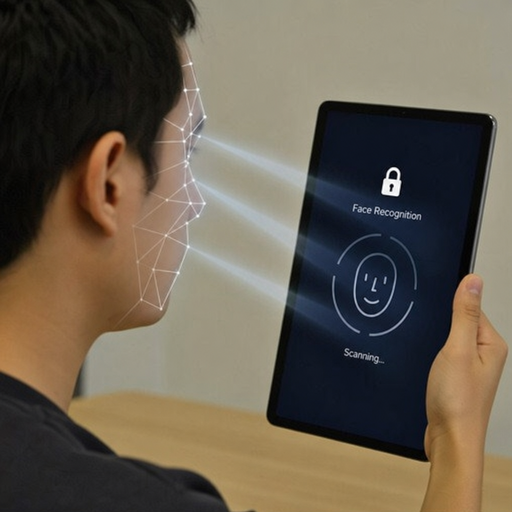
Biometric authentication is moving from a convenience feature to a core layer of digital and physical security. Instead of relying only on passwords, PINs, or cards, biometric technology uses traits such as a face, fingerprint, iris, voice, or behavior pattern to support identity verification and secure access. The future is not simply “more biometrics everywhere”; it is smarter, privacy-aware, multi-layered biometric security that works with other authentication methods rather than replacing every safeguard.
What does the future of biometric authentication look like?
The future of biometric authentication looks more adaptive, more invisible, and more accountable. Systems will increasingly combine multiple signals, such as facial recognition plus device intelligence or fingerprint matching plus behavioral patterns, to confirm that the right person is requesting access in the right context. At the same time, stronger privacy controls, anti-spoofing measures, and transparent consent practices will become essential because biometric data is personal, difficult to change, and highly sensitive.
This shift matters because identity has become central to nearly every digital interaction. People unlock phones, access bank accounts, enter workplaces, approve payments, check in for travel, and sign into cloud platforms many times a day. The challenge is to make those interactions safer without making them frustrating. Biometric authentication promises a more natural experience, but only when it is designed carefully and supported by strong governance.
The foundations of biometric technology
Biometric technology identifies or verifies a person based on measurable human characteristics. Some biometrics are physical, such as fingerprints, facial geometry, iris patterns, palm veins, and voice features. Others are behavioral, such as typing rhythm, touchscreen pressure, gait, mouse movement, or typical login behavior. Each method captures a signal, converts it into a mathematical template, and compares that template with an enrolled reference.
That distinction between the original biometric trait and the stored template is important. A well-designed system should not store a raw image of a face or fingerprint when a secure template can do the job. The template is still sensitive, but it reduces some risk and supports faster matching. Future systems will continue to improve how biometric templates are generated, protected, encrypted, and stored.
Biometric authentication usually works in two stages:
- Enrollment: The user provides a biometric sample, such as a face scan or fingerprint, and the system creates a reference template.
- Verification or identification: The user presents a biometric again, and the system compares the new sample with the stored template or with a database of templates.
Verification asks, “Is this person who they claim to be?” Identification asks, “Who is this person?” For most consumer and enterprise security use cases, verification is the safer and more privacy-conscious model because the person makes a specific claim of identity, such as unlocking their own device.
Why biometric security is gaining momentum
Biometric security is growing because traditional authentication methods have well-known weaknesses. Passwords can be guessed, reused, phished, shared, or stolen. Access cards can be lost or handed to another person. Security questions often rely on information that can be found online. Biometrics are attractive because they are tied to the person, not just something the person knows or carries.
The strongest value appears when biometrics reduce friction while improving confidence. A fingerprint or face scan can make secure access feel quick and natural. In workplaces, biometrics can help limit unauthorized entry to sensitive areas. In digital services, they can streamline account recovery, step-up authentication, and high-risk transactions.
Still, biometrics are not magic. A face scan does not prove intent. A fingerprint match does not guarantee that the device is uncompromised. A voice print can be challenged by noisy environments or synthetic media. This is why the future of biometric authentication will be layered, contextual, and risk-based.
Key reasons organizations adopt biometric authentication
- Convenience: Users do not need to remember complex passwords for every interaction.
- Speed: Biometric checks can reduce delays at login points, gates, kiosks, and approval screens.
- Stronger user binding: A biometric factor is harder to casually share than a password or badge.
- Improved identity verification: Biometrics can support onboarding, account recovery, and fraud prevention workflows.
- Better security posture: When combined with device checks, tokens, and monitoring, biometrics can strengthen access controls.
Biometric authentication and traditional authentication methods
Biometric authentication should be understood as one category within a broader security strategy. Passwords, passkeys, hardware keys, one-time codes, smart cards, mobile devices, and behavioral analytics all remain relevant. The best approach depends on the sensitivity of the system, the risk of impersonation, the user environment, and the consequences of failure.
A biometric can be used as a primary login factor, but it can also be used as a step-up control. For example, a user may sign in with a device-based credential, then use facial recognition before approving a large transaction. In another scenario, an employee may enter a secure area only after presenting a badge and a biometric match. The value comes from layering independent signals so one weakness does not compromise the whole system.
|
Authentication method |
Strength |
Limitation |
Best use |
|---|---|---|---|
|
Passwords |
Familiar and widely supported |
Vulnerable to phishing, reuse, and weak choices |
Low-risk systems or backup access |
|
One-time codes |
Adds a second step |
Can be intercepted or socially engineered |
Step-up login protection |
|
Hardware keys |
Strong phishing resistance |
Requires a physical device |
High-security accounts |
|
Biometrics |
Convenient and tied to the user |
Sensitive data; possible spoofing or matching errors |
Device unlock, identity verification, secure access |
|
Behavioral signals |
Continuous and low-friction |
Can be less transparent to users |
Fraud detection and risk scoring |
The direction of travel is clear: authentication is becoming less dependent on a single secret and more dependent on a combination of possession, presence, context, and user behavior.
How will facial recognition evolve?
Facial recognition will evolve from simple face matching into a more controlled and context-aware form of identity verification. Future systems will need to prove not only that a face resembles an enrolled user, but also that the person is physically present, consenting, and operating in an expected environment. This will make liveness detection, presentation attack detection, and policy controls just as important as match accuracy.
Facial recognition has become one of the most visible forms of biometric authentication because cameras are already built into phones, laptops, kiosks, vehicles, and security systems. Its convenience is clear: people can authenticate without touching a sensor. That makes it useful for mobile banking, workplace access, travel check-in, device unlocks, and customer onboarding.
However, facial recognition also carries higher public scrutiny than some other biometric methods. People may worry about surveillance, misidentification, hidden data collection, or unclear consent. These concerns will shape how the technology develops. Systems that provide clear notices, limit data use, store templates securely, and allow alternative authentication methods will be better positioned for long-term trust.
Features that will define next-generation facial recognition
- Liveness detection: Confirms that the presented face belongs to a real, present person rather than a photo, mask, or replayed video.
- On-device processing: Keeps biometric matching closer to the user’s device when possible, reducing unnecessary data exposure.
- Consent-based flows: Makes it clear when facial recognition is being used and why.
- Bias testing and monitoring: Checks performance across different user groups and environments.
- Fallback options: Gives users another secure way to authenticate when face matching is unavailable or inappropriate.
The rise of multimodal biometrics
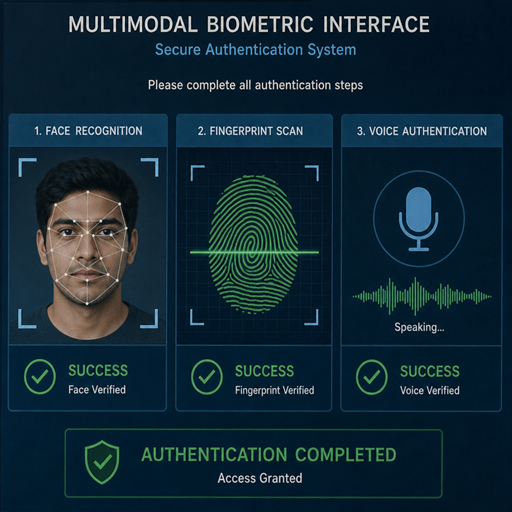
Multimodal biometric systems use more than one biometric signal to verify identity. A system might combine face and voice, fingerprint and palm vein, or iris recognition and behavioral analytics. This approach can improve resilience because different biometric methods fail in different ways.
For example, facial recognition may struggle in poor lighting or when the user’s appearance changes significantly. Voice recognition can be affected by background noise, illness, or recording quality. Fingerprint sensors may be less reliable if a person has worn fingertips, wet hands, or gloves. By combining signals, a system can make a better decision without forcing every user through the same rigid process.
Multimodal biometrics can also support risk-based authentication. A low-risk action may require only a device unlock. A higher-risk action may require a fingerprint plus a live face check. If the system detects unusual behavior, a new location, or a suspicious device, it can request a stronger biometric or an additional factor.
The goal is not to make authentication feel heavier. The goal is to apply the right level of trust at the right moment.
Privacy, consent, and trust will decide adoption
The future of biometric authentication depends as much on trust as on technical performance. Biometric data is not like a password that can be reset in seconds. If a biometric template is exposed, users may worry that a permanent part of their identity has been compromised. Even when the real risk is limited by template design and encryption, perception matters.
Organizations that use biometric technology should treat privacy as a design requirement rather than a legal checkbox. Users need to understand what data is collected, how it is used, where it is stored, how long it is retained, and what alternatives exist. The more sensitive the use case, the more important transparency becomes.
A privacy-conscious biometric program should include:
- Purpose limitation: Use biometric data only for the stated authentication or identity verification purpose.
- Data minimization: Collect the least amount of biometric information needed.
- Secure storage: Protect templates with encryption, access controls, and separation from unrelated personal data.
- Retention controls: Avoid keeping biometric templates longer than necessary.
- User choice: Provide reasonable alternatives where possible, especially in public, employment, or essential-service contexts.
- Auditability: Maintain clear records of system access, changes, and exceptions.
Trust also requires honesty about limitations. No biometric system is perfect. False accepts, false rejects, sensor failures, environmental challenges, and user accessibility needs must be anticipated. A mature system plans for exceptions rather than treating them as rare annoyances.
Security risks that future systems must solve
Biometric security must defend against both technical attacks and operational misuse. Attackers may attempt spoofing, replay attacks, deepfake impersonation, template theft, or social engineering around account recovery. Insider threats and weak vendor controls can also create risk. A system is only as secure as its full lifecycle: enrollment, matching, storage, administration, monitoring, and deactivation.
One major focus will be presentation attack detection. This means identifying attempts to fool a sensor with artificial or copied traits. Examples include printed face images, silicone fingerprints, recorded voices, manipulated video, or synthetic media. Future defenses will use depth sensing, motion analysis, texture checks, challenge-response prompts, and device integrity signals to reduce spoofing.
Another critical issue is enrollment integrity. If the wrong person enrolls a biometric at the start, later matches may be technically accurate but tied to a fraudulent identity. For high-risk services, biometric enrollment should be paired with document checks, trusted records, human review, or other identity proofing steps.
Practical controls for stronger biometric security
- Protect enrollment first. Verify identity before creating a biometric template.
- Use liveness checks. Detect whether the biometric sample comes from a present human being.
- Store templates securely. Avoid raw biometric storage unless absolutely necessary.
- Layer authentication. Combine biometrics with device, possession, or risk signals.
- Monitor anomalies. Flag unusual access patterns, repeated failures, or suspicious device changes.
- Plan recovery paths. Provide secure alternatives when a biometric cannot be used.
- Review vendors carefully. Assess data handling, security controls, testing practices, and support obligations.
Biometric authentication in everyday life
Biometric authentication is already familiar in personal devices, but its future reach is broader. In healthcare, it can help protect patient portals, medication systems, and staff access to records. In finance, it can support customer onboarding, transaction approval, and fraud reduction. In workplaces, it can control access to buildings, labs, data centers, and restricted systems.
Travel and hospitality may use biometrics to make check-in, boarding, and room access smoother. Retailers may use identity verification for age-restricted products, loyalty accounts, or fraud prevention. Education providers may use secure access for testing platforms, campus facilities, or administrative systems. In each case, the same principle applies: the use of biometrics should be proportional to the risk and respectful of the user.
The most successful applications will be those where the value is obvious to the person being authenticated. Unlocking a phone with a face scan feels useful because it saves time. Approving a sensitive payment with a biometric can feel reassuring because it protects money. Being scanned without a clear explanation, by contrast, can feel invasive even if the underlying technology works well.
How should organizations prepare for biometric adoption?
Organizations should prepare for biometric adoption by starting with the problem, not the sensor. The right question is not “Which biometric tool should we buy?” but “What identity risk are we trying to reduce, and what user experience do we need to preserve?” A careful rollout will define the use case, assess legal and privacy obligations, test performance with real users, and create secure alternatives before deployment.
A useful preparation checklist includes:
- Define the access scenario. Is the system protecting a device, building, account, transaction, or identity proofing flow?
- Classify the risk. Match the strength of authentication to the sensitivity of the resource.
- Choose the biometric modality. Consider environment, accessibility, user comfort, and device availability.
- Map the data lifecycle. Document collection, processing, storage, sharing, retention, and deletion.
- Design fallback methods. Avoid locking out legitimate users who cannot use a specific biometric.
- Test for usability and fairness. Evaluate performance across different users, lighting, noise levels, and real-world conditions.
- Communicate clearly. Explain what is happening in plain language before users enroll.
- Review regularly. Update controls as threats, regulations, and user expectations change.
This preparation helps organizations avoid common mistakes, such as overusing biometrics for low-risk actions, collecting more data than necessary, or launching without a clear recovery process.
The future is passwordless, but not factorless
Many discussions about biometric authentication point toward a passwordless future. That future is likely, but it does not mean security will depend on biometrics alone. Instead, authentication will rely on stronger combinations of cryptographic credentials, trusted devices, biometric unlocks, contextual risk analysis, and continuous monitoring.
In practical terms, a user may authenticate with a passkey stored on a trusted device, then unlock that credential with a fingerprint or face scan. The biometric may never leave the device, while the service receives proof that the correct credential was used. This model can reduce phishing risk and improve convenience at the same time.
Behavioral biometrics may also play a larger role in the background. Rather than interrupting the user, a system can observe patterns that suggest whether the current session matches the legitimate user’s normal behavior. If the pattern looks suspicious, the system can request a stronger check. Used responsibly, this can make secure access both smoother and more responsive.
Building a balanced biometric future
The future of biometric authentication technology will be shaped by balance. Stronger identity verification must be balanced with privacy. Convenient secure access must be balanced with accessibility. Innovation in biometric technology must be balanced with clear rules, transparent communication, and meaningful user choice.
Biometric authentication is most powerful when it supports people rather than simply measuring them. It can remove friction, strengthen security, and make digital life feel more seamless. But it must be deployed with care because trust is difficult to win and easy to lose.
For organizations evaluating biometric security, the best path is deliberate rather than rushed. Start with a clear use case, layer biometrics with other authentication methods, protect biometric data from enrollment through deletion, and give users confidence that the system works for them as well as for the business. That is where the future is headed: not just more biometrics, but better, safer, and more human-centered authentication.