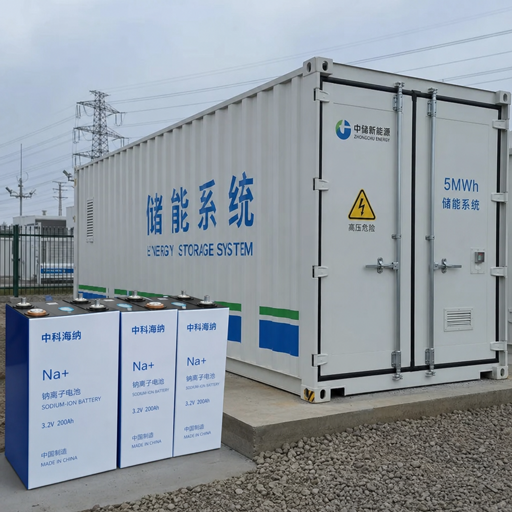
A new wave of Chinese sodium-ion battery development is making the energy storage market more competitive, especially where cost, safety, low-temperature performance, and material availability matter as much as maximum driving range. The headline is not that sodium-ion technology has already beaten Tesla across the board, but that Chinese manufacturers are proving it can rival key lithium-ion benchmarks in practical applications. For renewable energy storage, short-range EVs, commercial fleets, and grid services, that could be a meaningful shift.
Can a Chinese sodium-ion battery really rival Tesla?
Yes, in specific ways: recent independent testing found that a commercial sodium-ion cell from China’s HiNa Battery showed production quality and performance characteristics comparable to advanced lithium-ion cells, including Tesla-style benchmarks, while still trailing top lithium-ion chemistries in energy density. The most important takeaway is nuance: sodium-ion technology is emerging as a serious complement to lithium-ion battery energy storage, not a universal replacement for Tesla’s EV or Megapack ecosystem.
That distinction matters because “rivals Tesla” can mean different things. In a long-range performance EV, lithium-ion still has the advantage because it stores more energy per kilogram. In stationary storage, grid balancing, backup power, industrial sites, and shorter-range transportation, weight is often less important than lifecycle cost, supply security, safety, and cold-weather reliability.
Why sodium-ion technology is gaining momentum
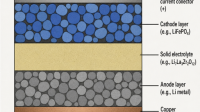
Sodium-ion batteries work in a broadly similar way to lithium-ion batteries: ions move between electrodes during charging and discharging. The difference is the core material. Sodium is far more abundant and widely distributed than lithium, which makes the chemistry appealing for manufacturers and energy planners who want to reduce exposure to lithium supply volatility.
Chinese companies have pushed this chemistry from research labs toward commercial production faster than many observers expected. CATL announced its Naxtra sodium-ion battery platform in 2025, describing it as a mass-produced sodium-ion battery and positioning it for both mobility and storage use cases. CATL later said its sodium-ion battery passed China’s GB 38031-2025 safety certification for EV traction batteries.
The momentum is especially visible in battery energy storage. CATL has said it plans to deliver its first sodium-ion energy storage systems and expects cumulative sodium-ion storage shipments to reach 1 GWh by the end of 2026. China Energy Storage Alliance also reported that, as of July 2026, dozens of Chinese enterprises had announced sodium-ion cell capacity projects, signaling that the supply chain is beginning to scale beyond isolated pilots.
Where sodium-ion can compete most effectively
Sodium-ion technology becomes most compelling when the job does not require the absolute highest energy density. That makes it a natural fit for advanced battery systems designed around cost, durability, and dependable output rather than maximum range.
Key use cases include:
- Grid-scale renewable energy storage: Solar and wind projects need storage that can shift energy from peak production to peak demand. If sodium-ion packs can lower material risk and remain stable over many cycles, they may become attractive for utility projects.
- Commercial and industrial battery energy storage: Warehouses, factories, data centers, and campuses often need backup power, demand-charge management, or load shifting. These applications can accept larger systems if the economics are favorable.
- Short-range EVs and fleet vehicles: Delivery vans, city cars, buses, and municipal vehicles often follow predictable routes. They may not need premium long-range lithium-ion packs.
- Cold-climate applications: The HiNa cell study found strong low-temperature discharge performance, though charging at low temperatures remained more limited. That makes cold-weather engineering a key area to watch.
This is why the Chinese sodium ion battery story is not only about cars. It is also about the infrastructure behind electrification: storage cabinets, microgrids, utility-scale batteries, and the systems that help renewable power behave more like dispatchable generation.
Tesla’s strength remains integration
Tesla is still one of the most important names in energy storage. Its Megapack is a utility-scale lithium-ion product that ships with integrated battery modules, inverters, and thermal systems, and Tesla reported 13.7 GWh of energy storage deployments in the third quarter of 2026.
That scale matters. A battery cell is only one part of a bankable storage project. Developers also care about software, warranties, safety systems, installation time, grid interconnection, maintenance, financing confidence, and long-term supplier reliability. Tesla has spent years building that full-stack energy storage model.
For Chinese sodium-ion battery makers, the opportunity is to compete where chemistry advantages translate into project advantages. If sodium-ion systems can reduce material costs, perform well in harsh conditions, and meet grid safety standards, they could pressure lithium-ion incumbents. But they still need system-level proof: field performance, project references, certification, and customer trust.
Lithium-ion and sodium-ion are likely to coexist
The most realistic future is not a winner-take-all battery market. Lithium-ion, especially LFP and high-nickel chemistries, will continue to dominate applications where energy density, mature supply chains, and proven performance matter most. Sodium-ion can grow in the spaces where affordability, abundant raw materials, and thermal resilience carry more weight.
|
Factor |
Lithium-ion systems |
Sodium-ion systems |
|---|---|---|
|
Energy density |
Generally higher, making it better for long-range EVs |
Lower today, but improving and often acceptable for storage |
|
Material supply |
Relies on lithium and, depending on chemistry, other critical minerals |
Uses sodium, which is more abundant and broadly available |
|
Best-fit applications |
Premium EVs, compact devices, mature grid storage |
Stationary storage, short-range mobility, cold-weather and cost-sensitive uses |
|
Market maturity |
Highly commercialized and widely banked |
Scaling quickly, especially in China, but still earlier in deployment history |
|
Competitive role |
Incumbent technology |
Complementary challenger |
This coexistence is good news for clean energy. The more viable battery chemistries the market has, the easier it becomes to match the right tool to each job. A grid operator may choose lithium-ion where space is tight and sodium-ion where land is available and cost stability matters more.
What makes these batteries eco-friendly batteries?
Sodium-ion batteries can be considered eco-friendly batteries when they reduce reliance on scarcer materials, support renewable energy storage, and are deployed in systems that extend clean power availability. However, no battery is automatically “green” simply because it uses sodium. Mining, manufacturing energy, transport, recycling, and lifespan all determine real environmental impact.
The environmental promise is strongest when sodium-ion systems help replace fossil-fuel peaker plants, store surplus solar or wind power, or reduce the need for material-intensive chemistries in applications that do not require them. Tesla makes a similar argument for Megapack-style systems: large batteries can stabilize grids and support cleaner electricity when paired with renewable generation.
For buyers and project developers, the practical question is not whether sodium-ion sounds sustainable. It is whether a specific product comes with credible lifecycle data, safety documentation, recycling plans, and a track record in the intended operating environment.
What to watch next in advanced battery systems
The next phase will decide whether sodium-ion becomes a niche chemistry or a mainstream pillar of advanced battery systems. The technology has already moved beyond hype, but scaling is where battery claims meet real-world constraints.
Watch these signals:
- Delivered projects, not just announcements. Utility and commercial buyers should look for operating systems with published performance data.
- Cycle life and warranty terms. Long-term economics depend on degradation, usable capacity, and service obligations.
- Cold-weather charging improvements. Strong discharge performance is useful, but charging limitations must be managed for fleet and grid use.
- Cost at the system level. Cell cost matters, but total installed cost includes inverters, controls, thermal management, fire safety, labor, and permitting.
- Certification and bankability. Standards compliance, insurer confidence, and lender acceptance will influence adoption as much as chemistry.
The Chinese sodium-ion battery sector has one major advantage: it is developing inside the world’s most active battery manufacturing ecosystem. That gives companies access to suppliers, equipment makers, engineering talent, and customers willing to test new battery energy storage formats.
The real meaning of the Tesla rivalry
The Tesla comparison is useful because Tesla represents the benchmark for integrated clean energy products, not because every sodium-ion cell needs to outperform every Tesla battery. A Chinese sodium-ion battery that matches key manufacturing and performance benchmarks shows that the competitive field is widening. It also suggests that future energy storage markets may be shaped by chemistry specialization rather than a single dominant formula.
For homeowners, businesses, utilities, and policymakers, the message is simple: sodium-ion technology deserves attention, especially for renewable energy storage and cost-sensitive stationary systems. Tesla remains a formidable storage leader, but Chinese sodium-ion battery manufacturers are proving that the next battery race may be less about one company winning and more about the industry gaining a broader set of practical, scalable tools.