Electric vehicles are becoming software-defined energy platforms, not just cars with batteries instead of fuel tanks. The most important EV technology shifts are happening in batteries, charging, power electronics, digital access, grid integration, and vehicle software. This guide explains how electric vehicles technology works today, which electric vehicle trends matter most, and how developments such as LFP, LMR, sodium-ion, solid-state batteries, NFC digital keys, and bidirectional charging fit into the future of EVs.
What does EV technology include?
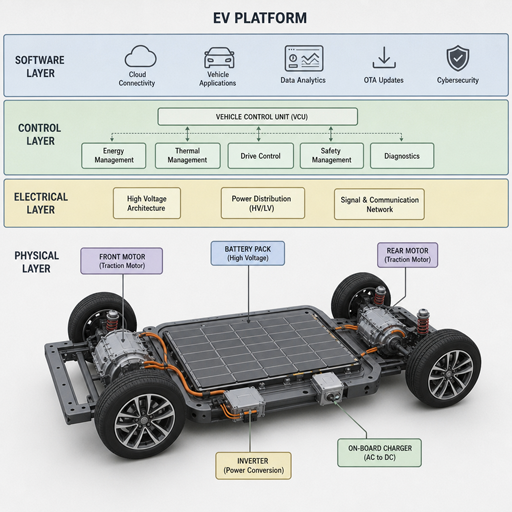
EV technology includes every system that stores energy, moves the vehicle, manages charging, controls efficiency, connects the car to software services, and supports driver convenience. At its core, an EV combines a high-voltage battery pack, one or more electric motors, power electronics, thermal management, onboard software, charging hardware, and connected vehicle features. The difference between a basic EV and a highly competitive EV is increasingly found in how well these systems work together.
The global market has moved beyond the question of whether EVs can work at scale. In 2025, global electric car sales exceeded 20 million, growing by about 20% from 2024, according to the IEA’s Global EV Outlook 2026. Chinese automakers supplied about 60% of global electric car sales in 2025, while European and North American automakers each accounted for roughly 15%, showing how strongly the competitive center of gravity has shifted toward battery supply chains, cost control, and software-led vehicle design.
For buyers, fleets, manufacturers, and investors, EV tech matters because it directly affects range, charging time, vehicle price, reliability, safety, resale value, and user experience. A better battery chemistry can lower cost or improve durability. A better charging standard can reduce travel friction. Better software can help drivers precondition the battery, plan charging stops, receive updates, share digital keys, and use the vehicle as part of a home energy system.
The EV powertrain is simpler mechanically but deeper digitally
An internal combustion vehicle relies on hundreds of moving parts to manage fuel, air, ignition, exhaust, cooling, and transmission. An EV has fewer mechanical wear points in the drive system, but it shifts complexity into electronics, software, battery controls, and thermal systems. That is why modern EV technology is less about one breakthrough component and more about system-level optimization.
Battery pack
The battery pack is the largest and most expensive technology system in most electric vehicles. It includes individual cells, modules or cell-to-pack structures, cooling channels, sensors, fuses, crash protection, and the battery management system. The pack must balance energy density, safety, charging speed, temperature control, cost, longevity, and ease of manufacturing.
Battery design also influences vehicle packaging. A flat underfloor pack can lower the center of gravity and improve cabin space, but it requires careful structural engineering. Some automakers are reducing intermediate module hardware through cell-to-pack or structural pack designs, aiming to save weight, simplify assembly, and use space more efficiently.
Electric motors and inverters
Electric motors convert electrical energy into motion with high efficiency and immediate torque. Most EVs use permanent magnet motors, induction motors, wound-rotor motors, or a combination across front and rear axles. Motor choice affects performance, cost, rare earth mineral exposure, efficiency at highway speeds, and all-wheel-drive behavior.
The inverter sits between the battery and motor, converting direct current from the battery into alternating current for the motor. Silicon carbide power electronics are increasingly used in higher-efficiency systems because they can reduce electrical losses, support higher voltages, and improve charging and driving efficiency. Even modest efficiency gains matter because they can reduce battery size for the same range or increase range from the same pack.
Thermal management
Temperature control is one of the least visible but most important parts of EV technology. Batteries operate best within a controlled temperature range, and fast charging produces heat that must be managed carefully. A strong thermal system can improve charging consistency, protect battery life, support cold-weather range, and keep the cabin comfortable without wasting energy.
Heat pumps have become a key electric vehicle trend because cabin heating can consume meaningful energy in cold climates. A heat pump moves heat rather than simply generating it through resistance, which can help preserve range. Thermal integration is also expanding, with vehicles sharing heat between the battery, motors, cabin, and power electronics.
EV battery technology is the center of competition
EV battery technology determines much of the vehicle’s cost, range, weight, charging behavior, and supply-chain exposure. No single chemistry is perfect. Instead, the market is moving toward chemistry diversification, where different batteries serve different vehicle segments and buyer needs.
LFP batteries prioritize cost, durability, and safety
Lithium iron phosphate, or LFP, has become one of the most important battery chemistries for mainstream EVs. LFP typically offers lower cost and strong cycle life, with less reliance on nickel and cobalt than many high-nickel chemistries. Its trade-off is lower energy density, which can mean a larger or heavier pack for the same driving range.
The cost advantage is significant. The IEA reported that in 2025, LFP battery packs were more than 40% cheaper on average per kilowatt-hour than lithium nickel manganese cobalt oxide alternatives, while noting that part of that advantage reflects stationary storage applications where lower energy density is less of a constraint.
For everyday EVs, LFP makes sense when affordability, long service life, and predictable performance matter more than maximum range. It is especially relevant for urban vehicles, rideshare fleets, entry-level crossovers, and markets where price sensitivity is high. As LFP improves, it continues to pressure higher-cost chemistries to justify their use through range, performance, or packaging advantages.
NMC and high-nickel batteries still matter for range
Nickel manganese cobalt chemistries, often grouped as NMC, have been widely used because they can deliver higher energy density than LFP. Higher energy density helps manufacturers build longer-range vehicles without making the pack too large or heavy. This matters for large SUVs, pickups, premium sedans, and high-performance vehicles.
The trade-offs are cost, supply-chain complexity, and the need for careful thermal and battery management. High-nickel chemistries can support impressive range, but they depend on materials that can be more expensive or geopolitically sensitive. As a result, automakers are segmenting their portfolios: using LFP where cost leadership matters and reserving higher-energy chemistries where customers are willing to pay for range, towing, performance, or luxury positioning.
LMR batteries aim to bridge the gap
One of the most watched developments is lithium manganese-rich, or LMR, battery technology. In May 2025, GM and LG Energy Solution announced plans to commercialize LMR prismatic battery cells for future GM electric trucks and full-size SUVs. GM said LMR would complement its high-nickel and iron-phosphate solutions, and the company has described the chemistry as part of a broader strategy to engineer the right battery for each vehicle segment.
The phrase “gm unveils new lmr battery technology for electric vehicles” became a search trend because it captured a bigger industry question: can automakers reduce battery cost in large EVs without sacrificing too much range? LMR is attractive because manganese is more abundant than some other cathode materials, and manganese-rich designs may help reduce cost while keeping energy density closer to long-range chemistries than to lower-density options.
Still, the practical impact depends on commercialization, cycle life, manufacturing yield, safety validation, and real-world vehicle integration. For now, LMR should be seen as a promising bridge chemistry, not a universal replacement. If it scales successfully, it could be especially important for pickups and large SUVs, where battery size has an outsized impact on price.
Sodium-ion batteries could reshape entry-level EVs
Sodium-ion batteries are gaining attention because they do not require lithium in their core chemistry. They can also perform well in some cold-weather and fast-charging scenarios, depending on design. Their main limitation is energy density, which currently makes them better suited to shorter-range vehicles, small cars, two-wheelers, low-cost mobility, and stationary storage.
The IEA notes that the first sodium-ion battery-powered electric car was introduced in China in late 2023, and that the technology is being scaled by major battery producers including CATL and BYD. The same analysis frames sodium-ion as part of a broader shift toward more affordable battery options alongside LFP.
Sodium-ion will not make every EV cheaper overnight, but it gives manufacturers another lever. In markets where daily driving needs are modest and price matters most, sodium-ion could help make compact EVs more accessible. It may also reduce pressure on lithium supply chains if production scales successfully.
Solid-state batteries remain promising but not yet mainstream
Solid-state batteries replace the liquid electrolyte used in conventional lithium-ion cells with a solid electrolyte. The potential benefits include higher energy density, improved safety characteristics, and faster charging. The challenge is manufacturing at automotive scale while meeting durability, cost, and quality requirements.
The IEA identifies Toyota and BYD among companies with announced solid-state timelines, including Toyota’s plan to launch its first all-solid-state battery-powered vehicle by 2028 and BYD’s plan to sell its first EV using all-solid-state batteries from 2027, with mass production from 2030.
That timeline shows why solid-state belongs in any discussion of the future of EVs, but not as an immediate buying assumption. It is a technology to watch for premium, high-range, or high-performance applications first. Mainstream adoption will depend on manufacturing cost and long-term durability evidence.
Charging technology is becoming a user experience battleground
Charging is not just about plugging in. It includes connector standards, charger reliability, payment systems, route planning, battery preconditioning, grid capacity, and the ability of vehicles to communicate with chargers. The best charging experience feels almost invisible: the car knows where to stop, prepares the battery before arrival, starts charging easily, and gives the driver a realistic departure time.
Home charging remains the foundation
For drivers with access to a garage, driveway, or assigned parking, home charging is often the biggest lifestyle advantage of EV ownership. Instead of visiting a fuel station, the driver starts most days with a charged battery. Level 2 home charging is usually fast enough for overnight replenishment, even when the vehicle is not charged from empty.
The limitation is equity and housing type. Apartment residents, street parkers, renters, and some urban drivers may not have reliable home charging. That makes workplace charging, curbside charging, multifamily charging, and public fast charging essential to broader adoption.
Fast charging depends on the whole system
Fast charging speed is not determined only by the charger’s advertised power. The vehicle’s voltage architecture, battery chemistry, pack temperature, state of charge, charging curve, cable cooling, and charger reliability all matter. A vehicle that briefly peaks at a high number may not charge faster overall than one with a lower peak but a flatter charging curve.
Drivers should look beyond maximum kilowatts. A more useful question is how long the vehicle takes to add practical highway miles in the middle of a trip. Automakers that combine efficient vehicles, good route planning, reliable preconditioning, and broad charging access can create a better experience even without the highest theoretical charging number.
Charging standards are consolidating in North America
Connector standardization is another major electric vehicle trend. SAE J3400, based on the North American Charging System, was issued in 2023 and revised in 2024 as a recommended practice for EV charging. The U.S. Joint Office of Energy and Transportation has noted that major automakers and EV charging companies announced plans to adopt the J3400 connector as early as 2025.
For consumers, standardization can reduce confusion and improve charging access over time. For charging networks, it can simplify hardware planning. For automakers, it raises expectations that vehicle navigation, payment authentication, charging speed, and network access should work smoothly across brands.
Software is turning EVs into upgradeable platforms
EV technology is increasingly software-defined. The vehicle’s performance, charging behavior, driver assistance features, infotainment, battery conditioning, diagnostics, and energy management can all be shaped by software. Over-the-air updates allow manufacturers to fix issues, improve features, and refine user experience after delivery.
This creates new expectations. Buyers increasingly compare EVs not only by horsepower and range, but by interface design, app quality, route planning, charging integration, and update reliability. A vehicle with strong hardware but poor software can feel frustrating. A vehicle with thoughtful software can make limited range or charging constraints easier to manage.
Battery management software protects value
The battery management system monitors cell voltage, temperature, current, and state of charge. It controls charging limits, balances cells, protects against unsafe conditions, and estimates available energy. Accurate state-of-charge and range prediction are essential because drivers make real decisions based on those numbers.
Better battery management can also improve resale confidence. Buyers want to know whether a used EV battery has been abused, frequently fast-charged at high states of charge, or exposed to extreme temperatures. As battery health reporting improves, transparent diagnostics may become a competitive advantage.
Route planning is part of the product
A strong EV route planner accounts for elevation, weather, speed, charger availability, charger power, expected arrival state of charge, and battery preconditioning. This turns a long trip from a guessing game into a managed process. It also helps drivers avoid arriving at a charger too cold, too full, or too low for comfort.
The most advanced systems blend mapping, energy prediction, charger status, and payment integration. In that sense, the charging network is no longer separate from the car. It is part of the vehicle’s digital ecosystem.
Digital access and NFC technology are changing convenience
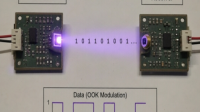
EVs often lead the industry in connected access features because they are already built around apps, software accounts, and digital services. Digital keys let drivers unlock, start, share, or manage vehicle access through smartphones, wearables, or key cards. NFC, or near-field communication, is one of the simplest and most practical technologies for this purpose.
BYD shows how NFC can support mass-market digital key adoption
BYD’s digital key ecosystem illustrates how NFC technology integration can become a practical EV feature rather than a luxury gimmick. BYD Europe describes a Digital Key process in the BYD App, including adding NFC car keys to Apple Wallet and activating the mobile car key by placing the iPhone in the vehicle’s phone tray. BYD owner documentation also describes NFC key cards and NFC digital keys for smartphones and wearable devices on supported vehicles.
A realistic nfc technology integration in byd electric vehicles market analysis should treat NFC as part of the broader connected ownership experience. The market value is not only that a phone can unlock a door. The value is that digital access can reduce dependence on physical keys, simplify shared household use, support fleet handoffs, and make the vehicle feel more integrated with the consumer’s digital life.
BYD also demonstrates how digital convenience and cost-aware EV manufacturing can coexist. NFC does not require the same sensor complexity as some ultra-wideband systems, yet it can offer a reliable tap-to-unlock experience when implemented well. For high-volume EV brands, that balance matters: useful technology must be scalable, understandable, and affordable.
Digital keys also raise security and support questions
Convenience features must be paired with clear security practices. Owners need to know how to revoke access, replace a lost phone, manage multiple drivers, and handle service appointments. Manufacturers need strong account security, reliable app uptime, and clear fallback methods such as NFC cards or physical keys where provided.
The practical lesson is simple: digital access should add options, not remove resilience. A well-designed EV access system lets drivers use a phone when convenient, a card when needed, and account controls when sharing or revoking access. This is why digital key technology belongs in the same conversation as batteries and charging: it shapes daily satisfaction.
Bidirectional charging connects EVs to homes and grids
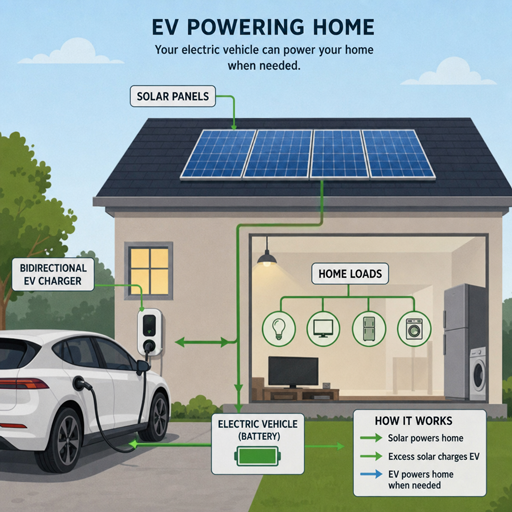
Bidirectional charging allows energy to move from the vehicle battery back to a home, building, device, or grid. The common terms are vehicle-to-load, vehicle-to-home, vehicle-to-building, and vehicle-to-grid. This technology reframes the EV as mobile energy storage.
The U.S. Department of Energy explains that bidirectional EVs can provide resilience benefits, demand-response capabilities, backup power to buildings or specific loads, and grid services where programs exist. DOE also notes that managed charging can reduce equipment upgrade needs, maximize local generation value, and reduce grid energy costs, while incentives for vehicle-to-grid programs are not yet widely available for vehicle applications.
For homeowners, bidirectional charging could mean backup power during outages or better use of rooftop solar. For fleets, it could mean lower demand charges or participation in energy programs. For utilities, it could mean flexible load that can absorb renewable energy when abundant and reduce stress during peak demand.
However, the technology is not plug-and-play for every driver. It may require compatible vehicles, bidirectional chargers, transfer equipment, utility approval, software controls, and rate structures that reward flexibility. The future of EVs will likely include more bidirectional capability, but adoption will depend on business models as much as hardware.
The environmental impact depends on lifecycle thinking
EVs have no tailpipe emissions, but that does not mean they have no environmental footprint. Battery production, mineral extraction, electricity generation, manufacturing, and end-of-life recycling all matter. The correct comparison is lifecycle impact, not just what happens while driving.
The U.S. EPA states that total emissions associated with driving EVs are typically lower than those for gasoline cars, particularly when electricity comes from lower-emission or renewable sources. Argonne National Laboratory’s GREET model is used to analyze energy use and emissions across vehicle production, fuel production, vehicle use, and end-of-life stages, and the Department of Energy notes that R&D GREET shows a 2025 EV produces 46% less greenhouse gas emissions than a comparable internal combustion vehicle.
This is where cleaner grids and better batteries reinforce each other. As electricity generation becomes cleaner, EV use-phase emissions fall. As battery production becomes more efficient and recycling improves, manufacturing impacts can decline. Buyers should avoid simplistic claims in either direction: EVs are not impact-free, but lifecycle evidence generally supports their emissions advantage over comparable gasoline vehicles.
Key electric vehicle trends to watch
The EV market is moving quickly, but not every trend carries equal weight. The most important developments are those that improve affordability, charging confidence, reliability, and everyday usefulness.
- Battery chemistry diversification: LFP, NMC, LMR, sodium-ion, and solid-state batteries will serve different segments rather than converge into one universal chemistry.
- Lower-cost EV platforms: Automakers are redesigning vehicles around simpler packs, fewer parts, streamlined electronics, and scale manufacturing.
- Charging standard consolidation: J3400 adoption in North America should make public charging easier to understand over time, though adapter transitions and charger reliability still matter.
- Software-defined ownership: Apps, updates, diagnostics, route planning, and digital keys increasingly influence brand loyalty.
- Vehicle-grid integration: Managed charging and bidirectional charging will become more important as EV adoption grows and electricity demand becomes more dynamic.
- China-led scale pressure: Chinese automakers and battery suppliers continue to influence global pricing, technology cycles, and feature expectations.
- Lifecycle transparency: Battery sourcing, recycling, carbon intensity, and repairability are becoming part of how buyers and regulators assess EV value.
These trends are connected. A lower-cost battery makes EVs more accessible. Better charging makes buyers more confident. Better software reduces friction. Better grid integration can lower operating costs and improve resilience. The strongest EV strategies combine all of these rather than treating them separately.
How should buyers evaluate EV technology?
Buyers should evaluate EV technology based on their actual use case, not only headline range or acceleration. The best EV is the one that fits daily charging access, driving distance, climate, budget, passenger needs, road-trip habits, and expected ownership length. A high-spec vehicle can be the wrong choice if it solves problems the driver does not have.
Use this checklist before comparing models
- Charging access: Can you charge at home, work, or nearby? If not, check public charger reliability on your normal routes.
- Realistic range needs: Estimate your weekly driving and occasional long trips. Avoid paying for extreme range if you rarely use it.
- Battery chemistry: Consider whether LFP durability and cost, high-nickel range, or emerging chemistries match your needs.
- Cold-weather performance: If you live in a cold region, look for heat pump availability, battery preconditioning, and owner reports.
- Charging curve: Compare practical charging time, not only peak kilowatts.
- Software quality: Test navigation, app controls, route planning, digital key features, and update history.
- Service and warranty support: Confirm local service availability and battery warranty terms.
- Resale and battery health: Ask how battery condition is measured and reported.
- Connector compatibility: In North America, check current and future J3400/NACS access, adapters, and included equipment.
- Energy features: If backup power or solar integration matters, verify bidirectional capability rather than assuming it is included.
This approach prevents technology overload. Instead of asking which EV has the most advanced specification sheet, ask which vehicle removes the most friction from your daily life.
How manufacturers should think about EV tech strategy
Automakers face a different challenge. They must choose technologies that can scale, meet regulations, satisfy buyers, protect margins, and survive rapid change. A feature that impresses early adopters may not work for mass-market buyers if it adds cost, complexity, or reliability risk.
The strongest EV strategies are modular. A manufacturer may use LFP for affordable models, LMR or NMC for larger long-range vehicles, and solid-state for future premium products. It may offer NFC digital keys as a simple baseline convenience feature while reserving more complex sensing systems for higher trims. It may design vehicles for both home charging and future bidirectional use, even if all markets are not ready on day one.
Manufacturers also need to treat software as a long-term responsibility. Over-the-air updates are valuable only when they are stable, transparent, and supported. Digital services are valuable only when owners trust account security and feature continuity. Charging partnerships are valuable only when drivers can rely on them outside marketing materials.
The future of EVs is practical, not just futuristic
The future of EVs will not be defined by one miracle battery or one charging network. It will be defined by steady improvements that make electric vehicles easier to buy, easier to charge, cheaper to operate, and more useful as connected energy assets. Battery chemistry will diversify, charging will standardize, digital keys will become normal, and bidirectional energy features will move from pilot programs into more mainstream use.
The most important shift is that EVs are becoming integrated technology products. They sit at the intersection of transportation, energy, software, consumer electronics, and grid planning. That creates complexity, but it also creates new value: a vehicle that can update itself, manage energy intelligently, connect to a home, share access through a phone, and improve over time.
For consumers, the practical takeaway is to focus on fit: charging access, battery durability, software quality, and support matter more than buzzwords. For businesses and automakers, the lesson is to build around real use cases rather than novelty. EV technology is advancing quickly, but the winners will be the solutions that make electric mobility feel simple, dependable, and worth choosing every day.