Depression has long been diagnosed by symptoms, but new brain research suggests the same diagnosis can involve very different patterns of neural communication. Researchers at the University of Helsinki identified five brain activity profiles among people with major depressive disorder, a finding that could eventually support more personalized mental health care. The study does not mean brain scans can diagnose or treat depression on their own today, but it offers a clearer way to think about why depression can look so different from person to person.
What did scientists actually discover about depression?
Scientists found that people with the same clinical diagnosis of depression can show five distinct profiles of brain connectivity. In simple terms, some participants’ brain regions appeared to communicate more strongly than usual, while others showed weaker communication, and these patterns were linked with different symptom clusters such as anxiety, rumination, trauma-related symptoms, substance use, and reduced daily functioning.
That matters because depression is often discussed as if it were one condition with one underlying mechanism. In real life, one person may feel slowed down, hopeless, and unable to enjoy anything, while another may be restless, anxious, stuck in repetitive thoughts, or coping with trauma symptoms. The new research gives scientific weight to something many patients and clinicians already recognize: mental health patterns are highly individual.
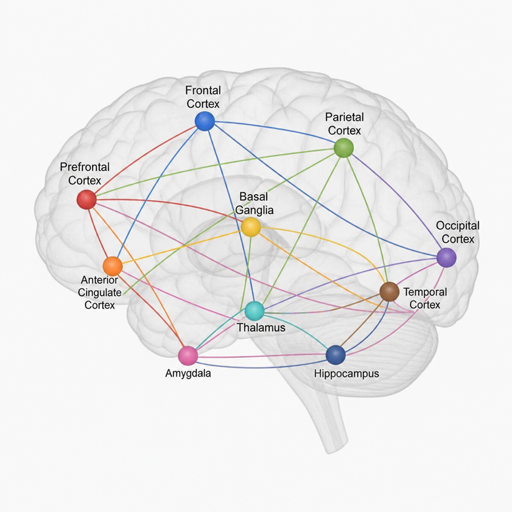
The phrase “hidden brain patterns depression” may sound dramatic, but the idea is straightforward. These patterns were “hidden” because they are not visible from a symptom checklist alone. They emerged when researchers looked at functional connectivity, or how activity in different brain regions becomes coordinated.
How the researchers studied brain activity depression links
The University of Helsinki team studied 263 people with major depressive disorder and compared them with 75 healthy control participants. They used magnetoencephalography, or MEG, a technique that records very weak magnetic fields generated by electrical activity in the brain. MEG can track brain signals with millisecond-level timing, which makes it useful for studying fast communication between regions.
This timing is important. Depression research has often relied on methods that capture slower changes in the brain. MEG gives researchers another angle: not just where activity occurs, but how quickly and in what rhythm different areas seem to coordinate.
The study focused on connectivity strength and frequency. Stronger connectivity does not automatically mean “better,” and weaker connectivity does not automatically mean “worse.” Instead, the meaning depends on which networks are involved, what symptoms appear alongside the pattern, and how the pattern differs from people without depression.
The five brain profiles in plain English
The study grouped participants with depression into five profiles. These are not consumer-ready labels, and they should not be used for self-diagnosis. Still, they help explain why hidden brain patterns depression research could become important.
- Profile 1: Stronger connectivity with severe symptoms. This group showed fairly strong connectivity between brain regions. Symptoms were broadly more severe, including depression, anxiety, rumination, and difficulty functioning in daily life. Rumination means repeatedly returning to distressing thoughts, worries, or negative experiences.
- Profile 2: Weaker connectivity with milder symptoms. This group showed weaker communication between brain regions and, compared with the other depression groups, generally had milder symptoms. This does not mean their depression was unimportant; it means their measured brain activity and symptom burden formed a different pattern.
- Profile 3: Widespread weaker connectivity with trauma symptoms. Participants in this profile showed weak connectivity across a large part of the brain. Post-traumatic stress disorder symptoms were especially pronounced in this group, suggesting that trauma-related experiences may overlap with depression in biologically meaningful ways.
- Profile 4: Mixed connectivity with multiple challenges. This group showed a combination of weaker connections in some areas and stronger connections in others. Depression severity, substance abuse problems, and lower overall well-being were more pronounced.
- Profile 5: Strongest connectivity with substance use symptoms. This group had the strongest connectivity among the five profiles. Substance abuse symptoms were more prominent, while trauma-related symptoms were less pronounced than in other groups.
The practical takeaway is not that one profile is “the real depression.” It is that the same diagnosis may include several biological pathways. That could help explain why past brain activity depression studies have sometimes produced conflicting results: different studies may have included different mixes of people under the same diagnostic umbrella.
Why one diagnosis can hide many mental health patterns
Depression is diagnosed by patterns of symptoms, duration, distress, and impairment, not by a single blood test or brain scan. The National Institute of Mental Health describes depression as an illness that can affect how a person feels, thinks, sleeps, eats, works, and handles daily life; research suggests genetic, biological, environmental, and psychological factors all play a role.
That broad mix of influences makes variation expected. Two people can both meet criteria for major depression while having different histories, bodies, stress exposures, sleep patterns, coping strategies, and co-occurring conditions. One person’s depression may be tightly linked with anxiety and repetitive thinking. Another person’s symptoms may sit alongside trauma memories, alcohol or drug use, chronic stress, pain, or major life disruption.
This is where brain connectivity research becomes useful. It does not reduce depression to “just brain wiring.” Instead, it adds another layer to the picture. Symptoms describe the lived experience; brain activity may help researchers understand the mechanisms underneath that experience.
Could these findings change treatment?
Not immediately. The researchers are clear that brain measurements are not yet enough to choose the right treatment for an individual patient. However, the study points toward a future where clinicians may combine symptoms, personal history, and biological measures to select treatments with less trial and error.
Today, depression care commonly includes psychotherapy, medication, lifestyle support, treatment of co-occurring conditions, and in some cases brain stimulation therapies. NIMH notes that treatment planning should be based on a person’s needs, preferences, and medical situation in consultation with a health care professional.
The promise of this research is precision, not replacement. A future clinician might one day use brain activity depression markers to ask better questions: Is this person’s depression more tied to rumination? Trauma symptoms? Substance use? Network over-coordination? Network under-coordination? Those answers could eventually help match patients to therapies faster, but more research is needed before this becomes routine care.
What readers should not take away from the study
Scientific discoveries about the brain can be exciting, but they are easy to overstate. This study is important because it adds nuance, not because it provides a simple test that everyone can use tomorrow.
Keep these cautions in mind:
- A brain pattern is not a personal destiny. Brain activity changes with sleep, stress, learning, medication, therapy, illness, and many other factors. A connectivity profile should not be treated as a fixed identity.
- Depression is not “all in your head” in the dismissive sense. Brain findings show that depression involves real biological processes, but those processes interact with relationships, environment, trauma, health, and daily life.
- More connectivity is not automatically healthier. One of the key lessons from the study is that both stronger and weaker connectivity can appear in depression, depending on the profile and symptoms.
- The research is not a substitute for care. If symptoms are persistent, worsening, or interfering with life, a qualified health professional is still the right starting point.
- Labels should not replace listening. Even if future tools identify hidden brain patterns depression subtypes more precisely, the person’s story will remain central to good mental health care.
A more personalized future for depression care
The most hopeful part of this research is that it respects complexity. Depression is not identical in everyone, and treatment often works best when it is adjusted to the individual rather than forced into a one-size-fits-all plan. The five profiles offer a research framework for connecting symptoms with brain function more carefully.
For patients, this can be validating. If a treatment that helped someone else does not help you, that does not mean you are failing. It may mean your depression has different drivers, different co-occurring features, or a different biological pattern.
For clinicians and researchers, the findings encourage more precise questions. Instead of asking only whether someone has depression, future research may ask what kind of brain and symptom pattern is present, how stable it is over time, and which treatments work best for that pattern.
Practical takeaways for anyone following the research
If you are reading about these findings because depression affects you or someone close to you, the science can be useful without becoming overwhelming. Here is a grounded way to apply the message:
- Track symptoms in detail, including sleep, energy, anxiety, rumination, trauma triggers, substance use, concentration, appetite, and daily functioning.
- Tell a clinician when symptoms differ from “typical” sadness, especially if they include panic, intrusive memories, emotional numbness, or increased alcohol or drug use.
- Ask about treatment options rather than assuming there is only one path.
- Give treatments enough time when advised by a professional, but report side effects or lack of improvement.
- Treat relapse, partial improvement, or mixed symptoms as information, not as personal failure.
NIMH advises talking with a health care provider if depression symptoms persist or do not go away, and immediate help is important for thoughts of suicide or self-harm. In the United States, people can call or text 988 for the Suicide & Crisis Lifeline; in life-threatening situations, call emergency services.
The bottom line
The discovery of five depression-related brain profiles does not solve depression, but it moves the conversation forward. It suggests that hidden brain patterns depression research may help explain why symptoms vary so much and why treatment response can be difficult to predict.
The clearest message is both scientific and human: depression is real, complex, and personal. Better brain research may eventually make care more precise, but compassionate listening, careful assessment, and individualized treatment remain essential today.