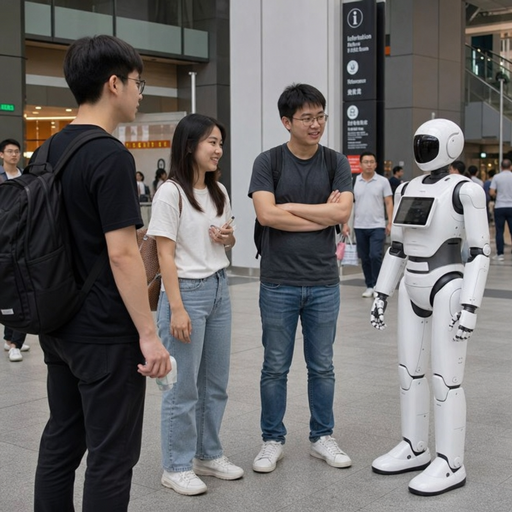
Humanoid robots are moving from science-fiction symbols into practical tools for work, care, education, research, and daily life. This site helps you understand where humanoid ai is heading, how ai robots may fit into society, and what to consider before following the market for humanoid robots for sale. Explore clear guides, responsible perspectives, and practical explanations designed for readers who want more than hype.
What will humanoid robots change in everyday life?
Humanoid robots could change everyday life by taking on physical tasks in spaces already built for human bodies, such as homes, offices, clinics, classrooms, warehouses, shops, and transport hubs. Their human-like form is not just for appearance; it can help them use stairs, doors, tools, shelves, handles, and workstations without requiring every environment to be rebuilt from scratch. The most important changes will depend on how safely, affordably, and responsibly robot technology can support real human needs.
The promise is not that Humanoid robots replace every kind of work or relationship. The more realistic future is a mixed one, where people use humanoid robotics to reduce repetitive labor, support independent living, improve training, gather data in complex settings, and assist teams during demanding tasks. That future needs thoughtful robot design, careful deployment, and public understanding of both the benefits and the limits.
Explore the future of humanoid ai with practical context
Humanoid ai brings together artificial intelligence, sensors, mobility, speech, vision, manipulation, and decision-making. When these systems work together, a robot can recognize parts of its environment, respond to instructions, move through a space, and interact with people in ways that feel more natural than a screen or fixed machine. The challenge is making that interaction reliable, safe, understandable, and useful in ordinary conditions.
This homepage is designed as a clear starting point. Whether you are curious about robot design, researching ai robots for a workplace, studying humanoid robotics, or comparing the idea of humanoid robots for sale, you will find content that explains what matters before you make assumptions or decisions.
Use this site to explore:
- How humanoid robots work — the core systems behind movement, sensing, balance, language, navigation, and physical interaction.
- Where they may be used — practical roles in industry, healthcare support, education, hospitality, home assistance, research, and public services.
- What buyers and teams should evaluate — safety features, operating environment, maintenance needs, data handling, training, durability, and support.
- How society may adapt — employment shifts, ethics, accessibility, trust, regulation, and the need for human oversight.
- Why design choices matter — how appearance, movement, interfaces, and physical capability shape user comfort and real-world usefulness.
Human-shaped machines for human-shaped spaces
A humanoid body gives robots a practical advantage in environments made around people. A wheeled machine may be excellent on smooth floors, and a robotic arm may be ideal in a controlled factory cell. A humanoid robot, however, is designed to operate across less predictable spaces where it may need to walk, reach, carry, open, point, turn, or communicate face-to-face.
That does not mean every robot should look human. Good robot design begins with the job, not the fantasy. If a task only requires moving boxes across a flat floor, a simpler system may be better. If a task requires interacting with people, using existing tools, or adapting to varied spaces, humanoid robotics becomes more relevant.
The value of a humanoid form often appears in ordinary scenarios: a robot helping staff move supplies in a facility, demonstrating a lesson in a classroom, assisting with routine household tasks, or supporting a worker who needs an extra set of hands. In each case, the question is not whether the robot looks impressive. The question is whether it can perform safely, consistently, and clearly enough to earn trust.
Key areas shaping the next generation of ai robots
The future of ai robots will not be decided by one breakthrough alone. It will come from progress across hardware, software, infrastructure, and social acceptance. A robot that walks well but cannot understand context is limited. A robot with advanced language ability but poor physical control is also limited. The strongest systems will combine intelligence with dependable engineering.
Important areas to watch include:
- Mobility and balance Humanoid robots need stable movement across floors, thresholds, slopes, and crowded spaces. Better mobility expands where they can work, but safety remains essential whenever people are nearby.
- Manipulation and touch Hands, arms, grips, and tactile sensors determine whether a robot can handle everyday objects. This is one of the hardest parts of robot technology because real-world objects vary widely in shape, weight, texture, and fragility.
- Perception and navigation Cameras, depth sensors, microphones, and mapping systems help robots understand where they are and what is around them. Strong perception allows safer movement and more useful interaction.
- Language and instruction following Humanoid ai can make robots easier to direct through speech or text. The goal is not just conversation; it is translating human intent into safe, accurate action.
- Power and endurance A practical robot must operate long enough to justify its role. Battery life, charging routines, energy use, and downtime all affect whether a deployment makes sense.
- Human-centered interfaces People need to know what a robot is doing, why it is doing it, and how to stop or redirect it. Clear signals, controls, and feedback can make advanced machines feel more manageable.
Responsible adoption matters as much as invention
The social impact of Humanoid robots will depend on how they are introduced. A robot placed into a workplace without training, boundaries, or communication can create anxiety even if the technology works. A robot introduced with clear purpose, human supervision, and honest expectations is more likely to be accepted.
Responsible adoption means asking practical questions before deployment. Who benefits from the robot? Who may be disrupted? What data does it collect? What tasks should remain human-led? What happens when the robot is uncertain, damaged, or operating near vulnerable people?
For organizations, this creates a planning challenge. It is not enough to ask whether humanoid robots for sale look advanced or affordable. Teams should assess whether the robot fits their environment, whether staff can work with it comfortably, and whether the expected use case is specific enough to measure.
A responsible plan should include:
- A defined task list rather than a vague hope that the robot will “help with everything.”
- A clear operating area with known hazards, rules, and physical constraints.
- A training plan for staff, users, supervisors, and maintenance teams.
- A data policy that explains what is collected, stored, shared, and deleted.
- A safety process for emergency stops, unusual behavior, damage, and manual override.
- A review cycle to decide whether the robot is solving the intended problem.
Robot design that earns trust
People respond to robots through more than performance. Movement, sound, size, speed, facial features, gestures, and voice all influence comfort. A robot that moves too quickly in a hallway may feel unsafe. A robot that looks too human but behaves awkwardly may feel unsettling. A robot that clearly signals its intentions can feel easier to understand.
Good robot design reduces confusion. It makes the machine’s capabilities visible without exaggerating them. If a robot can carry items but cannot reliably pick up delicate objects, users should know that. If it can answer questions but cannot make independent medical, legal, or financial judgments, that boundary should be obvious.
Design also affects accessibility. Some people may prefer spoken interaction, while others need visual prompts, tactile controls, or simple app-based instructions. In public or care settings, inclusive design can determine whether humanoid robotics helps a wider range of people or only works for a narrow group.
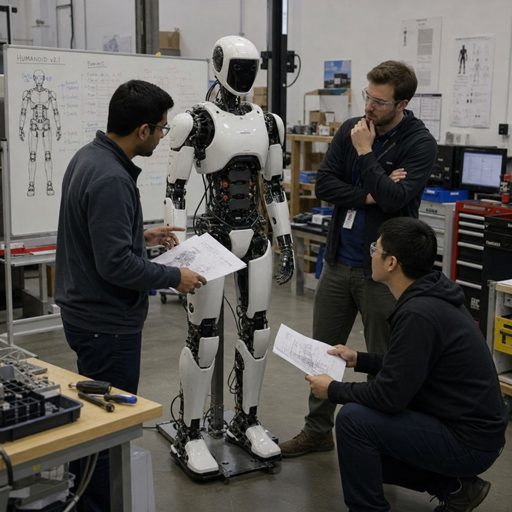
Practical uses across society
Humanoid robots are often discussed as a single category, but their value depends on the setting. A school, a factory, a hospital, and a home all require different levels of reliability, privacy, physical skill, and emotional sensitivity. The best use cases are specific, bounded, and connected to a real need.
In workplaces, ai robots may support repetitive movement, material handling, inspection, basic reception, training demonstrations, or tool delivery. In education, they can make robotics, programming, and ethics more tangible by giving students a physical system to observe and control. In healthcare-adjacent settings, robots may help with logistics, reminders, or non-clinical support, while human professionals remain central to judgment and care.
At home, the expectations are especially high. A household robot must handle clutter, pets, children, privacy, stairs, furniture, and unpredictable routines. This is why the path from demonstration to everyday usefulness can be slower than public excitement suggests. Still, the long-term possibility is compelling: supportive machines that help people live more independently, manage routine chores, and connect digital intelligence with the physical world.
How to think about humanoid robots for sale
Interest in humanoid robots for sale is growing because more companies, researchers, and developers are showing machines that can walk, talk, lift, sort, or demonstrate human-like interaction. Before treating any model as a finished solution, it is useful to separate demonstration value from operational value. A polished video or trade-show appearance does not always show how the robot performs over weeks of normal use.
If you are evaluating a humanoid robot for a business, institution, lab, or personal project, focus on fit. The right question is not “Which robot is the most futuristic?” It is “Which robot can safely perform the tasks we actually need, in the place we actually have, with support we can realistically manage?”
Consider these evaluation points:
- Use case clarity: What exact task will the robot perform, and how often?
- Environment fit: Can it handle your floors, doorways, lighting, noise, layout, and obstacles?
- Payload and reach: Can it lift, hold, carry, or manipulate the objects involved in the task?
- Autonomy level: Does it work independently, by remote control, with supervision, or through programmed routines?
- Safety systems: How does it detect people, avoid collisions, stop movement, and recover from errors?
- Software flexibility: Can workflows, integrations, or behaviors be adapted to your needs?
- Support and maintenance: Who handles repairs, updates, parts, training, and troubleshooting?
- Data and privacy: What sensors are active, and how is captured information managed?
A clearer path from curiosity to confident understanding
The public conversation around robot technology often swings between excitement and fear. One moment, humanoid robots are presented as the answer to labor shortages and household chores. The next, they are framed as a threat to jobs, privacy, and human connection. A better conversation starts with specifics.
That is the purpose of this site: to make humanoid robotics understandable without stripping away the complexity. You can explore the engineering, the social questions, the buyer considerations, and the design trade-offs in one place. The goal is not to push a single vision of the future, but to help readers make sense of the options ahead.
A practical learning path might look like this:
- Start with the basics Learn what makes a robot “humanoid,” how it differs from industrial automation, and why body shape matters.
- Study the technology stack Explore sensors, actuators, batteries, control systems, ai models, safety layers, and human-machine interfaces.
- Compare use cases Look at where humanoid robots are most likely to help and where simpler tools may be better.
- Review risks and responsibilities Understand privacy, labor impact, accessibility, emotional attachment, liability, and oversight.
- Evaluate real-world readiness If you are considering a purchase or pilot, examine performance requirements, support needs, and deployment planning.
For learners, builders, buyers, and decision-makers
Different visitors arrive with different questions. A student may want to understand how humanoid ai works. A business leader may want to know whether ai robots can support a team. A designer may care about movement, interaction, and user trust. A buyer may be comparing humanoid robots for sale and trying to separate marketing from practical requirements.
This homepage connects those paths. It invites beginners to build a foundation, gives professionals a framework for evaluation, and encourages decision-makers to think beyond novelty. The subject is technical, but the implications are human: how people work, receive support, share spaces, learn skills, and decide what machines should or should not do.
You may find this site useful if you are:
- Researching Humanoid robots for a class, article, project, or presentation.
- Following developments in robot technology and artificial intelligence.
- Planning a workplace automation strategy and exploring future options.
- Comparing robot design choices across different humanoid systems.
- Considering whether a humanoid robot belongs in a pilot program.
- Thinking about ethics, policy, safety, or public acceptance.
- Looking for plain-language explanations without losing technical substance.
The future is collaborative, not automatic
The strongest vision for humanoid robots is not a world where machines quietly take over every task. It is a world where people decide which tasks should be automated, which should be assisted, and which should remain deeply human. In that future, robots may handle routine physical work, but people still define goals, ethics, care, creativity, and accountability.
This distinction matters because robot technology is not neutral once it enters society. It changes workflows, expectations, budgets, skills, and relationships. A well-designed humanoid robot can make a difficult task easier. A poorly deployed one can create new burdens for the very people it was meant to help.
The future of humanoid robotics will be shaped by builders, buyers, workers, families, educators, policymakers, and communities. Each group has a role in asking better questions and demanding better answers. The more clearly we understand the technology, the more responsibly we can choose how to use it.
Start exploring humanoid robotics today
Use this site as your guide to the practical, social, and technical future of Humanoid robots. Read the foundational guides, compare real-world use cases, study responsible adoption, and return as the field evolves. If you are evaluating ai robots for an organization, begin with the task, the environment, and the people affected before you focus on any single machine.
The future of humanoid ai will not be decided by imagination alone. It will be built through careful robot design, honest testing, useful applications, and public trust. Start with clear information, then move toward smarter decisions.