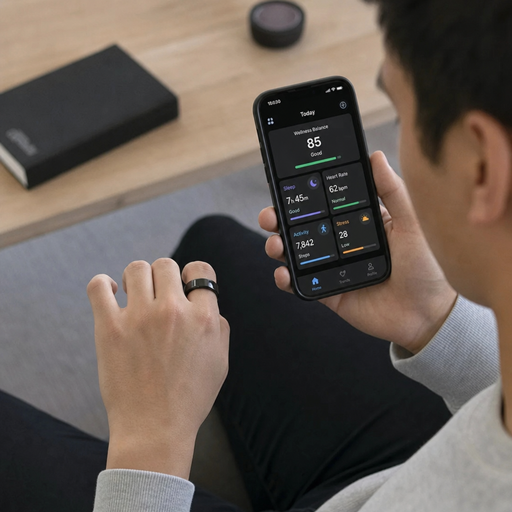
Smart rings are moving from niche gadget status into everyday wearable health tech because they make continuous tracking feel simple, discreet, and comfortable. Instead of asking users to wear a screen on the wrist all day and night, health tracking rings gather signals from the finger while fitting into daily routines, sleep, work, and workouts. For people comparing smart rings for health tracking in 2026, the real opportunity is not just more data; it is easier access to patterns that can support better habits.
Why are smart rings becoming mainstream?
Smart rings are becoming mainstream because they solve a practical problem: many people want health insights without wearing a bulky device around the clock. A ring fitness tracker can monitor sleep, recovery, heart trends, activity, and stress-related signals in a form factor that feels closer to jewelry than equipment. As major brands and specialized wearable companies add more advanced apps, coaching, and sensors, the category is shifting from early-adopter curiosity to a realistic daily wellness tool.
The appeal is especially strong at night. Watches can be uncomfortable during sleep, while rings are often easier to forget once they are sized correctly. That matters because continuous health tracking only works when people actually wear the device consistently.
Smart rings also benefit from a broader cultural shift. People are paying more attention to sleep quality, recovery, stress, readiness, and long-term wellness, not just step counts. Fitness tracking rings match that shift by focusing on trends and baselines rather than constant screen alerts.
The finger is a natural place for quiet health data
The finger offers strong potential for wellness tracking because it is a stable place to collect signals such as heart rate, temperature changes, blood oxygen trends, and movement. A well-designed ring sits close to the skin and can be worn during normal routines with minimal friction. That makes it a good fit for passive tracking: the device works in the background while the app turns raw signals into usable summaries.
Current health monitoring rings often focus on a few core areas:
- Sleep tracking: sleep duration, sleep stages, restfulness, breathing-related trends, and bedtime consistency.
- Recovery insights: heart rate variability, resting heart rate, temperature trends, and readiness-style scores.
- Activity tracking: steps, calories, workouts, movement goals, and automatic activity detection in some models.
- Stress and resilience: patterns that may reflect strain, recovery, or changes from a user’s normal baseline.
- Women’s health features: cycle-related temperature trends, symptom logging, and period predictions where supported.
These insights are most useful when viewed over time. A single poor sleep score may not mean much, but a pattern of lower recovery after late meals, alcohol, intense training, or travel can help someone adjust their routine.
What can smart rings for health tracking actually measure?
Smart rings for health tracking typically measure a mix of cardiovascular, sleep, temperature, movement, and recovery signals, then translate those signals into app-based insights. Oura, for example, says its app may take about two to four weeks of consistent wear to establish personal baselines, which highlights an important point: the value comes from comparing your current patterns against your own normal, not against a generic average. (support.ouraring.com)
Samsung’s Galaxy Ring ecosystem emphasizes sleep, heart monitoring, and wellness insights through Samsung Health, while its user guide lists sleep-related measures such as blood oxygen, skin temperature, heart rate, respiratory rate, and sleep coaching. (samsung.com) RingConn describes 24/7 tracking of heart rate, HRV, and SpO2 at regular intervals in its app experience, along with personal health timelines and recommendations. (ringconn.com) Oura has also continued expanding software features, including proactive health monitoring experiences and live activity tracking for eligible members and ring generations in 2026. (ouraring.com)
That does not mean every ring measures the same things or interprets them in the same way. Buyers should look beyond the product name and check the specific sensor set, app features, subscription model, phone compatibility, and supported metrics before choosing.
Why people like rings more than watches for some use cases
Smartwatches still have clear advantages: bigger screens, richer workout views, notifications, maps, payments, and broader app ecosystems. But a ring is not trying to be a tiny phone. Its strength is low-profile, long-wear tracking.
For many users, the biggest benefits are practical:
- Comfort during sleep A ring can feel less intrusive than a watch, especially for people who dislike sleeping with something strapped to the wrist.
- Discreet design Health tracking rings can blend into work, social settings, and formal clothing more naturally than sport-focused wearables.
- Reduced distraction Most rings have no screen, which means fewer interruptions and less temptation to check notifications.
- Continuous wear If a device is comfortable enough to wear day and night, it can create a more complete picture of sleep, recovery, and routine.
- Wellness-first experience Many rings are built around readiness, sleep, and recovery rather than constant performance stats.
That last point is important. A ring fitness tracker may not replace a dedicated GPS watch for marathon training, cycling intervals, or live pace data. But it can be an excellent companion for understanding how lifestyle choices affect recovery.
The best smart rings for health tracking 2026 depend on your priorities
The best smart rings for health tracking 2026 are not the same for everyone. One person may want the strongest sleep insights, another may care most about subscription-free tracking, and another may prefer compatibility with a specific phone ecosystem. Instead of chasing a single “best” device, shoppers should match the ring to the habits they want to improve.
A simple buying checklist can help:
- Start with your main goal. Are you trying to improve sleep, monitor recovery, track workouts, watch stress patterns, or build healthier routines?
- Check phone compatibility. Some features may work best inside a specific ecosystem, such as Samsung Health for Galaxy Ring users.
- Review the subscription model. Some rings include core insights without a required subscription, while others reserve deeper features for paid memberships.
- Look at battery life and charging style. A ring that needs frequent charging may break the continuity that makes the category useful.
- Use a sizing kit when available. Fit affects comfort, sensor contact, and whether you will actually wear the ring daily.
- Read the feature details, not just the marketing page. Workout tracking, temperature trends, blood oxygen, and cycle insights can vary by model, region, app version, and device generation.
- Consider data privacy. Health data is personal, so review app permissions, sharing controls, and account settings before committing.
This approach prevents disappointment. A ring can be advanced and still be wrong for your needs if it lacks the one feature you care about most.
Everyday scenarios where health tracking rings make sense
The mainstream rise of wearable health tech is not just about athletes. Smart rings are finding an audience among people who want a calmer, more consistent way to understand their bodies.
For a busy professional, a ring may reveal that late-night work sessions are linked with lower readiness the next morning. For a new parent, it can make fragmented sleep visible without requiring manual tracking. For someone returning to exercise, it can show when harder workouts are followed by slower recovery. For a frequent traveler, temperature, resting heart rate, and sleep disruption trends may help explain why energy feels lower after crossing time zones.
These are not diagnoses. They are feedback loops. The power of smart rings comes from making invisible patterns easier to notice, then giving users a reason to make small changes.
Smart rings are strongest when paired with better habits
A wearable cannot improve health on its own. The ring collects data; the user still has to decide what to do with it. The most successful users tend to treat their data as a conversation starter rather than a grade.
Useful ways to act on ring data include:
- Moving bedtime earlier when sleep debt builds over several nights.
- Scheduling intense workouts after better recovery days.
- Watching how alcohol, late meals, or stress affect resting heart rate and HRV.
- Adding wind-down routines when sleep latency increases.
- Noticing whether morning sunlight, walks, or consistent wake times improve energy.
- Sharing concerning patterns with a qualified clinician when symptoms or persistent changes appear.
The key is patience. Because many rings rely on personal baselines, the first few weeks are less about optimization and more about learning your normal patterns.
The category still has limitations
As impressive as fitness tracking rings have become, they are not perfect. Small devices have limited space for sensors and batteries. Workout detection may be less detailed than a sports watch. Strength training, cycling, swimming, and high-intensity intervals can be harder to capture precisely from a finger than from specialized devices.
Accuracy can also vary based on fit, skin contact, motion, temperature, and software interpretation. A loose ring may feel comfortable but deliver weaker readings. A tight ring may improve contact but become uncomfortable during heat, exercise, or natural finger swelling.
There is also the issue of overinterpretation. A readiness score can be helpful, but it should not become a source of anxiety. Health data works best when it supports body awareness, not when it replaces common sense.
What the rise of smart rings says about wearable health tech
The popularity of smart rings reflects a bigger change in wearable health tech: people want fewer interruptions and more meaningful insights. The next phase of wearables is less about counting everything and more about connecting the dots between sleep, recovery, stress, activity, and daily behavior.
This is why software matters as much as hardware. Two rings may track similar signals, but the better experience is the one that explains what changed, why it might matter, and what action is reasonable. As companies continue refining apps, coaching, and personalized insights, health monitoring rings are likely to become more useful for everyday wellness decisions.
For consumers, that is good news. More competition can lead to better design, clearer insights, and more options for different budgets and ecosystems. But it also means buyers should stay thoughtful. The most attractive device is not always the most useful one.
A practical takeaway for choosing a ring fitness tracker
Smart rings are no longer just minimalist gadgets for tech enthusiasts. They are becoming everyday wellness companions for people who want continuous health tracking without constant distraction. If you are comparing smart rings for health tracking, start with your real goal, confirm the features that support it, and choose a device you will comfortably wear day and night.
The right ring will not magically improve your sleep, recovery, or fitness. But it can make your patterns easier to see, your habits easier to adjust, and your health decisions a little more informed.