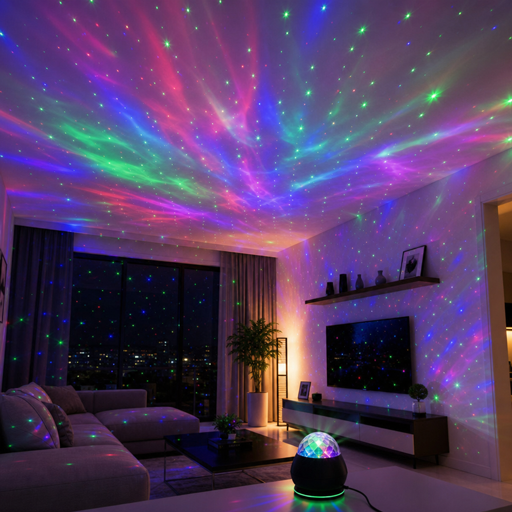
Swiveling multi-color laser projectors bring movement, color, and atmosphere into a smart home without requiring a complicated lighting setup. They can turn a plain wall, ceiling, patio, game room, or media space into a dynamic visual scene using colorful laser lights and adjustable motion. This guide explains how these devices work, where they fit best, what features to compare, and how to use projector light shows safely and effectively.
What are swiveling multi-color laser projectors?
Swiveling multi-color laser projectors are compact lighting devices that project colored laser patterns onto nearby surfaces while the projector head, lens assembly, or internal optics create movement. Instead of producing a fixed beam or a static decorative pattern, they are designed to make light feel active: dots, waves, stars, lines, or abstract effects can sweep, rotate, drift, or pulse across a room.
In a smart home setting, these laser projectors are often used as mood lighting, party lighting, holiday décor, gaming room enhancement, home theater ambiance, or relaxing background visuals. The “swiveling” element matters because movement changes the experience. A still projection can look decorative, but a moving projection feels immersive, especially when layered with music, voice control, app scheduling, or other smart lighting scenes.
The “multi-color” part usually refers to a device’s ability to display more than one color, either individually or in blended combinations. Depending on the model, users may be able to choose a single color, cycle through several colors, combine colors, adjust brightness, select motion modes, or set timers. The right device can make a room feel calm, festive, futuristic, playful, or dramatic with only a small footprint.
The appeal of colorful laser lights in a connected home
Colorful laser lights work well in smart homes because they add emotional texture to spaces that already rely on automation, convenience, and personalization. A smart bulb may change a room’s color, but a laser projector adds motion, layered patterns, and visual depth. That difference can make everyday rooms feel more responsive to the moment.
For example, a living room can shift from a soft evening glow to a lively party scene without moving furniture or installing permanent fixtures. A bedroom can use slow, low-intensity projections as part of a wind-down routine. A covered patio can become a social backdrop for gatherings. A child’s playroom can feel imaginative and theatrical, provided the device is installed and supervised safely.
Smart homes are built around scenes: “movie night,” “dinner,” “work focus,” “morning routine,” or “guest mode.” Swiveling multi-color laser projectors can become part of those scenes when paired with smart plugs, app controls, voice assistants, or built-in connectivity. Even when a projector is not fully smart on its own, it may still work within a connected environment if it remembers settings after power cycling or can be controlled through a compatible smart outlet.
The appeal is not only visual. It is also practical. Many people want expressive lighting without repainting rooms, installing ceiling fixtures, or wiring custom accent lights. Laser projectors offer a flexible option that can be moved, stored, repositioned, or used seasonally.
How laser projectors create moving light shows
Laser projectors use narrow, focused beams of light to create visible patterns on surfaces. In decorative home models, those beams are shaped, split, diffused, or reflected through lenses, gratings, mirrors, or rotating elements. The result is a field of points, flowing shapes, or animated effects rather than one plain beam.
Swiveling movement can happen in more than one way. Some devices physically adjust their projection angle so the light travels across a wider area. Others use internal motors or optical mechanisms to move the projected pattern while the device housing stays still. Some combine both approaches, creating a larger sense of motion.
Projection surfaces change the final effect
A laser projector does not look exactly the same in every room. Smooth white walls, ceilings, textured surfaces, curtains, and outdoor siding all affect how the light appears. A pale, matte surface usually shows patterns clearly, while dark or glossy surfaces may absorb or reflect light differently. Textured walls can add depth, but they may also break up fine details.
Distance matters as well. Placing the projector closer to a wall usually creates a tighter and brighter display area. Moving it farther away can spread the effect across a larger surface, though brightness and detail may appear less concentrated. The best placement often comes from testing a few angles before settling on a permanent spot.
Ambient light affects visibility
Laser effects are most noticeable in dim or dark environments. In a brightly lit room, colorful laser lights may still be visible, but the impact is usually softer. If the goal is a vivid projector light show, reduce competing light sources or use the projector as part of an evening scene.
That does not mean the room must be completely dark. A balanced setup can combine laser patterns with low accent lighting, LED strips, lamps, or smart bulbs. The key is contrast: the projection should stand out enough to feel intentional rather than washed out.
Smart home features that make a projector easier to use
A projector does not need every smart feature to be useful, but connected controls can make it much easier to enjoy consistently. The best features depend on how you plan to use the device. A party host may care most about music response and quick mode changes, while a bedroom user may value timers, quiet operation, and dim settings.
When comparing laser projectors for smart homes, look for features that support everyday convenience rather than novelty alone.
Important features may include:
- App control: Useful for changing colors, patterns, movement speed, timers, and brightness without reaching for the device.
- Voice assistant compatibility: Helpful when the projector is part of a larger smart scene, especially for hands-free room changes.
- Smart plug compatibility: Practical for projectors that do not have built-in Wi-Fi but can safely turn on with restored power.
- Timer and scheduling options: Good for bedtime routines, holiday displays, parties, or automatic shutoff.
- Adjustable movement: Allows the display to feel calm, energetic, or somewhere in between.
- Multiple color modes: Makes the projector more flexible for different moods, seasons, and events.
- Brightness adjustment: Helps prevent the effect from feeling too intense in small or dark rooms.
- Remote control: Still useful as a simple backup even in a connected home.
- Memory function: Lets the projector return to the last used mode after being turned off, if supported.
A device with fewer features can still be a good fit if it performs the basics well. The goal is not to buy the most complicated projector. The goal is to choose one that matches your space, habits, and comfort level.
Where do projector light shows work best?
Projector light shows work best in spaces where the projected surface is visible, the lighting can be dimmed, and the device can be positioned safely. The ideal location depends on whether you want background ambiance, visual drama, seasonal decoration, or interactive entertainment. A small room may need a softer, slower setting, while a larger open area may benefit from wider coverage and stronger movement.
Living rooms and media rooms
Living rooms are a natural fit because they are already used for entertainment, conversation, and relaxation. A laser projector can support movie nights by casting subtle ceiling effects before or after the film, or it can transform the room for a casual gathering. In media rooms, the projector should not compete with the screen. Place it behind viewers, toward the ceiling, or on a side wall so the effect adds atmosphere without distracting from the main display.
For a polished look, coordinate the projector with other smart lights. If the room already has smart bulbs or LED strips, choose complementary colors rather than turning every device to maximum brightness. A soft blue-and-purple ceiling effect, for instance, can pair well with low warm lamps and a dimmed TV area.
Bedrooms and relaxation spaces
In bedrooms, slower movement and lower brightness usually work better than fast, high-energy effects. A swiveling multi-color laser projector can become part of a calming evening routine when used thoughtfully. Set it to a gentle mode, place it where beams do not aim toward faces, and use a timer so it does not run longer than needed.
For relaxation spaces, the best settings are often simple. One or two colors, gradual movement, and minimal flashing can help create a peaceful environment. If the projector includes sound-responsive modes, save those for social settings rather than bedtime.
Game rooms, studios, and creative spaces
Game rooms and creative studios can handle bolder projector light shows. Moving laser effects can make livestream backgrounds, music practice rooms, tabletop gaming areas, or hobby spaces feel more immersive. They also pair naturally with RGB keyboards, LED wall panels, and other tech-forward décor.
In these spaces, placement is especially important. Avoid shining the projection into monitors, cameras, mirrors, or directly toward seated users. A side wall or ceiling placement can create atmosphere while keeping the main activity area comfortable.
Entryways, patios, and seasonal displays
Some laser projectors are used for entryways, porches, patios, or seasonal decoration. If you plan to use one outdoors or in semi-outdoor spaces, choose a model intended for that environment and follow the manufacturer’s guidance on moisture, temperature, and power safety. Indoor-only devices should stay indoors.
Outdoor use also requires extra attention to direction. Keep projections on your own surfaces and avoid aiming beams toward roads, neighbors’ windows, the sky, vehicles, aircraft paths, or public walkways. Decorative lighting should feel welcoming, not intrusive or unsafe.
Choosing the right swiveling multi-color laser projector
Choosing the right projector starts with the space and the experience you want to create. A device for calm bedroom ambiance should not be judged by the same priorities as a device for lively parties. Before comparing features, decide where it will sit, how often you will use it, whether you want smart home control, and how intense the effect should feel.
Match the coverage to the room
Think about the size and shape of the room before choosing a projector. A compact bedroom may need a narrower, softer projection to avoid overwhelming the space. An open living area, finished basement, or patio may need broader coverage and flexible angle adjustment.
Coverage is not only about distance. Furniture placement, ceiling height, wall color, and obstacles all matter. A projector hidden behind a plant or speaker may look tidy, but it may also block part of the light show. A slightly elevated position often helps patterns spread more evenly.
Look for useful control, not just more modes
Many laser projectors advertise multiple effects, but the most useful devices make those effects easy to control. If changing modes requires cycling through every option one by one, the device may become frustrating in daily use. Clear app controls, labeled remote buttons, or simple presets can make a major difference.
Ask what you will actually adjust:
- Do you want to choose specific colors?
- Do you need brightness control for different times of day?
- Will you change motion speed often?
- Do you want a timer for automatic shutoff?
- Should it work with existing smart scenes?
- Will more than one person in the household need to control it?
The answers will narrow the field quickly. A projector that is easy to use will get used more often than one with impressive features buried behind awkward controls.
Consider noise, heat, and placement
Some devices use small motors for movement or fans for cooling. In a party room, that may not matter. In a bedroom, office, or meditation area, operating noise can be more noticeable. If quiet operation is important, look for a model designed for low-noise use and place it on a stable surface to reduce vibration.
Heat is another practical consideration. Like other electronics, laser projectors need airflow and should not be covered, tucked into tight enclosed spaces, or placed near flammable materials. Give the device room to operate as intended.
Check indoor, outdoor, and mounting requirements
A projector’s intended environment matters. Indoor models are usually built for dry, controlled spaces. Outdoor-rated models may include additional protection, but they still require proper power handling and setup. Always follow the product’s instructions rather than assuming a decorative light can handle weather.
Mounting options can also influence the final look. Some projectors sit on a table or shelf, while others include stands, brackets, or adjustable bases. If you want the device to disappear into the room, consider where it can be placed without creating clutter or a trip hazard.
Safety and comfort come before the light show
Decorative laser projectors should be used with care because laser light is different from ordinary lamp light. Even when a product is designed for home use, it should never be treated like a toy or aimed casually at people, pets, vehicles, aircraft, mirrors, or reflective surfaces. The safest setup is one where the projected effect lands on walls, ceilings, floors, or décor surfaces without crossing eye level.
Read the manufacturer’s instructions before use, especially for placement, recommended distance, duty cycle, power supply, and indoor or outdoor limitations. If a product includes warnings, they are part of the setup process, not fine print to skip. Supervise use around children and pets, and store remote controls or power switches where young children cannot experiment with the device unsafely.
Comfort matters, too. Fast movement, flashing effects, and high contrast can bother some people. If guests are coming over, choose moderate settings at first and adjust based on the room. A great projector light show should enhance the experience, not dominate it.
A safe setup checklist:
- Place the projector on a stable surface or secure mount.
- Aim the projection away from faces and direct sightlines.
- Avoid mirrors, glossy objects, and reflective décor in the beam path.
- Keep cords clear of walkways and seating areas.
- Use only the recommended power source and accessories.
- Do not cover vents or place the device under fabric.
- Keep indoor-only models away from moisture.
- Use timers or manual shutoff instead of leaving the device running unattended for long periods.
- Follow all product labels and setup instructions.
Building smart lighting scenes with laser projectors
A swiveling multi-color laser projector becomes more useful when it is treated as part of a full lighting scene rather than a standalone gadget. Smart homes work best when devices support routines. The projector can provide the motion and sparkle, while lamps, bulbs, strips, and shades create the foundation.
Start with the mood
Before setting colors, decide what the room should feel like. A “party” scene may use brighter colorful laser lights, faster movement, and bold accent lighting. A “movie night” scene may use slow ceiling patterns, dim wall lighting, and no effects near the screen. A “wind down” scene may use one soft color, low brightness, and an automatic timer.
This mood-first approach prevents lighting from becoming random. It also makes the projector easier to integrate into daily life. Instead of asking, “Which mode looks coolest?” ask, “What should this room help me do right now?”
Layer light sources thoughtfully
Laser projectors are accent lights, not a replacement for every other light source. They work best when layered with practical lighting and ambient lighting. In a living room, that might mean a floor lamp for visibility, smart bulbs for wall color, and a laser projector for ceiling movement.
Avoid using too many competing effects at once. If every light is changing color, pulsing, and moving, the room can feel chaotic. Let the projector be the active element while other lights provide a stable background.
Use automation in simple ways
Automation does not need to be complex. A smart plug can turn a compatible projector on at a certain time. A voice command can activate a “game night” scene. An app timer can shut the device off after a set period. These simple automations are often more valuable than elaborate routines that become hard to maintain.
If the projector has built-in smart features, check whether it supports the platforms you already use. If it does not, a smart plug may still help, but only if the projector powers back on safely and predictably after receiving power. Some devices require a physical button press after power is restored, which limits automation.
Common mistakes that make laser projectors less effective
Many disappointing projector setups come from placement and expectation issues, not from the basic idea of the device. A laser projector is highly dependent on environment. Small changes in angle, distance, brightness, and room lighting can dramatically change the final effect.
Avoid these common mistakes:
- Pointing the projector directly across seating areas. This can create glare and discomfort. Aim toward walls or ceilings instead.
- Using the brightest setting in a small room. More intensity is not always better. Lower settings often look more refined.
- Placing the device too close to clutter. Nearby objects can block or fragment the projection.
- Expecting daylight-level visibility. Laser effects need contrast. Dim the room for stronger results.
- Combining too many animated lights. One moving focal point usually feels more intentional than several competing effects.
- Ignoring cord management. A beautiful light show loses appeal if the setup creates a tripping hazard.
- Skipping the safety instructions. Safe placement is part of getting good results.
The best setups usually look effortless because someone took time to test them. Move the projector around, try several angles, and watch the room from where people actually sit or stand. What looks dramatic from one corner may feel distracting from the sofa.
Style ideas for different rooms and occasions
Laser projectors are flexible because the same device can support many moods. The trick is to avoid using the same high-energy setting for every occasion. A smart home feels more personal when lighting changes with the activity.
For a relaxed evening, choose slower movement, fewer colors, and a ceiling-focused projection. Pair it with warm lamps or dimmed smart bulbs so the room still feels comfortable. This works well for reading breaks, quiet conversations, or background ambiance.
For a party, use broader coverage and more saturated color combinations. If the projector includes music-responsive modes, test them before guests arrive so you know how intense they feel. Balance the motion with steady accent lights near food, drinks, and walkways.
For a home theater setup, keep projector light shows away from the screen during viewing. Use the effect as a pre-show scene, an intermission atmosphere, or a soft ceiling accent. The goal is to make the room feel special without reducing picture quality.
For seasonal decorating, choose colors that fit the occasion without relying only on themed objects. Multi-color laser projectors can support winter gatherings, birthdays, celebrations, or cozy nights simply by changing color palettes and speed. Because they are temporary and movable, they offer a low-commitment way to refresh a space.
Maintenance and long-term use
A laser projector is usually simple to own, but a few habits can help keep it reliable and attractive in the room. Keep lenses clean according to the manufacturer’s instructions, because dust or fingerprints can soften the projection. Avoid harsh cleaning products unless the product guide specifically allows them.
Store the device carefully when it is not in use. If it is seasonal, pack it with its power adapter, remote, stand, and instructions so setup is easier next time. Do not wrap cords tightly around the device in a way that strains connections.
Review placement every so often. Smart homes evolve: furniture moves, new devices are added, and routines change. A projector that worked perfectly on one shelf may need a new position after a room update.
A simple buying and setup plan
If you are not sure where to start, use a step-by-step approach instead of shopping by impulse. This keeps the decision grounded in how the projector will actually be used.
- Choose the primary room. Decide whether the projector is for a bedroom, living room, game room, patio, or seasonal display.
- Define the main mood. Pick calm, festive, immersive, decorative, or party-focused as the main purpose.
- List must-have controls. Decide whether you need app control, remote control, timers, brightness settings, or smart home compatibility.
- Plan safe placement. Identify a stable surface or mount where beams will not aim toward eyes, reflective surfaces, or public areas.
- Test before finalizing. Try different distances, angles, colors, and speeds at the time of day you expect to use it.
- Build one simple scene. Pair the projector with existing lights and save a routine you will use often.
- Adjust after real use. Notice whether the effect feels too bright, too busy, or too subtle, then refine the settings.
This process helps prevent overbuying and underusing. The best laser projectors are not necessarily the ones with the longest feature list. They are the ones that fit naturally into your home and routines.
Bringing movement, color, and atmosphere together
Swiveling multi-color laser projectors can add a vivid layer of personality to smart homes when they are chosen and placed with intention. They are especially useful for people who want colorful laser lights, flexible ambiance, and projector light shows without committing to permanent lighting changes.
Start with the room, the mood, and the safest placement. Then compare controls, color options, movement styles, and smart home compatibility based on how you will actually use the device. With a thoughtful setup, laser projectors can make everyday spaces feel more expressive, immersive, and ready for the moment.