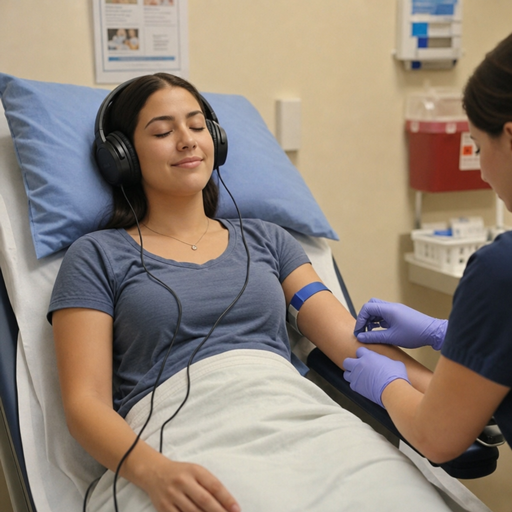
A favorite song will not turn a medical procedure into a concert, but it may make a short, uncomfortable appointment feel more manageable. Research on music-based interventions suggests that listening to music can help reduce procedure-related anxiety and pain for some patients, especially when it is used as a simple add-on to standard medical care. The most useful approach is practical: choose familiar, calming tracks, ask your care team what is allowed, and treat music as support rather than a substitute for medicine or clinical guidance.
Why can favorite music make a procedure feel easier?
Favorite music can make a procedure feel easier because it gives the brain something safe, familiar, and emotionally meaningful to focus on while the body is experiencing stress. Pain is not only a physical signal; it is also shaped by attention, anticipation, fear, and the surrounding environment. When music reduces tension and redirects attention, the same procedure may feel less threatening, and the patient may feel more in control.
This is one reason music therapy for pain relief has drawn interest in hospitals, dental offices, and outpatient settings. The National Center for Complementary and Integrative Health notes that preliminary research suggests music-based interventions may be helpful for pain and anxiety connected with a variety of health conditions and medical procedures. A 2023 systematic review and meta-analysis also found that music interventions were associated with lower anxiety and pain in adults undergoing surgery, though effects varied by factors such as intervention duration and study design.
The word “favorite” matters. Relaxation music can be helpful, but a song that feels personally comforting may work better for some people than a generic spa playlist. Familiar music can bring memory, rhythm, predictability, and emotional reassurance into a moment that otherwise feels clinical and unfamiliar.
Music changes the experience around pain
Music does not simply “block” pain like a wall. It changes the experience surrounding pain. A short procedure may involve several layers of discomfort: the sensation itself, worry about what is coming, muscle tension, embarrassment, boredom, and the sounds of the room. Therapeutic music can soften some of those layers at once.
For example, a person waiting for a biopsy, injection, dressing change, dental work, or imaging-related procedure may feel their shoulders tighten before anything begins. A slow, steady playlist can cue slower breathing. A meaningful song can create a sense of companionship. Rhythmic music can give the mind a pattern to follow instead of scanning every sound in the room.
Recent reviews have looked at music interventions across settings such as colonoscopy, biopsy, catheter insertion, wound care, eye procedures, urologic procedures, and other clinical contexts. The findings are not identical in every study, but many trials report reductions in anxiety, pain, or both when music is added to usual care.
What counts as therapeutic music in a clinic?
Therapeutic music in a clinic can mean professionally delivered music therapy, but it can also mean a structured music-listening plan approved by the care team. Formal music therapy is usually provided by a trained music therapist and may involve listening, singing, rhythm, songwriting, breathing, or emotional processing. Music medicine or music listening is simpler: the patient listens to selected music, often through headphones, before, during, or after care.
For small medical procedures, the second option is often the most realistic. You may not need a full session with a music therapist to benefit from sound. You may simply need permission to use earbuds, a playlist that calms you, and a plan that does not interfere with instructions from clinicians.
That said, the distinction matters. Music therapy benefits can go beyond distraction when a trained professional tailors the music to a patient’s goals, symptoms, culture, trauma history, or communication needs. A playlist is useful; a therapeutic relationship is different. Both can have a place, but they are not the same thing.
A simple playlist plan for small procedures
The best playlist is not necessarily the slowest, prettiest, or most “healing” music on the internet. It is the music that helps your nervous system settle without pulling your attention away from important medical instructions. Before an appointment, build a short playlist with three phases:
- Before the procedure: Choose two or three familiar songs that make you feel steady. This can be acoustic music, soft pop, instrumental music, prayer music, ambient sound therapy, or anything that feels grounding.
- During the procedure: Select tracks with a predictable rhythm and no sudden volume spikes. If lyrics distract you, use instrumental relaxation music. If lyrics comfort you, choose songs you know well.
- After the procedure: Add one or two songs that feel warm, hopeful, or gently energizing. This helps mark the transition from “medical mode” back to normal life.
Keep the playlist downloaded in case the clinic has poor reception. Use clean, comfortable earbuds or headphones, and keep the volume low enough that you can hear your provider. If the care team needs both ears available, ask whether one earbud is acceptable.
How should you use relaxation music before and during a procedure?
Use relaxation music intentionally: start before anxiety peaks, pair it with slow breathing, and keep it flexible enough to pause when staff need your attention. Music for healing works best when it supports the appointment rather than competing with it. Tell the nurse, technician, dentist, or physician that you would like to listen to music and ask when it is safe to begin.
A simple routine can help:
- Arrive with your playlist ready. Searching for the “perfect” song in the waiting room can add stress.
- Begin listening early. Start while waiting, not only when the procedure starts.
- Lower your jaw and shoulders. Let the music cue physical release, not just mental distraction.
- Breathe with the phrase length. Inhale for part of a musical phrase, exhale through the next.
- Use a calm anchor lyric or sound. Return to it when you notice worry rising.
- Pause when asked. Medical instructions come first.
This approach is especially useful for people who become tense before needles, dental tools, skin procedures, or brief outpatient care. It can also help people who dislike medical sounds, because music adds a more pleasant layer to the sound environment.
The best music is personal, not perfect
There is no universal “correct” therapeutic music. Some people relax with piano. Others need gospel, folk, jazz, lo-fi beats, film scores, nature sounds, devotional music, or a familiar song from childhood. Music healing is personal because emotional safety is personal.
Still, certain qualities are worth considering. For many people, helpful tracks are steady, familiar, moderate in volume, and emotionally reassuring. Songs that trigger sadness, agitation, grief, or intense memories may not be ideal during a procedure, even if they are meaningful at other times.
Use this quick checklist when choosing music therapy for pain relief at your next minor appointment:
- The music makes you feel safer, not more emotionally stirred up.
- The volume is comfortable and does not block staff instructions.
- The playlist is long enough that you do not need to touch your phone.
- The tracks do not include abrupt ads, loud intros, or jarring transitions.
- The device is charged, unlocked, and easy to pause.
- The clinic has confirmed that earbuds or headphones are allowed.
Where sound therapy fits—and where it does not
Sound therapy, therapeutic music, and relaxation music can be valuable supportive tools, but they should not replace anesthetic, sedation, numbing medicine, sterile technique, or appropriate pain control. If a procedure is expected to be painful, ask your clinician what options are available. Music can sit beside those options; it should not be used to pressure someone into tolerating avoidable pain.
This point is important because “natural” does not always mean sufficient. Music may reduce anxiety enough that a patient feels more confident, but it cannot guarantee pain relief. Studies also vary in quality, procedure type, timing, music selection, and how pain is measured. Cochrane has reported evidence that music interventions can reduce preoperative anxiety, while also noting research limitations that are common in this kind of study, such as difficulty blinding participants and assessors.
If you have hearing sensitivity, trauma responses to certain sounds, migraines triggered by audio, cognitive overload, or a condition that makes communication during the procedure especially important, talk with the care team first. Silence, guided breathing, a support person, or another coping strategy may work better for you.
Small choices can make clinical moments feel more human
One of the quiet strengths of music in healthcare is that it brings something personal into an impersonal setting. A clinic room is designed for safety and efficiency, not necessarily comfort. Your music can remind you that you are not just a patient in a chair; you are a person with preferences, memories, taste, and agency.
That sense of agency matters. Choosing your playlist, asking for permission, and practicing a breathing pattern gives you a role in your own comfort. Even when you cannot control the procedure, you may be able to shape the atmosphere around it.
For healthcare teams, music is appealing because it is low-cost, familiar, and usually easy to offer when it does not interfere with care. For patients, it is accessible and customizable. Those qualities help explain why music therapy benefits continue to be studied across medical settings, from anxiety before surgery to discomfort during shorter procedures.
A practical takeaway for your next appointment
If you are nervous about a small medical procedure, consider preparing a short playlist before you go. Choose music that feels steady, familiar, and comforting; ask your care team whether headphones are allowed; and use the music alongside slow breathing and standard pain-control options. The goal is not to prove that music is magic. The goal is to make an uncomfortable moment a little less overwhelming.
Your favorite song may not remove every sensation, but it can change the emotional texture of the experience. In that sense, music for healing is not only about pain scores. It is about comfort, attention, dignity, and giving the nervous system one more reason to feel safe.